

Can a heat pump keep up in a California winter

Describe the project once instead of to every installer.

New system or replacementHeat PumpCalifornia
Step 1 of 2

What ZIP code is the job in?

Will a heat pump keep up during a California winter?

Most homes here heat with gas, so a heat pump is less familiar, and California winters don't get brutally cold but they do bring stretches of nights in the 30s and 40s. You want to know if a heat pump will actually hold the house at temperature on those nights, or if it's going to struggle and run up the bill, especially with power priced the way it is here.

Yes, a properly sized heat pump keeps up in a California winter

A heat pump moves heat from outside air into your house instead of burning fuel to make it, and it can still pull heat from air well below freezing. California winters rarely stay that cold for long, so the equipment isn't being asked to work at its limit the way it would somewhere with hard freezes all season. What matters more than the climate is sizing. A unit sized correctly for your home's heat loss will keep up through the coldest nights without leaning on backup heat strips, which cost more to run. An undersized unit will struggle on the coldest mornings and lean on those strips more often, and that's where the power cost here adds up.

  1. Outside air passes over a cold refrigerant coil.

  2. Refrigerant absorbs heat from that air, even when it's cold.

  3. A compressor squeezes the refrigerant, raising its temperature further.

  4. The hot refrigerant moves inside to the indoor coil.

Is your heat pump actually keeping the house warm

You notice it most on the cold nights, the ones in the 30s and 40s. The air coming out of the vents feels cooler than you expect heat to feel, even though the house does warm up eventually. Maybe it runs longer than you think it should, or you catch it switching to a backup mode when the temperature drops. Some rooms stay colder than others. If it's struggling to keep up on the coldest nights, it's working harder than it needs to, and that shows up on your power bill, which already costs more here than in most of the country. Left alone, a system that's undersized or poorly matched to your house won't just cost more. It wears out faster.

A gray outdoor condenser unit on a concrete pad beside a light-colored lap-sided house, with a wall-mounted disconnect box, refrigerant lines, mulch bed and shrubs, and a concrete walkway in the foreground.

Sized and installed for your coldest nights

This is what a heat pump installed right looks like: set on a solid pad, lines run clean to the disconnect, nothing crowding the airflow around it. Sized for your home, it keeps pulling heat out of cold air on the 30 and 40 degree nights without strain.


An outdoor air conditioner condenser unit with rust spots on its top grille sits on a concrete pad beside a house with light horizontal siding, with conduit lines and an electrical box on the wall and a mulch bed to the right.

A unit that was never matched to the house

Rust along the top grille and dirt packed around the base usually mean years of running harder than it should. If a heat pump was undersized or poorly placed when installed, it struggles most exactly when you need it most, on the coldest nights.

Heat Pump Alone or Paired With Gas Backup

Heat pump alone

  • On nights in the 30s and 40s, a correctly sized heat pump still pulls enough heat from the outside air to keep the house warm.
  • It runs longer on the coldest nights than it does in mild weather, which is normal and not a sign of trouble.
  • Most heat pumps have a backup heat strip that kicks in only when the outdoor temperature drops low enough that the compressor alone can't keep pace.
  • Since power here costs more than gas, running on backup heat strip for long stretches shows up on the bill fast.
  • A heat pump sized and installed for your coldest nights rarely needs that backup strip except on the harder nights of the year.

Gas furnace backup

  • Pairing a heat pump with your existing gas furnace lets the furnace take over on the coldest nights instead of relying on electric backup heat.
  • The switch between the two can be set to happen automatically once the outdoor temperature drops past a set point.
  • Gas burns hotter at the furnace than a heat pump's output, so the air at the vents feels warmer right away on those nights.
  • This setup still lets the heat pump do the cooling in summer and most of the mild-weather heating on its own.
  • It costs more upfront to keep both systems tied together than to run the heat pump by itself with electric backup.
A gray-haired bearded man in a dark knit sweater sits on a light gray sofa in a sunlit living room, looking to his left, with a framed artwork, a potted palm, and a curtained glass door behind him.
A middle-aged man in a dark green sweater sits on a light grey sofa looking toward a sunlit window, with a wooden shelving unit, lamp and potted plants in the background.
A man in a dark green sweater sits on a light grey sofa in a sunlit living room, looking to his left, with a shelving unit, houseplants, framed art and a large window behind him.
A gray-haired bearded man in a dark green sweater sits on a light gray sofa in a sunlit living room with a potted plant, framed picture, and dark shelving in the background.

No quotes to chase

A heat pump that isn't sized or installed right for your coldest nights will leave you guessing every January whether it's working or failing. Figuring that out on your own means calling around, explaining the same thing to three or four companies, and trying to judge their quotes against each other without knowing what "sized for your home" actually requires. Someone who installs these year round in California, where most houses still run on gas and electricity costs what it does here, knows what a heat pump needs to hold up through a cold snap and what corners get cut when it doesn't. Handing this off puts the request in front of one licensed local contractor who already knows the equipment and the climate, instead of you fielding calls from several companies trying to win the job. You still have a system to get right before the next cold night. Who looks at it doesn't have to be something you sort out alone.

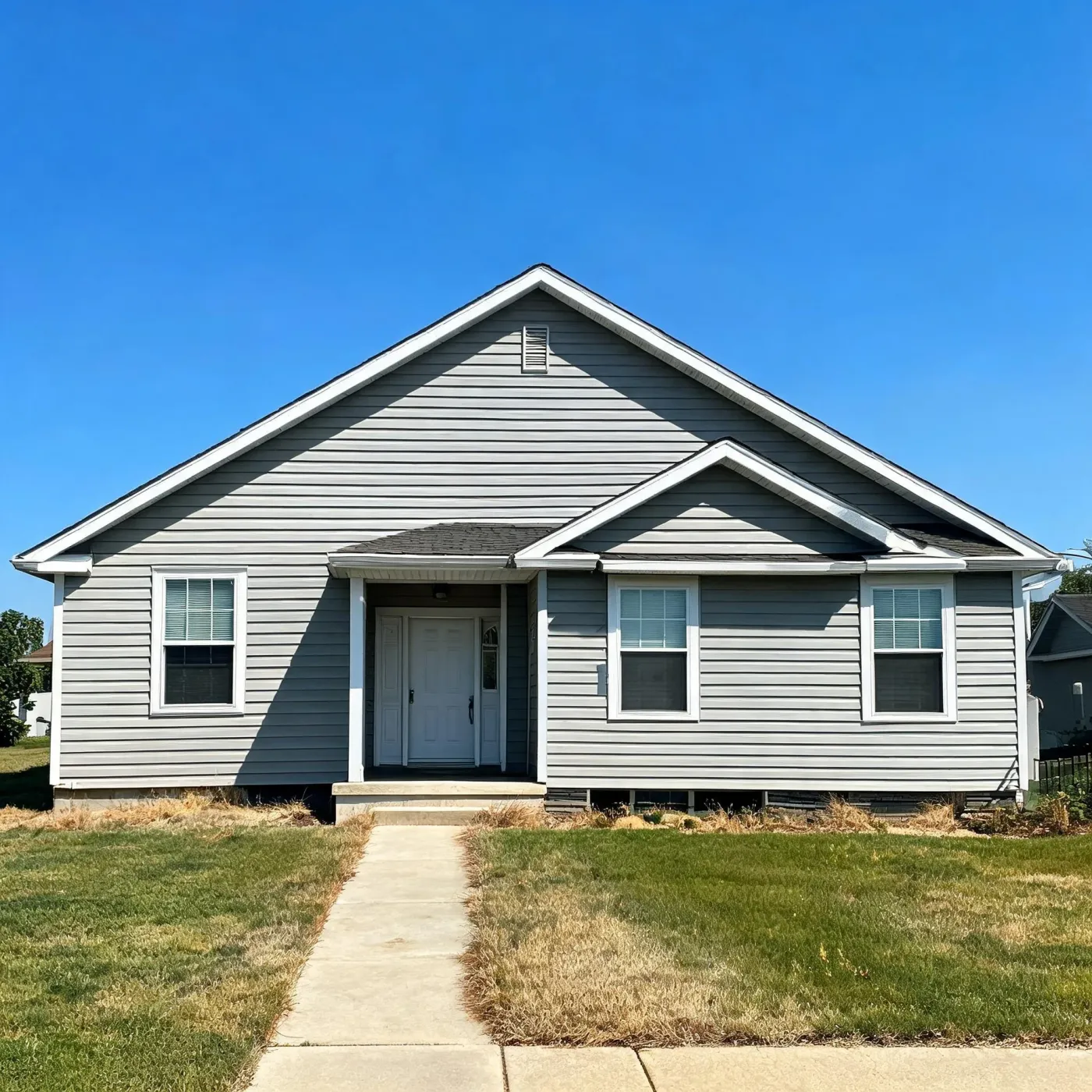
Single-story gray horizontal-siding house with white trim, gabled roof, white front door, and two windows, fronted by a concrete walkway through a patchy lawn under a clear blue sky.

Your summers don't ask much of a heat pump. The dew point across June, July and August averages 50°F here, according to NOAA climate data, which is dry enough that the air cools down fast and the system doesn't have to wring much moisture out of it to make the house feel comfortable. That matters for winter too. A heat pump that barely works in July is sitting unused for most of the year except on those cold nights in the 30s and 40s, which is exactly when it needs to be sized right and installed clean to keep up.

NASA POWER T2MDEW county cells weighted by homes

A gray outdoor condenser unit on a concrete pad beside a light-green sided house, surrounded by mulch, ornamental grasses and a shrub, with mowed lawn in the foreground.
A heat pump kept clear around the sides pulls outside air freely, which is what it needs to do on a cold January night.
A gray outdoor air conditioning condenser unit on a concrete pad beside a house with light vinyl siding, with a gray electrical disconnect box and conduit on the wall to the right.
Fins packed with dirt choke that airflow, so the unit works harder for less heat on the nights you need it most.

How your heat pump handles cold nights

  • Below about 25 to 30°F, a heat pump leans on backup heat strips or a dual-fuel furnace to hold the temperature.
  • Defrost cycles clear frost off the outdoor coil by briefly running in cooling mode, which is why you might feel cool air for a few minutes on a cold morning.
  • A thermostat set to emergency heat skips the heat pump entirely and runs the backup source alone, so it should stay off unless the heat pump has failed.
  • Two-stage or variable-speed compressors shift into a lower, steadier output on mild nights and ramp up only when the coldest air calls for it.
  • The refrigerant charge has to match the system exactly, since a few ounces off either way costs real heating capacity on the coldest nights.
  • Sizing for your coldest average night, not the mildest one, is what decides whether backup heat kicks in rarely or constantly.

A heat pump doesn't run the same way all winter. Most nights it works alone, pulling heat from outside air and stepping its compressor up or down to match what the house needs. On a mild night that might mean running at a low, steady output for hours instead of cycling on and off. When the temperature drops into the 25 to 30°F range, that gets harder, and the system calls on backup heat, either electric strips or a gas furnace paired with it in a dual-fuel setup, to make up the difference. You'll also notice the outdoor unit go quiet and blow cool air for a few minutes some cold mornings. That's the defrost cycle clearing frost off the outdoor coil, and it's normal, not a malfunction. There's a switch on the thermostat marked emergency heat that bypasses the heat pump completely and runs backup heat on its own. It exists for when the heat pump itself has failed, so if it's set to run that way all the time, something's wrong and the heat pump isn't doing its job. None of this works if the refrigerant charge is off. Too little or too much, even by a few ounces, and the system loses real heating capacity right when you need it most. The same goes for sizing: a heat pump sized for your coldest average night leans on backup heat only occasionally, while one sized smaller ends up leaning on it constantly.

An outdoor air conditioner condenser unit on a concrete pad beside a house with beige horizontal siding, with conduit running from an electrical box on the wall.
Before you get your heat pump installation
A gray outdoor heat pump unit on a concrete pad beside a house with horizontal lap siding, connected by conduit and a flexible line to a wall-mounted disconnect box, with low shrubs and mulch nearby.
After you get your heat pump installation
A gray outdoor heat pump unit on a concrete pad beside a house with horizontal lap siding, with a conduit running to a wall-mounted disconnect box and a green shrub to the left.

Clear and maintained

Set on its pad with the disconnect close by and nothing crowding it, this unit pulls outside air without resistance. The coil fins stay clean enough to work efficiently on a cold night, which is when you need every bit of that airflow.

An outdoor air conditioner condenser unit on a concrete pad beside a house with horizontal vinyl siding, with refrigerant lines and an electrical disconnect box on the wall and dry leaves on the ground.

Choked and neglected

Dirt coats the coil fins and dead leaves pile against the base. Airflow drops, so the unit pulls less heat from the cold air outside and runs longer to make up for it, right when you're counting on it most.

Power costs 31.35 cents per kilowatt-hour statewide

At 31.35 cents a kilowatt-hour, every degree a heat pump labors for on a cold night shows up on the bill faster than it would in most other states. A unit sized right for your home gets the heat you need without running longer than it has to.

EIA-861 2025 statewide residential average

A heat pump can keep up in a California winter. Nights in the 30s and 40s don't ask more of it than it's built to handle, as long as it was sized for your home and set up so it can breathe. The failures that make people doubt it, cold air at the vents, long run times, a system that can't hold the temperature, trace back to installation more than to the equipment itself. Get the sizing right, keep the coil clear, and it does what it's supposed to do on the coldest night of the year, not just the mild ones. With power priced the way it is here, that work matters even more, since a unit straining against bad ductwork or the wrong size runs longer and costs more every time it does. What you've read here is the answer: a heat pump holds up fine in this climate when it's installed by someone who knows how to size and set one up for nights that actually get cold. The part worth getting right is who does that installation.

A woman with shoulder-length graying brown hair in a cream knit cardigan sits in a dark armchair indoors, looking off to the side with a slight smile, with a shelf, window and houseplant blurred behind her.
A woman with dark hair in a bun sits wrapped in a chunky knit blanket on a couch with a child resting his head on her shoulder, eyes closed, beside a lit lamp and bookshelf indoors.

Skip the search

A heat pump sized and installed right handles a California winter without drama. Getting that result means finding someone who sizes it for your coldest nights, not just the easy months. One request here connects you with a licensed local contractor who works on this equipment all year and knows what sizing and setup actually hold up. No calling around, no repeating your situation to a handful of companies, no sorting through quotes that aren't comparable. Just one contractor who already knows what the job needs.

Get a licensed local pro

Your request stays with one local pro.

You only hire the pro if you want to.