AC Repair in California
Electricity costs homes more in California than in 48 of the other 49 states.
Tell us about the job
Takes about a minute. No obligation.
- 87°Fsummer afternoon high where people live
- 4 monthsof cooling, June through September
- 31.97¢ per kWhwhat homes paid for power in 2024 (kWh means kilowatt hours, the unit on an electric bill)
- 344hail events from 2015 to 2024
What does an AC in California face?
How hot do summer afternoons get?
87°Faverage afternoon high where people live
Alaska66°F
Arizona101°F
How many months does the cooling run?
4 monthsof cooling a year
Alaska0 months
Hawaii12 months
What does electricity cost?
31.97¢per kWh, what homes paid in 2024
North Dakota11.51¢
Hawaii42.86¢
How often do storms hit?
239severe weather events per county from 2015 to 2024
Alaska5
Wyoming1,057
How many homes lost power for a day or more?
17%of homes in 2024
Arizona7%
Maine54%
What your AC is dealing with in California
May is the quiet month, the system barely running. Then June comes and it has to hold up all day, every day, and whatever was already weak gets found out fast. A capacitor on its way out or a charge that's been low for a while usually makes it through spring without a sound, then fails in the first real heat wave. That's why so many June calls turn out to be something that had been building for a while, not something that just broke.
California summers run hotter than in most of the country, with afternoons averaging 87°F through June, July and August.
Heat like that pushes a struggling AC past the point of coasting, so a repair call here is usually about a system that finally gave out, not one that failed for no reason.
What a struggling air conditioner is trying to tell you
The signs are usually there before the system quits for good
A failing unit rarely stays quiet about it. It runs longer than it used to and still doesn't get the house to the temperature you set. Warm air comes out of the vents, or the airflow feels weak, like the blower is pushing against something. You notice it cycling on and off more than usual, or a new sound shows up. A click that repeats. A hum that wasn't there before. A rattle from the outdoor unit. Sometimes water shows up where it shouldn't, pooling near the indoor unit or dripping from a line. Sometimes the system just stops responding when you change the setting. A weak capacitor can cause hard starts and clicking. A low charge can mean warm air and ice forming on the line. A clogged drain can back up and leak onto the floor. None of these get better by running the system harder. Left alone, a failing part tends to drag another one down with it, often the compressor, which is the one part nobody wants to replace. Catching the problem while it's still one bad part is what keeps it simple.
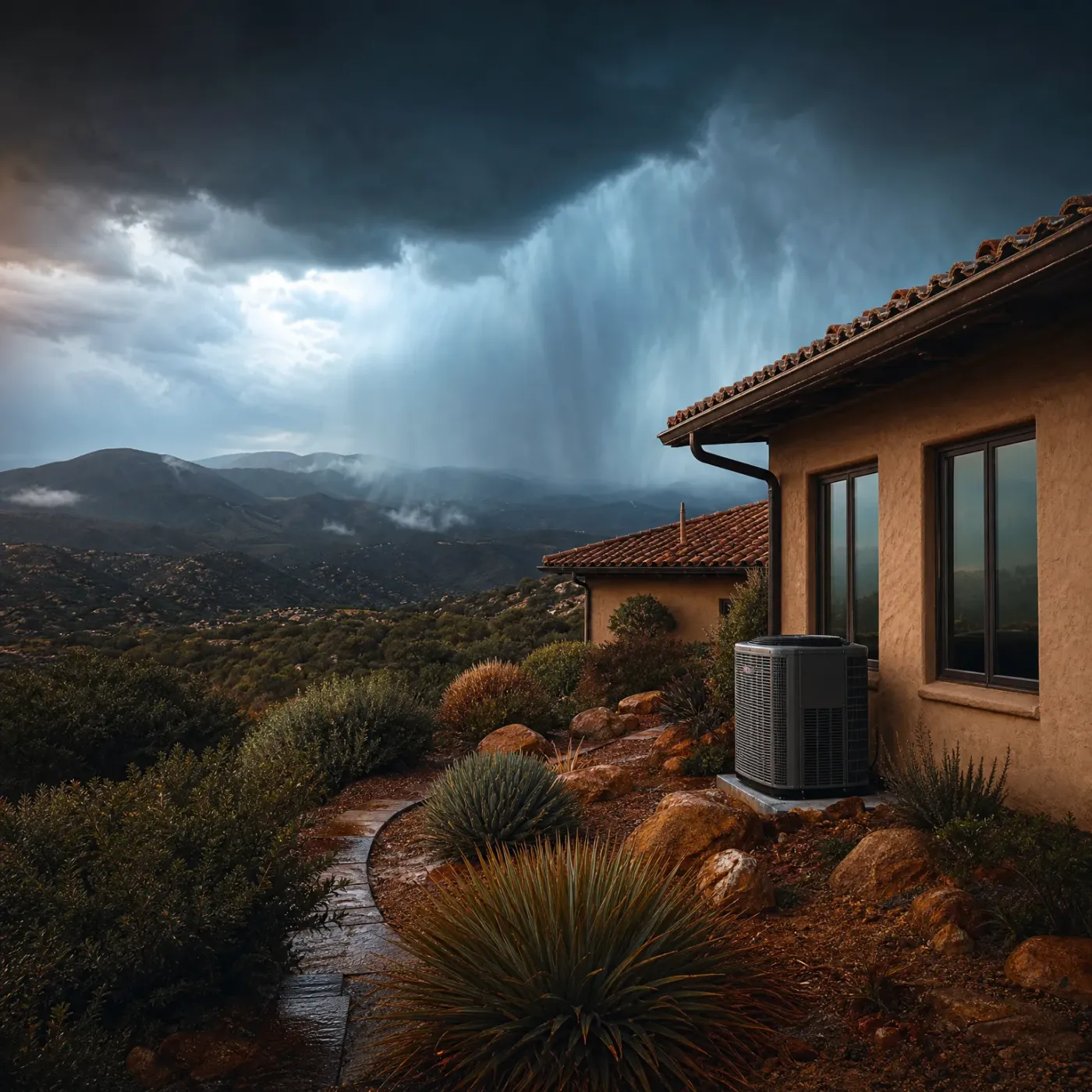
California gets hit with severe weather more than most states, and most of that is wind. Damaging wind struck more than 4,000 times between 2015 and 2024, more than in most other states. Wind is what throws branches and debris into an outdoor AC unit or rocks it on its pad.
Hail is less of a factor here than in most of the country, but it still happens, and the largest hailstone recorded in that stretch measured 3 inches across. Hail that size can bend the fins on a condenser coil or crack a fan blade, and a unit that took a hit like that is worth a look even if it still blows cold air.
Tornadoes have touched down in California, the strongest rated EF2, and lightning has caused damage too. Either one can take out the outdoor unit directly or fry the electronics that control it. A lightning strike nearby doesn't have to hit the unit itself to send a surge through the wiring.
Winter storms and tropical storms have both affected the state, and Kern County carries the heaviest storm record in California. Storms like these knock out power, and a share of California households went at least a full day without electricity in 2024, smaller than in most other states but real enough to matter. A day without power means a day without cooling, and when the power comes back, most AC systems start up again on their own.
If a storm has come through and the outdoor unit took wind, hail or debris, have it checked even if it's still running. Bent fins, a cracked blade or loose wiring don't always stop a system right away, but they tend to cause a bigger failure later.
Electricity costs more here than almost anywhere A struggling AC runs up the bill
- Southern counties need about twice as much cooling than northern ones
- Summer afternoons average 87°F where people live
- Cooling runs June through September
- 344 hail events from 2015 to 2024
- 4,171 damaging wind events from 2015 to 2024
- 17% of homes lost power a day or more in 2024
What you can check yourself first
A few things are worth checking before anyone comes out. Start at the thermostat. Make sure it's set to cool and that the target temperature is actually below room temperature, since a dead thermostat battery can leave the system doing nothing at all. Check the breaker. If it's tripped, reset it once. If it trips again right away, leave it off, that's a short, not something to keep resetting. Pull the air filter and hold it to the light. If you can't see light through it, that alone can starve the system of airflow and cause warm air at the vents. Walk outside to the condenser and clear away any leaves, grass or branches sitting against it. If the fan blade looks bent or isn't spinning, don't run the system any further, that strains the compressor. Check the refrigerant line for ice. Ice means an airflow or charge problem, and running the system more only makes it worse. Look under the indoor unit for standing water, which usually means a clogged condensate drain. None of this requires opening the unit or touching wiring. If the fix isn't as simple as a filter or a breaker, that's where to stop.
North or south changes what breaks first
California isn't one climate when it comes to cooling load. Homes across the southern counties need about twice as much cooling over a year as homes across the northern counties. That gap is why the same AC complaint can mean different things depending on where you are. In the south, a system runs hard for most of the year, so parts wear down from sheer hours of use, the capacitor, the contactor, the fan motor. In the north, a system sits idle more of the year, so it's more likely to stall on a problem that had nothing to do with wear, a pest nest in the outdoor unit, a stuck relay, a line that was never charged right to begin with. Worth telling a contractor which part of the state you're in. It points them toward what usually goes first out there.
If your outdoor unit took wind, hail or debris in a storm, have it checked even if it still runs.
Tell us about the job
Takes about a minute. No obligation.
Fill out the form and a licensed California contractor will contact you about the repair.