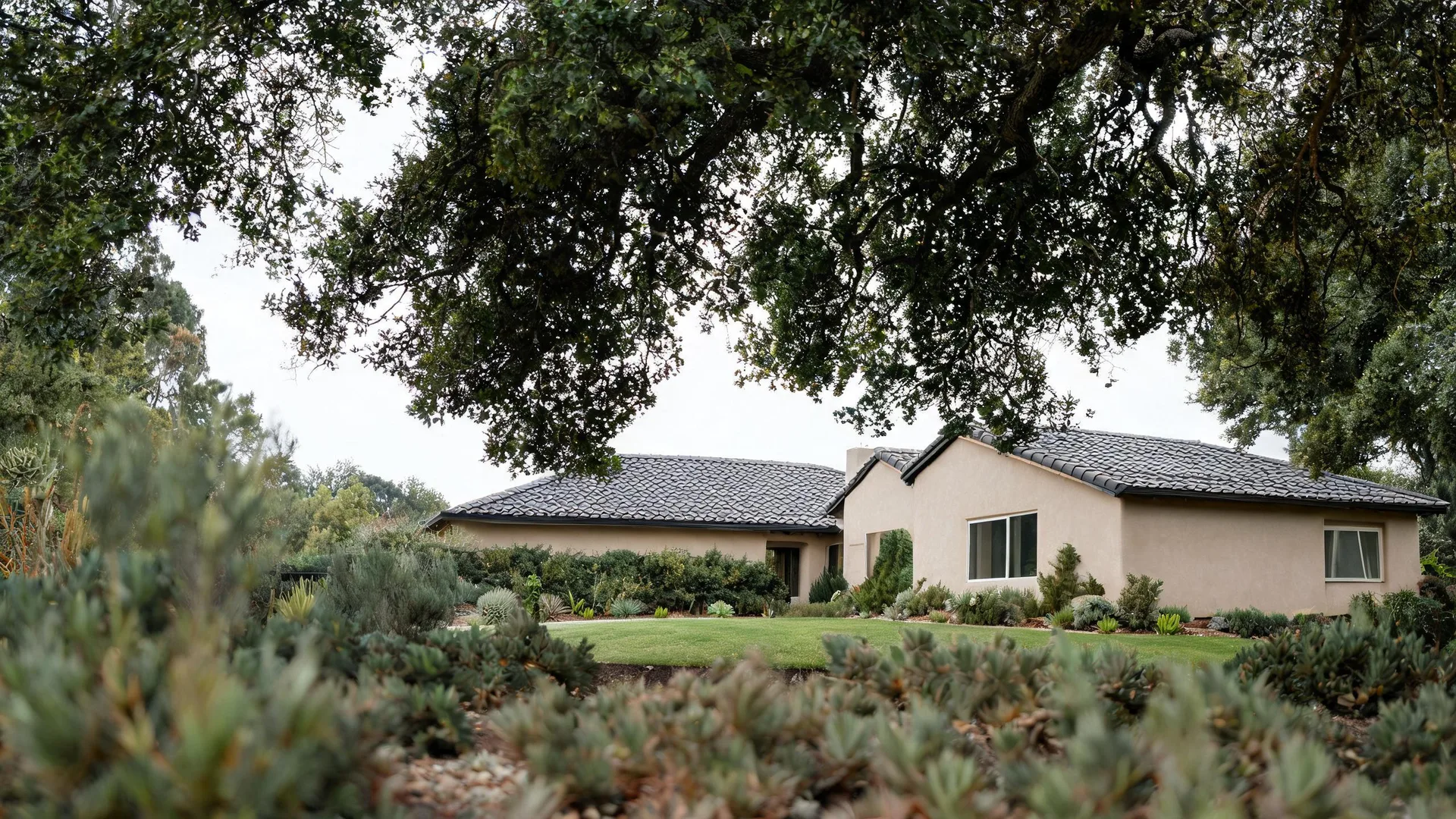
A single-story stucco house with a gray tile roof behind a lawn, framed by large oak branches overhead and succulent and shrub plantings in the foreground.

AC Repair in San Diego, CA

Tell us about the job

Takes about a minute. No obligation.

RepairCentral ACSan Diego County, CA
Step 1 of 2

What ZIP code is the job in?

The tech checks the whole system, not just the symptom

A tech will check refrigerant charge, electrical connections, the capacitor, and airflow across the coil before touching anything. Warm air from the vents can trace back to a failing capacitor, a dirty coil, or a refrigerant leak, and those each call for a different fix. Pinning down the actual cause first means the repair holds.


What gets found decides what happens next

A weak capacitor or a clogged filter gets handled on the spot. A refrigerant leak means locating where it's escaping before anyone adds more. If the compressor itself is failing, the tech should walk through whether repair still makes sense or whether the unit is better replaced.

4 months
June through September, your air conditioner is on duty
89°F
the average summer afternoon it cools against
11 hail events
in ten years, and hail bends the fins on outdoor coils
370 wind events
in ten years, and wind drives debris into outdoor units
Isometric line illustration of a cutaway single-story house showing interior rooms, ducted air handler, ceiling ductwork, and an outdoor condenser unit connected by refrigerant lines.
Your air conditioner works hardest from July through September.

NOAA nClimDiv, 1991–2020 normals

A compressor straining against a bad capacitor pulls hard every time it starts.

Keep running it that way and the compressor windings take the damage, not just the capacitor.

Half the homes in San Diego County were built in 1980 or later, so the AC inside yours may still have plenty of life left

Half the homes here were built by 1980
Cooling runs June through September
Summer afternoons average 89°F
A struggling AC costs more to run hereCalifornia homes paid 31.97 cents per kilowatthour for electricity in 2024, more than most states

Warm air from the vents is the one most people notice first, but pay attention to what else is happening around it. Short cycling, where the unit shuts off a few minutes after starting, usually points to a sensor or electrical problem rather than anything wrong with the cooling itself. A hissing or bubbling sound near the lines can mean refrigerant escaping, which is worth calling in before the system has to work harder to keep up. Ice on the coil or the lines means airflow is restricted somewhere, often at the filter, and running it that way can damage the compressor. A unit that cycles on and off rapidly, or one that runs constantly without the house cooling down, both mean something is wrong even if the air coming out still feels cold at first. None of these fix themselves, and waiting usually just moves the repair from small to large.

Get it checked after a storm

Storms hit hard here. If the outdoor unit took hail or debris, have it checked even if it still runs.

Find a contractor
A man seen from behind in a dark jacket, tan work pants and boots climbs wooden porch steps toward an orange front door, carrying a waxed canvas tool bag, with a potted shrub beside the entry.
A gray residential air conditioning condenser unit mounted on a concrete pad outdoors, surrounded by green grass under a partly cloudy blue sky.

A newer system is worth fixing

If your AC came with the house, check the paperwork for the install date before you decide anything. A unit installed within the last several years has a lot of running life ahead of it, and most problems at that age are a single failed part, not a system in decline. That's worth knowing before a tech even gets there, since it points toward repair.

Most failures start with the capacitor or the fan motor

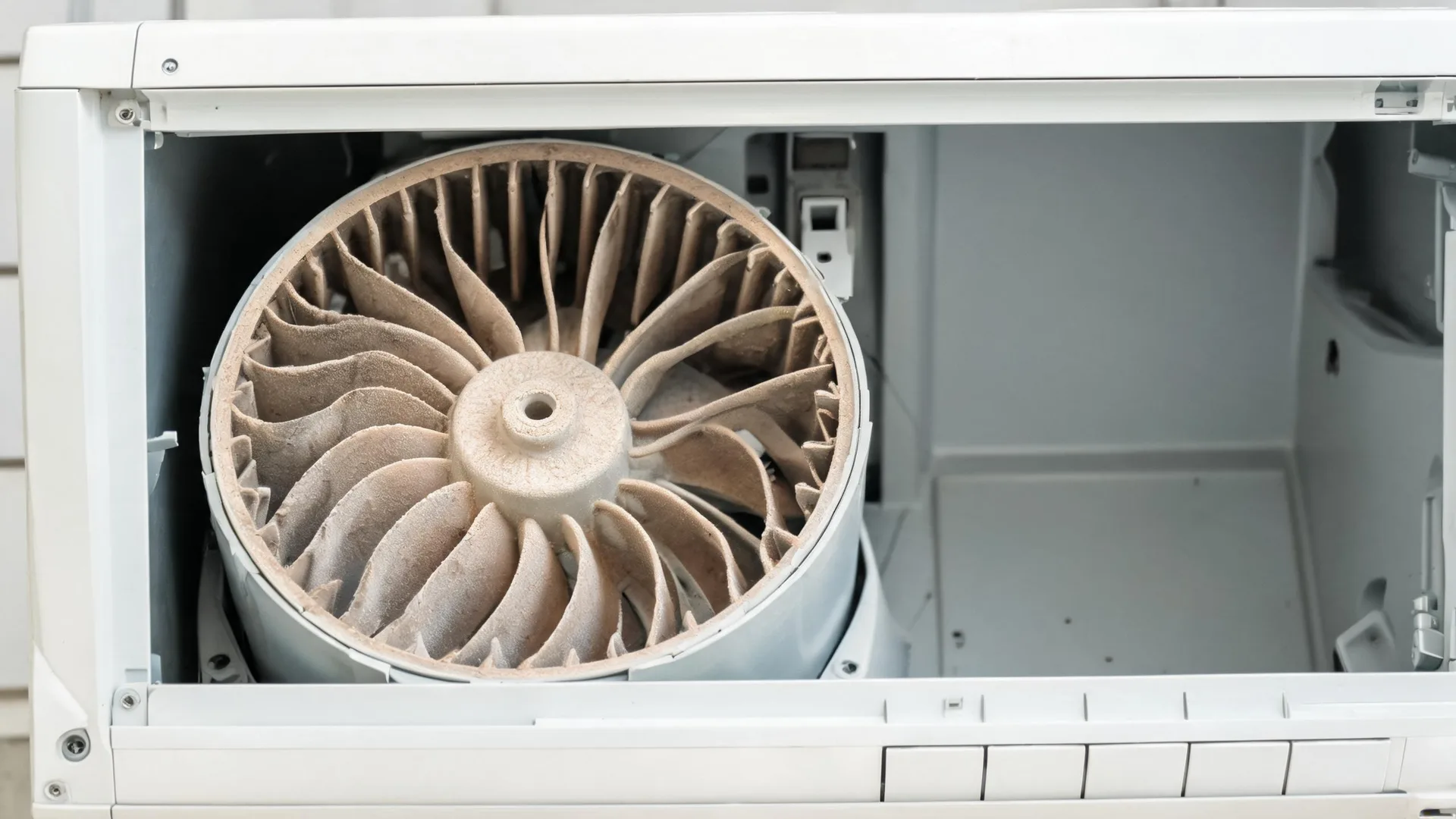
The capacitor gives the compressor and fan motor the push they need to start and keep running. Once it weakens, the compressor strains on every cycle until it fails too. Fan motor bearings wear the same way, slowly, until the motor seizes or just stops turning.

The rest comes down to dirt and refrigerant

A coil caked in dirt can't shed heat the way it should, so the system runs longer and harder to do the same job. Refrigerant lines don't lose charge on their own. If the level is low, it's leaking somewhere, and the leak has to be found before adding more does any good.

Aerial view of a square outdoor air conditioning condenser unit on a concrete pad beside a house wall with a sliding glass door.

A new air conditioner would cut about $70 a year off cooling for a typical San Diego County home.

  • A new one at the federal minimum, 14.3 SEER2$510 a year
  • An older air conditioner$580 a year

Estimates for a typical San Diego County home, compared with an older unit built to the previous federal minimum, from EIA household energy data, California fuel prices and NOAA climate normals. Your home will differ.

Repair makes sense when a part like a capacitor or contactor has failed.

Replacement makes sense when the compressor has failed or the system uses R-22 refrigerant, which is no longer made.

A compressor failure is the one that changes the math. It's the most expensive part in the system, and replacing it alone can cost close to what a new unit runs, so most techs will talk through replacement at that point rather than repair. Everything short of that, a capacitor, a fan motor, a blocked drain line, a cracked contactor, gets fixed on its own without touching the rest of the system. Age matters alongside the failure. The same broken part means something different in a unit a few years in than one that's been running for over a decade, because the question isn't just what broke but what's likely to break next. A tech who's seen the unit can tell you which situation this is.