
AC not cooling in Concord, CA

Send the request and finding a pro stops being your problem.

Send it today

When your AC runs but the air coming out isn't cold, the most common cause is a refrigerant leak or a compressor that's failing. A dirty condenser coil outside, caked with dust from a dry summer, can also stop the system from shedding heat the way it needs to. If the unit doesn't run at all, check the breaker first, but if that's fine, the problem is likely the capacitor or the thermostat itself. Summers around Concord run warm and dry, so the system works hard for months at a time, and that steady demand is what wears out these parts. None of these are things to diagnose by guesswork. A failing capacitor can look identical to a refrigerant problem from where you're standing, and opening the unit without the right gauges risks making a simple fix expensive. A licensed technician can tell within minutes which of these it is and what it takes to get the cold air back.

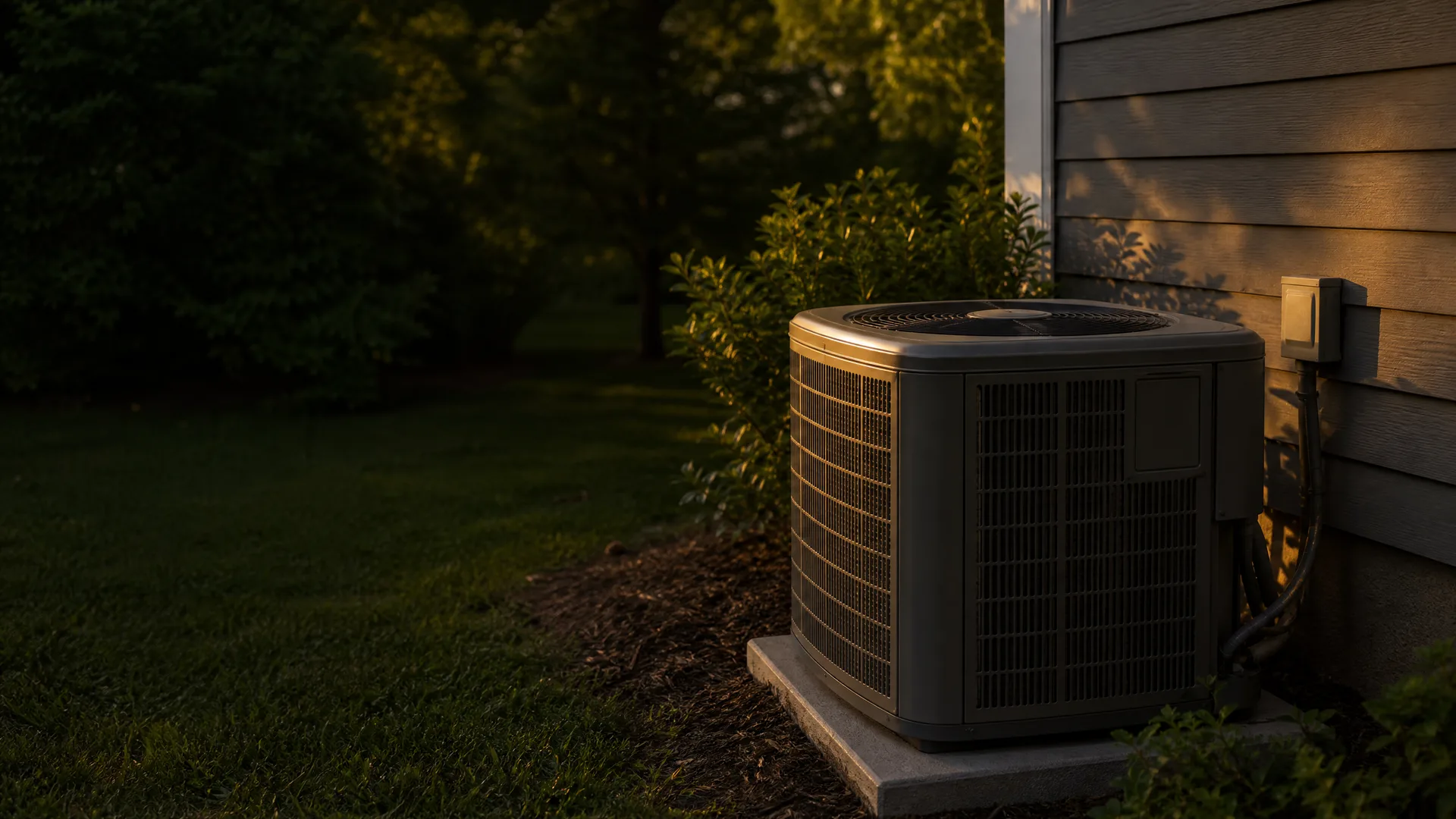
An outdoor air conditioner condenser unit on a concrete pad beside a house with horizontal lap siding, next to a mulch bed, shrubs and a lawn at dusk.

You're out back around seven, watering what's left of the grass before it gets dark. The air is still warm, the kind of dry warm Concord gets in August, and you notice the quiet. The condenser isn't humming. You walk over and the fan inside the unit is still, not even turning slow. Inside, you already know what you'll find: the vents pushing air that isn't cold. You crouch down and check the side panel, like that'll tell you something. It won't. The sun's dropping behind the fence line and the house is going to sit warm all night unless something changes.

Call Now or Wait It Out

Call Today

  • A compressor that's failing usually gets worse within days, not weeks, especially if it's been running hard through an August heat stretch.
  • A refrigerant leak left alone can let moisture into the system, which leads to corrosion a technician can't just patch over later.
  • A licensed contractor who works on AC systems around Concord every summer can usually tell within a visit whether it's the coil, the compressor, or the charge.
  • Waiting through more hot days with a system that isn't cooling means running the fan and the compressor without getting anything for it.
  • If the condenser fan has stopped, the compressor can overheat the longer it keeps trying to run against it.

Wait It Out

  • If the air is still blowing, just not cold, the house won't get dangerously hot the way it would with no airflow at all.
  • A dirty condenser coil might clear up some on its own after a storm rinses off the dust, though it won't fix a refrigerant leak.
  • Some failures, like a tripped breaker from a dirty filter restricting airflow, resolve with a simple reset once the filter's changed.
  • Power here is among the most expensive in the country, and a system limping along inefficiently adds to that bill every day it runs.
  • A small refrigerant leak now can turn into a failed compressor later, and that's a larger repair than catching it early.
A gray outdoor air conditioning condenser unit on a concrete pad beside a house with horizontal lap siding, with a wall-mounted disconnect box and conduit, and shrubs to the left.

Running the way it should

This is a condenser doing its job. It sits clean on the pad, fan clear, nothing blocking the sides. Air moves through it the way it's built to, and the coil can shed the heat it's pulling out of your house. A unit kept like this is the one that gets you through August without a call.


An outdoor air conditioning condenser unit on a concrete pad beside a house with horizontal siding and a concrete foundation, with dry brown leaves on the ground to either side.

Struggling to keep up

Leaves have piled up against the cabinet and the coil fins look caked with dirt and dust. A unit sitting like this, dirty and surrounded by debris, can't dump heat the way it needs to, and that shows up as warm air inside. The conduit and refrigerant lines running along the wall are worth a look too, since a leak there often starts small.

Is your AC running but not actually cooling the house?

You've probably noticed the thermostat says 74 but the house feels closer to 80. The vents are blowing, but the air isn't cold, maybe just barely cool. Upstairs rooms might feel worse than the rest of the house. The unit outside could be running longer than it used to, cycling on and off more through the afternoon without ever catching up. Some homeowners notice a faint hissing near the indoor unit or outside lines, which can point to a refrigerant leak. If the system keeps running this way, the compressor is working harder than it should, and that kind of strain tends to shorten how long it lasts.

A two-story gray clapboard house with white-trimmed windows and a white front door, framed by large green trees, with a wet concrete walkway and sidewalk crossing a lawn in the foreground.

Summer air in Concord doesn't sit heavy. NOAA puts the average dew point across June, July and August at 50°F, which is dry by most standards. That matters because a dry condenser coil sheds heat fast when it's clean and clear. It's when that coil is caked with dust, or the refrigerant charge has dropped, that the dry air stops helping and the system just can't keep up, no matter how low you set the thermostat. If your AC is already blowing warm, that's not the weather working against you. Something in the system needs a look, and once you send the request, finding the right person for it is off your plate.

NASA POWER T2MDEW

Hand off the search today

A licensed pro who works in Contra Costa County gets your request.

Asking costs nothing, and the choice to hire stays yours.

Why the coil still clogs here

Dry air doesn't mean clean air. Concord's dust and pollen settle on the condenser fins just like anywhere else, and without regular rain to rinse them off, that layer builds up over a full summer of runtime. A coil caked in dust can't shed heat the way it needs to, even though the air around it is dry. The fan still turns, the compressor still runs, but the unit is working against itself. A technician can usually tell within minutes whether a dirty coil is the problem or something further along the line.

What a refrigerant leak does over time

A system low on refrigerant doesn't just cool less, it runs longer trying to reach the temperature you set, and that extra strain is what pushes a weak compressor toward failure. Left alone, a slow leak gets worse, not better, since the refrigerant doesn't replenish itself. Moisture can get pulled into the system through the same opening, and that leads to corrosion inside parts that are expensive to replace. Catching it early, before the compressor starts struggling, is usually the difference between a repair and a full replacement.

A smiling bearded man in a dark blue henley shirt sits leaning back on a light grey sofa in a living room, with a bowl of popcorn on a wooden coffee table and a large window behind him.
A bearded man in a dark quarter-zip sweater sits smiling on a brown sofa in a dimly lit living room, with a bowl of popcorn and a mug on a table in the foreground and a potted plant near a window behind him.
A smiling man with graying dark hair and a beard, wearing an olive sweater, sits on a sofa in a living room beside a bowl of popcorn on a wooden table.
A smiling man in a dark green henley shirt sits on a gray sofa in a living room with a lit table lamp, wooden shelving unit, and a bowl of popcorn in the foreground.

Still under warranty

If your system is newer and the compressor is the problem, a licensed technician can tell you whether the repair is covered before any work starts.

Get one local pro

Out of warranty

An older compressor or a slow refrigerant leak usually means a paid repair, and a tech who works on these year-round can tell you what's worth fixing.

Get one local pro

Why does my AC fan run but no cold air comes out?

Why does my AC fan run but no cold air comes out?

The compressor outside isn't running, even though the fan is

A central AC has two fans and one compressor. The indoor fan pushes air through your vents, and it'll run on its own schedule no matter what else is happening. The outdoor fan and the compressor are supposed to run together, cooling and compressing refrigerant so there's something cold to blow across. When you hear the indoor fan but the air isn't cold, the compressor has usually stopped working while the fan keeps going. A failed capacitor is the most common reason, since it's the part that gives the compressor its starting jolt. Low refrigerant from a leak can also trip a safety switch that shuts the compressor off to protect it, leaving the fan running alone.

An outdoor air conditioner condenser unit on a concrete pad beside a house with beige horizontal siding and a stone-veneer base, with refrigerant lines running to a gray wall-mounted electrical box, surrounded by dark mulch, a flowering shrub and an evergreen on the left.

Clean coil, clear sides

This condenser sits clean on its pad, fan unobstructed, nothing crowding the sides. The coil can shed the heat it's pulling from your house, and the fan moves air through it the way it was built to. That's what lets the system turn warm air into cold.

An outdoor air conditioning condenser unit on a concrete pad beside a house with light vinyl siding, an electrical disconnect box and conduit on the wall, bare shrubs and mulch to the right, and a concrete walkway in the foreground.

Starved for airflow

Bare shrubs crowd this unit close to the wall, and dust has had a full summer to settle into the fins. A coil blocked like this can't shed heat fast enough, so the compressor runs longer and harder for less cooling, and a weak one gives out sooner.

Cooling runs June through September

Four months is most of the stretch your compressor gets tested here. June through September is when a weak refrigerant charge or a tired compressor finally shows itself, usually on the hottest afternoons when the system runs longest. Miss the repair window and you're stuck through the rest of summer with it.

NOAA nClimDiv 1991-2020

An outdoor air conditioning condenser unit on a concrete pad beside a house with white horizontal lap siding, with an electrical disconnect box and insulated refrigerant line on the wall and a shrub over mulch to the right.
A clean condenser like this one lets the coil shed heat fast, so the compressor inside isn't straining through a hot Concord afternoon.
An outdoor air conditioner condenser unit on a concrete pad beside a house with light horizontal lap siding, with an electrical disconnect box and conduit on the wall behind it.
Weathering and a coil that's gone years without a cleaning make the compressor work harder, and that's often when it quits for good.

What's Behind Warm Air

  • Warm air from the vents almost always traces back to a refrigerant leak or a compressor that's quitting.
  • A caked condenser coil keeps the system from shedding heat even when every part inside is working fine.
  • June through September is when a weak charge or a tired compressor finally shows itself here.
  • A compressor that's failing tends to get worse within days once it's been running hard in the heat.
  • A leak left alone lets moisture into the system, and that leads to corrosion a technician then has to deal with too.
  • Whether the fix is covered or out of pocket usually comes down to whether the system is still under warranty.

Warm air from the vents has a short list of real causes, and by now you've got a clearer sense of which one fits. If the fan runs but the compressor outside doesn't, that's usually a refrigerant leak or a compressor on its way out, and neither gets better with time. If the compressor is running and the fan is clear but the air is still off, check the condenser coil. A season of dust settling on those fins without rain to rinse them off is enough to keep the unit from shedding heat, even when the compressor and every other part are sound. Concord's dry air doesn't wash that off the way rain would elsewhere, so the coil carries it until someone cleans it.

Timing matters too. June through September is when your system runs longest and hardest, and that's exactly when a weak charge or a tired compressor stops keeping up. Once a compressor starts failing under that kind of load, it tends to worsen fast, sometimes within days. A slow leak is quieter but not harmless. Left alone, it lets moisture into the system, and that moisture corrodes parts that were otherwise fine.

None of this tells you what the repair costs, but it does tell you what decides it. A system still under warranty may have the compressor covered. One that's aged out usually means paying for the part and the labor. Either way, a technician can tell you which case you're in before any work starts.

A woman with wavy brown hair sits on a beige couch with her eyes closed and a slight smile, a knit blanket over her lap and a closed dark-covered book resting on it, with a lit lamp and plant in the dim background.
A smiling man with dark wavy hair and a short beard, wearing a navy crewneck sweater, sits at a candlelit dinner table with a bowl of food, wine glass and a lamp and framed art behind him.

Air Conditioner Repair

Send one request and you're done looking

The pro who gets in touch is licensed in California and works in Contra Costa County.

A black-framed smartphone standing upright against a plain off-white background, its screen filled with solid green.
RepairCentral ACContra Costa County, CA
Step 1 of 2

What ZIP code is the job in?