Profile view of a bearded man wearing a dark baseball cap and a dark gray T-shirt against a plain off-white background.

Heat pump not heating in Concord, CA

RepairHeat PumpContra Costa County, CA
Step 1 of 2

What ZIP code is the job in?

Why is my heat pump running but not heating my house?

Your heat pump turns on, the fan runs, maybe you can even feel air coming out of the vents, but the house just isn't warming up. In a Concord winter that's mild compared to a lot of the country, but it still gets cold enough at night that you notice right away when the system isn't keeping up, especially with other people at home who feel it before you do.

Most likely the system is stuck in defrost or backup mode, or it's low on refrigerant

A heat pump moves heat from the outside air into your house, and that process depends on the outdoor coil staying clear and the refrigerant charge being correct. When the coil frosts over in cold, damp weather, the unit switches to defrost mode and can blow cool air for several minutes at a time, which feels like it's not heating at all. A low refrigerant charge does something similar: the system runs, but it can't move enough heat to keep up with the house. Since Contra Costa County winters are mild, most heat pumps here aren't built with strong backup heat strips, so when the heat pump side falters, there's little behind it to pick up the slack.

A woman with long dark hair in an olive green shirt over a white top sits indoors, looking off to the side and smiling slightly, with a blurred kitchen, dining table with a plant in a vase, striped cushions, and a glass door in the background.
A woman in a cream knit sweater stands in a home interior looking to the side, with a bookshelf, armchair, framed pictures and a potted fern in the background.
A woman with long brown hair in a cream knit sweater sits on a gray couch indoors, looking off to the side toward a window.
A woman with long wavy auburn hair in a dark sweater stands indoors looking off to the side, with a stone fireplace, shelves and a bright window behind her.
A closed silver laptop and a white mug of dark coffee sit on a wooden table in a sunlit room, with a blurred kitchen counter, shelf and window with plants in the background.

A heat pump that won't warm the house still runs up the bill

While the system runs without heating, the house cools off room by room and the heat pump keeps drawing power trying to catch up. Contra Costa County pays some of the highest electric rates in the country, so a unit stuck in a bad cycle costs you more for less comfort. If someone home is older or very young, a house that won't hold heat matters more than the thermostat number alone.

Most Concord homes lean on gas for heat, which means fewer people know the local signs of a heat pump in trouble, and fewer companies keep technicians sharp on these systems year-round. That leaves you doing the legwork yourself: searching for someone who actually works on heat pumps, calling around for availability, explaining the same problem three or four times, then weighing quotes that aren't really comparable. A local contractor who services this equipment regularly has likely already seen whatever is keeping your air from heating, in a house not unlike yours.

A dark ceramic mug on a round wooden table beside a light grey sofa with a woven cushion and knit throw, with a window, potted plant, floor lamp and wooden cabinet blurred in the background.
A light gray outdoor heat pump unit mounted on a concrete pad beside a house with horizontal lap siding, with refrigerant lines and conduit running to a wall-mounted electrical box, gravel and a leafy shrub nearby.

Running the way it should

The unit sits clean on its pad, lines and wiring running straight to the disconnect box on the wall. Air moves through it freely. Nothing blocks the coil, so the system can pull in outside air and turn it into heat for the house.

An outdoor air conditioner condenser unit on a concrete pad beside a house with horizontal lap siding, with refrigerant lines entering the wall and a shrub on bare soil to the left.

Coil caked with debris

When the coil gets this clogged, the unit can't absorb enough outside air to heat the refrigerant inside it. The fan still spins and the compressor still runs, but the heat exchange that makes warm air happen has nowhere to work.

Is this your heat pump right now

Walk up to the outdoor unit and feel it. If it's cold to the touch, or you can see frost or ice built up on the coil, that's your answer. The fan might still be spinning. The compressor might still be making noise. None of that means it's making heat. Inside, you'll notice the air from the vents feels cool or barely warm, not the steady warm air you expect. Some rooms may feel colder than others, especially ones farther from the unit. Left alone through a cold snap, a heat pump that's iced over or stuck in the wrong mode can leave the house struggling to hold even 60 degrees overnight.

A gray outdoor condenser unit on a concrete pad beside a house with horizontal lap siding, with an electrical disconnect box and insulated refrigerant lines on the wall, gravel in the foreground and a planting bed at left.

Clean and clear

Lines and conduit run straight from the unit to the disconnect box, and the coil sits open to the air. Nothing blocks it from pulling in outside air, so it can turn that air into heat and send it into the house without having to work around anything.

An outdoor air conditioner condenser unit on a concrete pad beside a house with horizontal lap siding, with refrigerant lines and a gray electrical disconnect box on the wall, surrounded by bare dirt.

Caked in grime

The coil guard and fan grille are packed with dirt, thick enough to see from a few feet away. Air can't move through a coil like that the way it needs to, and a heat pump that can't pull in air can't pull in heat, no matter how long it runs.

A woman and a child wrapped in a knitted blanket sit together on a couch in a dimly lit room with a glowing table lamp behind them.
An older woman with short gray hair in a cream knit sweater stands smiling and looking to the side behind a wooden counter holding a round loaf of bread, in a warmly lit kitchen with shelves and a window showing snowy trees at dusk.

No calling every shop in Contra Costa County

A heat pump that won't heat isn't something to leave alone through a Concord winter, even a mild one, because the unit keeps pulling power the whole time it's stuck like this. Finding someone to look at it is usually its own chore. You'd be searching contractor sites, calling two or three, explaining the same thing about the fan running and the house staying cold to each one, then waiting on quotes to compare. This goes to one licensed contractor working in Concord and the rest of Contra Costa County, someone who sees this exact equipment all season and knows what usually goes wrong when a heat pump runs without putting out heat. One call covers it instead of several. While that gets sorted, the house keeps losing ground room by room, and the meter keeps turning. The button above starts that off.

How a heat pump makes heat

  • A heat pump makes heat by moving it from outside air into the house, it doesn't burn fuel to create it.
  • The reversing valve tells the system whether to act like an air conditioner or a heater, and a stuck valve leaves it cooling when it should be heating.
  • Outdoor coils pick up frost in cold, damp weather, and the unit runs a defrost cycle on a timer to melt it off before it builds up.
  • If the defrost cycle doesn't kick in or doesn't finish, ice keeps collecting on the coil and blocks it from pulling in outside air.
  • A low refrigerant charge lets the compressor keep running without moving enough heat, so the air at the vents stays cool.
  • Many heat pumps have a backup heat strip that should kick in when the outdoor unit can't keep up, and a bad relay or breaker can keep it from firing.

A heat pump doesn't burn anything to warm your house. It moves heat from the outside air, even cold air, into the refrigerant inside the outdoor unit, then carries that heat indoors. A valve called the reversing valve decides which direction the system runs. Switch it one way and you get air conditioning. Switch it the other way and you get heat. When that valve sticks, the system can keep running in cooling mode through the middle of winter, and nothing about the sound or the fan will tell you that's what happened.

Cold, damp days leave frost on the outdoor coil, and that's normal. The unit is built to handle it with a defrost cycle that runs on a timer, warming the coil just enough to melt the frost before it builds into ice. If that cycle doesn't start on schedule or stops before it finishes, the frost turns to ice, and ice on the coil blocks the unit from pulling in the outside air it needs to make heat at all.

Refrigerant plays into this too. If the charge is low, the compressor keeps running, but it can't move enough heat to warm the air passing through. You'll feel that as air coming out the vents that's cool, not warm.

Most systems also carry a backup heat strip for when outdoor temperatures drop further than the heat pump alone can handle. If the relay or breaker feeding that strip fails, the backup never fires, and the system is left relying on a heat pump that's already struggling.


How cold does it get here when your heat pump needs to work

  • Winter nights average 41°F

    Winter nights here average 41°F, not deep freeze territory, but a heat pump stuck in the wrong mode still leaves the house that much colder inside.

  • Heat runs November through April

    Six months of heat, November through April, means a stuck reversing valve or iced-up coil isn't a one-day problem. It's half the year.

  • Cooling runs June through September

    Four months of cooling means this same unit has to switch modes twice a year, and that switch is often where the trouble starts.

NOAA nClimDiv 1991-2020

A heat pump that's running but not warming the house usually comes down to one of a few things: a stuck reversing valve, a frozen coil, a thermostat set wrong, or a refrigerant charge that's too low to move enough heat. None of those sort themselves out, and none of them are safe to guess at over the phone. What you need is someone who can get out to the unit, check the coil, the valve, and the charge, and tell you which one it actually is. A contractor who works heat pumps in Concord and the rest of Contra Costa County every winter has seen this exact complaint before and knows where to look first. You'll be matched with one licensed contractor local to the area, not a handful of companies competing for the job, so there's no juggling calls or repeating the same description of your system to five different people. You explain it once, to the person who's coming to fix it.

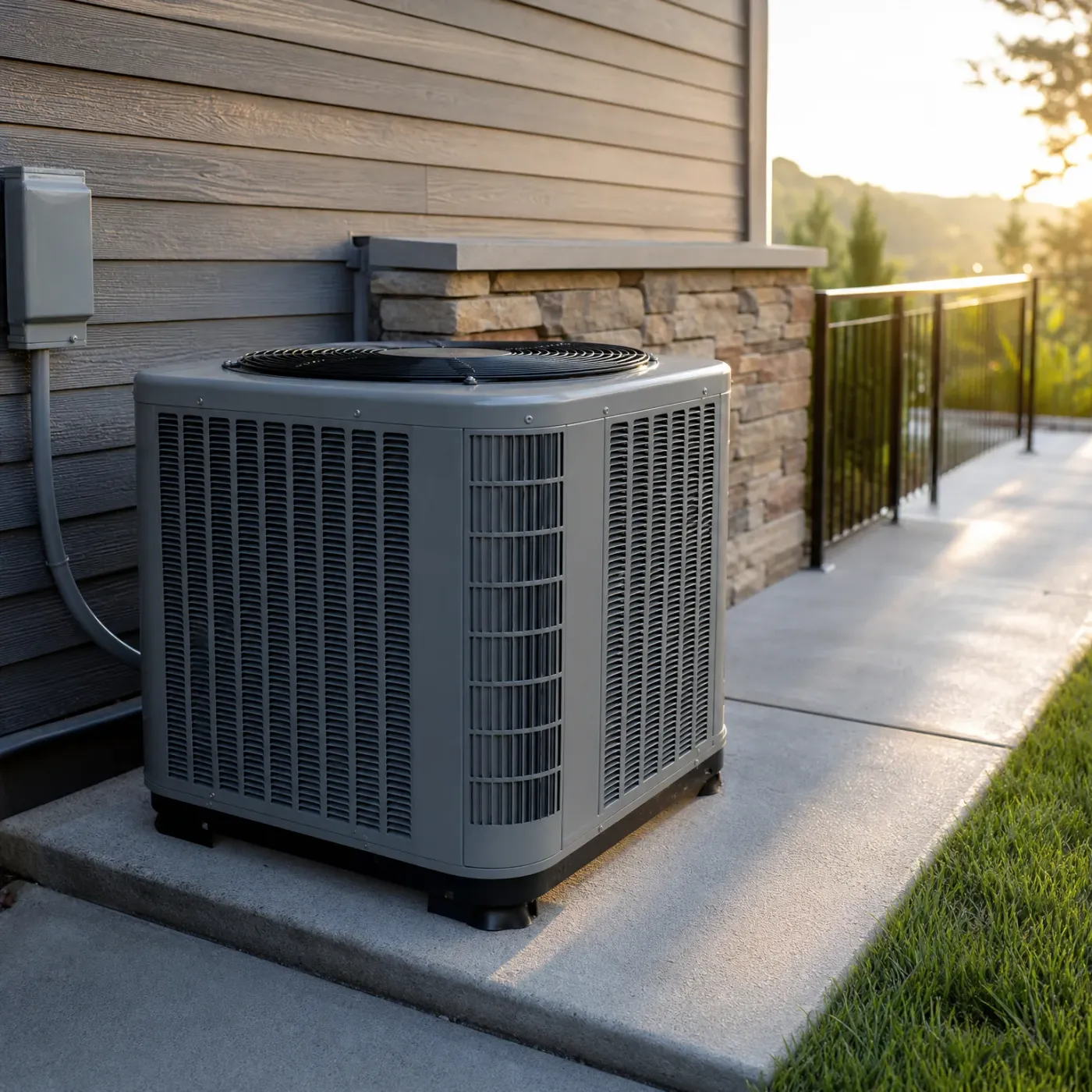
A gray outdoor air conditioner or heat pump condenser unit on a concrete pad beside a house with horizontal lap siding and a stone-faced wall, with a metal railing, lawn, and hills lit by low sun in the background.

Explain it one time

Skip the search

A licensed pro who works in Contra Costa County gets your request.

No charge to send it. You decide if you hire them.