

AC blowing warm air in Concord, CA

Explain the air conditioner problem once instead of to every shop in Contra Costa County.

Start one form

Warm air from your vents usually means the compressor outside has stopped running while the indoor fan keeps blowing, so air moves through the ducts without getting cooled. A tripped breaker, a failed capacitor, or a refrigerant leak can all cause this, and a dirty air filter or frozen coil will produce the same symptom once the ice melts and the system can't keep up. Sometimes it's simpler: the thermostat is set to fan instead of cool, or set to a schedule that's running the blower on its own. Concord gets warm, dry stretches through the summer, and a system that's low on refrigerant or straining with a weak capacitor often holds on through spring before it gives out on the first real hot day. Either way, warm air from a running system is not something that fixes itself, and running it for days like this can push a struggling compressor toward a harder failure.

A gray outdoor air conditioning condenser unit on a concrete pad beside a house with horizontal siding and a stone veneer base, with refrigerant line and electrical disconnect box on the wall and flowering shrubs to the left.

Compressor running right

The condenser cycles on, the fan spins, and cold air reaches every room. Refrigerant lines stay cool to the touch where they enter the wall. A unit kept clear of leaves and mulch buildup around the fins can move heat the way it's supposed to, even on a hot Concord afternoon.


An outdoor air conditioner condenser unit on a concrete pad beside a house with light gray horizontal siding, with mulch and green shrubs on either side and a concrete walkway in the foreground.

Compressor not starting

The outdoor unit sits silent while the indoor fan still pushes air, so the vents blow warm. Years of dirt packed into the fins, or a capacitor worn past its limit, can keep the compressor from starting at all. Until it does, the house won't cool down no matter how long the system runs.

A smiling woman with long brown hair in a cream sweater sits at a stone counter with a glass of red wine, with a dimly lit living room, beamed ceiling and glass doors behind her.
A woman with shoulder-length dark wavy hair in a beige sweater laughs while looking off to the side, seated at a white marble counter with a glass of red wine, in a dimly lit home interior with a kitchen and sofa in the background.
A smiling woman with long dark hair in a black sweater sits at a white marble counter with a glass of red wine, in a dimly lit kitchen and living area with pendant lights, a potted plant, and flowers.
A smiling woman with long brown hair in a light knit sweater sits at a stone-topped counter with a glass of white wine, with a dimly lit living room, sofa, fireplace and round mirror behind her.

Why the fan still runs

The indoor blower and the outdoor compressor are two separate motors. Most thermostats call for the fan whenever the system is on, even if the compressor outside has shut itself down on a safety switch. That's why you still feel air movement at the vents, sometimes even warm from the attic or ducts, while no cooling is happening. The fan alone can't drop the temperature of the air passing through it. Unless the compressor is cycling on outside, running the fan just circulates whatever temperature air is already in your ducts.

What a refrigerant leak does

Refrigerant doesn't get used up the way fuel does. A system low on refrigerant has a leak somewhere in the lines or coil, and the charge only drops further over time. With less refrigerant, the coil can't pull heat out of the air the way it's built to, and in some cases ice forms on the coil itself, which cuts cooling further. A leak found early is a smaller repair than one left to drain the system over a full Concord summer.

A smiling bearded man in a dark green sweater sits at a dinner table with a glass of red wine, a bowl of salad and a lit candle in the foreground, in a dimly lit room with a framed picture, lamp and potted plants behind him.
A woman in a cream knit sweater reclines on a sofa with her eyes closed and a slight smile, a closed dark book resting on a blanket in the foreground and a lit lamp and small potted plant behind her.

Still blowing warm after a reset

If the breaker holds and the thermostat is set right but the air stays warm, the compressor itself has likely failed and needs a contractor to diagnose it.

Get a licensed local pro

Running the fan on warm air

Every hour the blower pushes unconditioned air through your ducts is an hour of power used for nothing, and PG&E rates here make that add up fast.

Get a licensed local pro

Call Now or Check First

Call a contractor now

  • A compressor that won't start can be a stuck relay or a failed capacitor, and a contractor can often tell which from the sound it makes trying to start.
  • You avoid running the blower for days on warm air while you wait, which costs you on a power bill that's already high in Contra Costa County.
  • A licensed tech carries gauges to check refrigerant charge, something you can't check yourself even if the problem turns out to be simple.
  • If the compressor has a burnt winding or a seized motor, it needs replacing, and that's a diagnosis worth getting right the first time.
  • Someone who works on these systems all summer in Concord has likely seen the same failure on the same brand of unit before.

Wait and watch

  • If the breaker tripped once and holds after a reset, the system may just start cooling again on its own.
  • A thermostat set to 'on' instead of 'auto' will run the fan continuously even when the compressor is fine, and switching it fixes the warm air right away.
  • Waiting costs you comfort fast once outdoor temperatures climb, since the compressor is what actually cools the air, not the fan.
  • A refrigerant leak won't fix itself, and running the system low on charge for days can damage the compressor further.
  • If the outdoor unit is silent and the breaker won't stay reset, there's nothing left to try without a contractor's tools.
A gray outdoor air conditioner condenser unit on a concrete pad beside a house with horizontal vinyl siding, surrounded by mulch, flowering shrubs, and lawn.

Clear coil, open fins

The fins are clean and the cage is clear of mulch and leaves, so air passes through the coil freely. Heat the compressor pulls from your house gets dumped outside the way it's supposed to, and the system keeps up on a hot Concord afternoon.

A weathered outdoor air conditioning condenser unit on a concrete pad beside a house with light horizontal siding, an electrical disconnect box and conduit on the wall, and mulched soil on either side.

Caked coil, blocked airflow

Dirt and grime coat the fins and the cage behind them, so outside air can't move through the coil. The compressor keeps running but can't shed heat, and it can trip on its own safety switch and stop, which is what leaves warm air coming from your vents.

An outdoor air conditioning condenser unit on a concrete pad beside a house with horizontal lap siding, with a conduit and electrical disconnect box on the wall at right.
Before you get your air conditioner repair
A gray outdoor air conditioner condenser unit on a concrete pad beside a house with horizontal lap siding, with a wall-mounted disconnect box and conduit to its right and shrubs to the left.
After you get your air conditioner repair

Skip the calls to every shop

The pro who gets in touch is licensed in California and works in Contra Costa County.

There's no charge for the request.

Waiting it out, Leave it a few more days and the warm air doesn't fix itself. You're calling around to find someone who works on your system, explaining the same thing to each one, then lining up quotes side by side.

Getting it matched, One call goes to a licensed contractor near Concord who works on systems like yours all summer and knows what a dead compressor sounds like versus a stuck relay. No lineup of competing bids to sort through, just the one visit to get the answer.

Cooling runs June through September

Four months a year, your air conditioner is the only thing standing between you and a warm house, and June through September is when a failed compressor actually costs you something. The rest of the year you could put off a repair. Not now.

NOAA nClimDiv 1991-2020

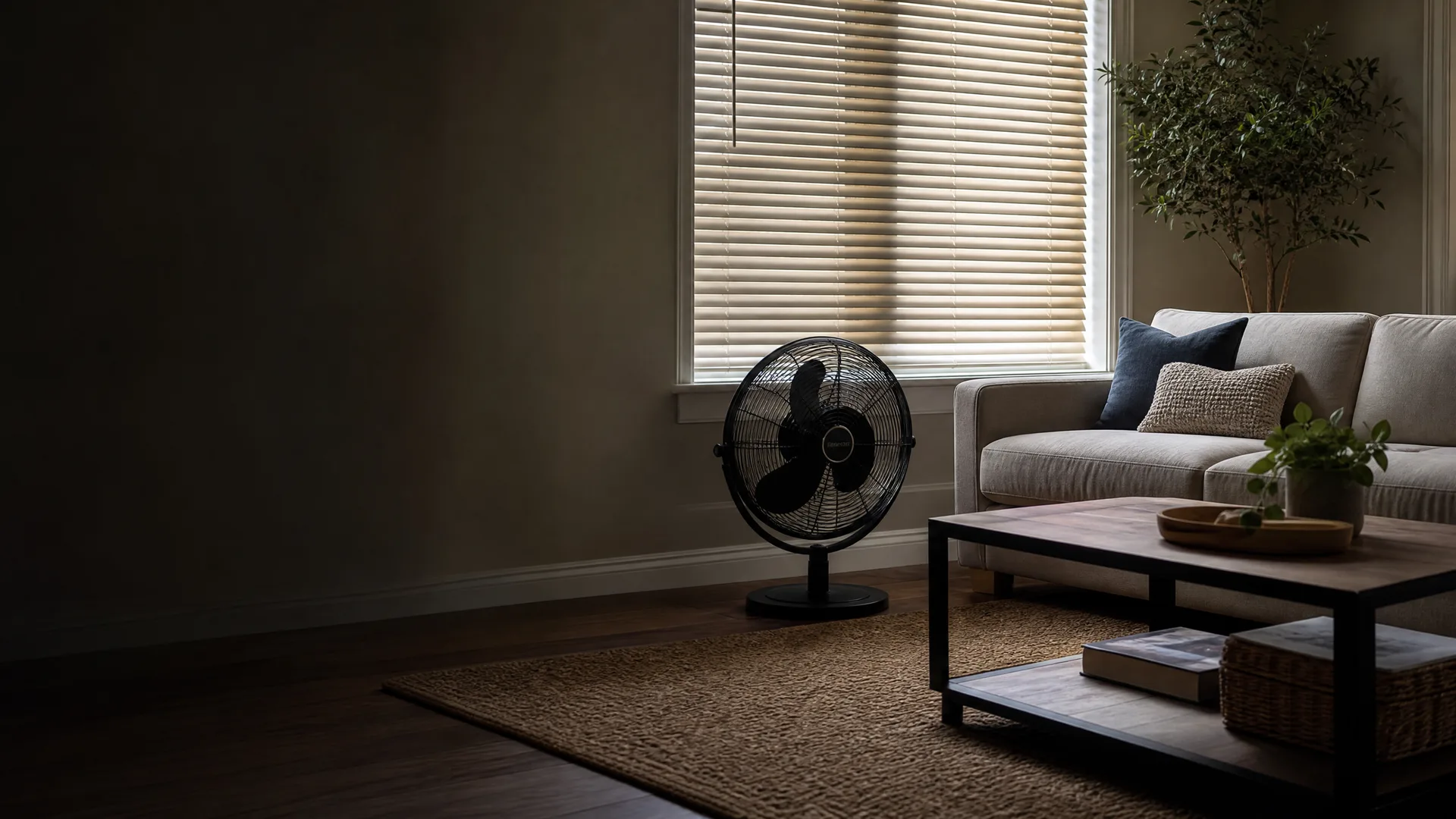
A dimly lit living room with a black table fan on the wood floor near a window with closed blinds, beside a light-colored sofa with cushions, a wooden coffee table, a woven rug, and a potted tree.

By three in the afternoon the blinds are down against the glare and the floor fan is going beside the couch, pushing the same warm room air back and forth. The vent above the hallway is still blowing, you can hear it, but it's not doing anything. You've turned the thermostat down twice already and nothing changes. Outside the sun is flat and white over Concord and the house is holding the heat the way it does these afternoons, July being what it is here. You sit where the fan reaches and wait it out, and somewhere in the wall the compressor that should be cooling this air isn't running at all.

A gray outdoor air conditioning condenser unit on a concrete pad beside a house with horizontal siding and a stone veneer base, with a wall-mounted disconnect box and conduit, next to a shrub bed and a concrete patio.
A disconnect box feeds power to a unit that's cycling on and off the way it should, keeping the house cool.
An outdoor air conditioner condenser unit on a concrete pad beside a house with light gray vinyl siding, with a gray electrical disconnect box and conduit on the wall, gravel beds and dried plants nearby, and a concrete sidewalk in the foreground.
Weeds and gravel crowd an older unit left to run on its own, with nobody checking it until it stops.
A two-story house with light beige siding and a gray shingled roof, fronted by a mowed lawn, shrubs, a large leafy tree at right, and a wet concrete walkway leading to the front door in low golden sunlight.

Contra Costa County air carries a summer dew point around 50°F, which is dry as these things go. A compressor working right can shed heat fast in air that dry, so when yours is actually running, the house cools quickly and the air from the vents feels cold within minutes. That's exactly why warm air out of the vents stands out here. There's no muggy stretch to mask a struggling system or make you wonder if it's just the weather. If the compressor has stopped, the air coming through stays at room temperature, not cool and not even close, and you notice fast. Figure from NOAA climate data for the county.

NASA POWER T2MDEW

Why does my house feel warmer every hour?

You've probably already put a hand up to the vent and felt room-temperature air instead of cold. Maybe you've gone out to the side yard and noticed the outdoor unit sitting quiet, not even trying to start. The thermostat might still say it's calling for cooling, and the fan inside keeps running, but the house doesn't move toward the number you set. By afternoon the rooms that get the most sun start holding heat, and anyone home during the day is the one who feels it first. Left alone, this isn't just discomfort. A house that can't cool down gets harder to bring back down once the sun's been on it for hours, and anyone sensitive to heat in the house is the one who pays for the delay.

  1. Thermostat calls for cooling and signals the outdoor unit to start.

  2. A capacitor kicks the compressor and fan motor into motion.

  3. Refrigerant compresses and carries heat out through the condenser coil.

  4. Cold refrigerant moves inside to the evaporator coil in the air handler.

A closed silver laptop and a light ceramic mug of dark coffee on a wooden table, with a wooden chair, kitchen counter with sink, pendant lamp, potted plant, and a window showing a sunset sky in the background.

Warm air from the vents means the compressor isn't running

A tripped breaker, a bad capacitor, a refrigerant leak, a failed compressor: whichever it turns out to be, the fix starts with someone standing at that outdoor unit listening to what it does when it tries to start. You've checked the thermostat and the breaker. If the unit still won't cycle on, that part isn't something to solve from the couch.

Finding that someone is usually its own chore: searching, calling a few companies, describing the same warm vents and quiet outdoor unit to each one, then waiting on quotes to compare. A contractor local to Concord who works on these systems every summer has heard this exact complaint before and knows where to start looking. One call, one visit, one answer on what's actually wrong.

Interior corner with sheer white curtains at a window, a brown upholstered sofa in the foreground, and a wooden multi-drawer cabinet holding a round ceramic vase with leafy branches.
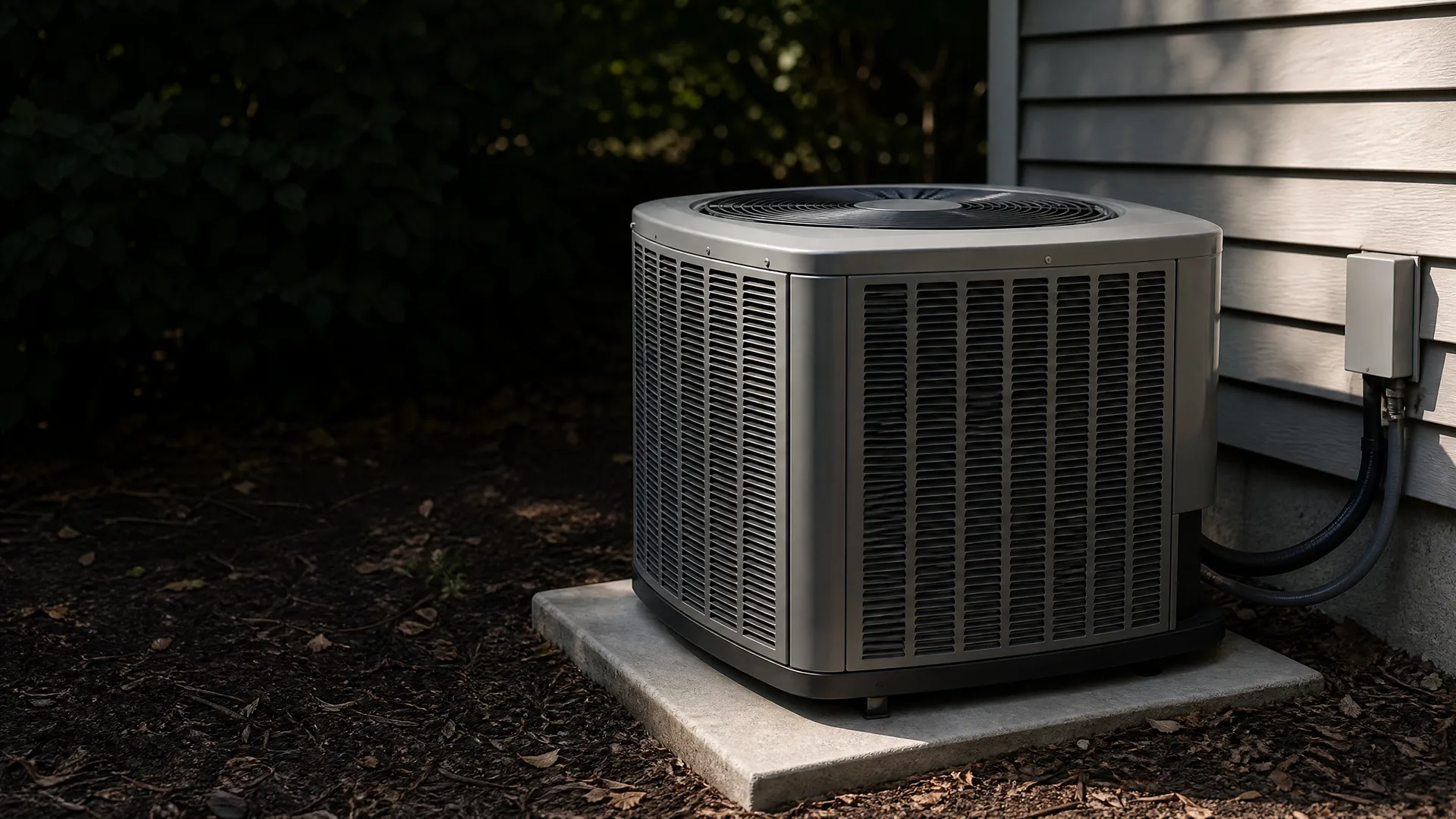
An outdoor air conditioner condenser unit on a concrete pad beside a house with horizontal lap siding, with an electrical disconnect box and conduit on the wall and dark mulch and shrubs around it.

Skip calling around

RepairCentral ACContra Costa County, CA
Step 1 of 2

What ZIP code is the job in?