

Running the way it should
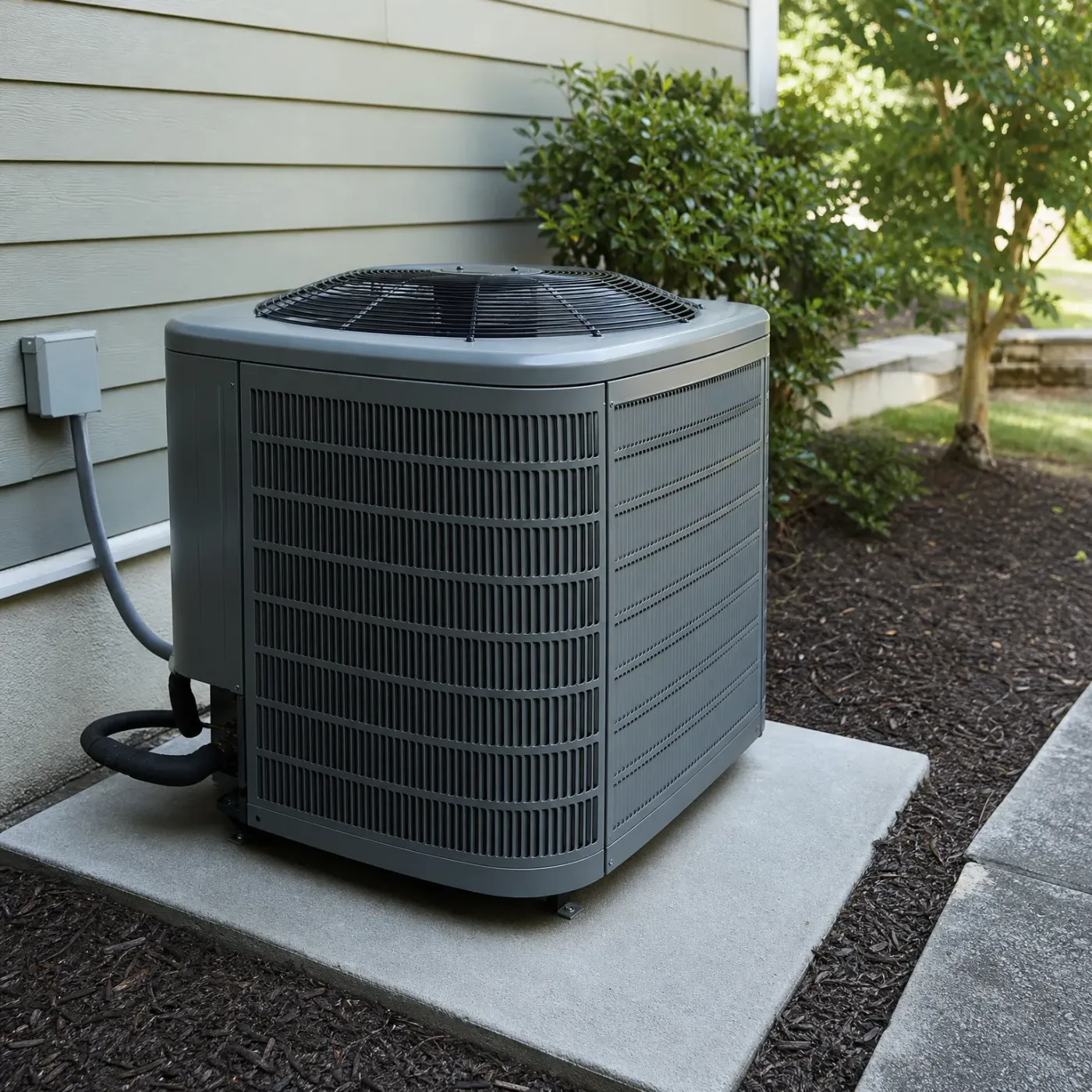
A condenser like this draws steady power once it's past that first second of startup. The fan turns, the coil stays clear, and the breaker holds because the compressor isn't working any harder than it has to.
Tell a local repair pro what your air conditioner is doing.
You keep going down to the panel to flip the same breaker, and it holds for a while and then trips again. Everyone at home still needs the house cool, so you want to know if this is something simple or if the system is on its way out. A breaker that trips once might be nothing. One that keeps doing it is telling you something specific about the unit.
A breaker trips to protect the wiring when the air conditioner draws more current than it should. The most common reason is a capacitor that's worn out and no longer helping the compressor start smoothly, so the motor pulls a hard surge of power every time it kicks on. A failing compressor, a dirty condenser coil making the system work harder, or a loose electrical connection can cause the same thing. It is not something to keep resetting and ignoring. Running the unit on a breaker that keeps tripping can damage the compressor further, and with electricity priced the way it is in California, a system straining to start is also costing more every time it tries.
The compressor draws a hard surge of current when it starts.
A failing capacitor makes the motor pull even more current than normal.
Dirty coils or a weak fan make the compressor work harder to cool.
That extra draw pushes past what the breaker is rated to carry.
You notice the AC runs fine for a stretch, then quits, and the house starts warming up again before anyone's had a chance to say anything about it. Sometimes the outdoor unit hums or clicks right before it cuts out. Sometimes you catch a burning smell near the panel, or the breaker feels warm to the touch when you go to reset it. If it's tripping more often as the day gets hotter, that points to the compressor straining harder in the heat. Left alone, a breaker that keeps tripping is wearing down the wiring behind it, and a compressor that keeps pulling too much current can fail for good instead of just needing a repair.

A condenser like this draws steady power once it's past that first second of startup. The fan turns, the coil stays clear, and the breaker holds because the compressor isn't working any harder than it has to.

Dust packed into the wire mesh blocks airflow across the coil, so the compressor runs longer and pulls more current to do the same job. That extra draw is what sends the breaker past its limit.




A breaker that keeps tripping isn't going to fix itself, and with power costing what it does in California, a compressor pulling more current than it should is also running up the bill every time it does manage to stay on. You could spend an afternoon calling around, explaining the same thing to three or four companies, and comparing quotes that are hard to tell apart without a technician actually looking at the unit. Handing this off means one contractor gets the details once, checks the capacitor and the amp draw, and tells you what's actually going on instead of you guessing from the panel. Your house still needs to hold its temperature through the rest of a California summer, and a breaker that trips today will trip again tomorrow unless something about the load on that circuit changes.
A breaker isn't there to protect the AC. It's there to protect the wire running to it, and it trips at a set amperage no matter what's causing the draw. Most residential units run on a two-pole breaker, so one trip kills power to both legs the compressor needs, not just one side of the circuit. That's why the whole unit goes dead at once instead of running weak.
When a breaker trips almost the moment the AC starts, before the compressor has had any real time to labor, that points more toward a short somewhere in the wiring or the compressor windings than a motor working too hard. A fault that shows up under load after some minutes points the other way, toward a part pulling more current as it heats up.
Heat changes the math too. The breaker itself trips faster at a given amperage when it's hot out, which is why a system can hold on a mild morning and trip by mid-afternoon on the same bad part. And a breaker that's been tripped over and over can wear out and start tripping below the load it's rated for, so the fact that it's tripping isn't proof the draw is still as high as it was the first time. If it resets and holds, then trips again days later, the fault behind it is probably still there.


Most home AC breakers protect both legs the compressor runs on, so one trip cuts power to the whole unit, not just part of it.
A breaker that trips more than once in the same day is responding to a real current draw, not a fluke in the panel.
At 31.35 cents per kilowatt-hour, a compressor that's pulling too much current isn't just tripping the breaker, it's costing you more every minute it runs before it does. Getting the amp draw back to normal is worth doing for the bill alone.
EIA-861 2025 statewide residential average


A breaker that keeps tripping is telling you the compressor is pulling more current than the wire was ever meant to carry. That doesn't go away on its own, and running it anyway just means another trip, another trip down to the panel, and a house that keeps warming back up. The fix is a contractor checking the capacitor and the amp draw to find out which part is making the compressor work that hard. What you don't have to do is spend your afternoon on it: no searching through contractors, no calling around to see who answers, no explaining the same tripping breaker three separate times to three separate companies, no sitting with quotes trying to guess which one actually knows what they're looking at. You've got people at home who need the house cool. That part of it, finding someone who can actually look at it, is the part that's handled once you take the next step.
Explain the job once and skip repeating it on every call.
There's no charge for the request.