When it's working right
The condenser sits on its pad outside, lines and conduit running up to the disconnect box on the wall. It cycles on when the thermostat calls for it, runs, and shuts off again without you thinking about it.

You go to the thermostat expecting the house to cool down and nothing happens. The air stays still, the unit outside is silent, and the house starts warming up fast once it gets going. With the kind of heat that builds through a California afternoon, you want to know whether this is something simple before anyone gets uncomfortable.
A thermostat with dead batteries or a setting bumped off cool will stop the whole system before it ever starts. A breaker can trip from a jammed outdoor fan or a wire worn loose, and once it trips, the system won't try again on its own. Many air conditioners also have a float switch near the indoor coil that shuts the unit off when the drain line clogs and water backs up, which is common enough on its own and worth checking before anything else. Power here costs more than in most states, so a unit that keeps cycling off instead of running steady is also worth a second look, not just one that won't start at all.

The condenser sits on its pad outside, lines and conduit running up to the disconnect box on the wall. It cycles on when the thermostat calls for it, runs, and shuts off again without you thinking about it.

The unit outside sits silent. The grille is caked with dirt and weathered from sitting outdoors season after season, and that buildup can keep it from starting at all. The disconnect box on the wall is worth a look too, since a switch left off there will stop the unit cold.




The disconnect box on the wall outside can trip or corrode and cut power to the condenser. A contractor checks it before opening anything else up.
If the display is blank, the thermostat may just need new batteries. If it's still blank after that, the wiring or the unit itself needs a look.

With no AC calling for power, the house still runs the rest of its electric load, and here that's already a steep bill. The difference is you're not getting cooling for it. Meanwhile the house heats up through the afternoon and holds that heat into the evening, since California nights don't always bring the air down fast enough to catch up on their own.
You don't need to figure out whether it's the disconnect box, the thermostat, or something at the condenser itself. That's the part you can hand off. Once you request a repair, a contractor who works on these systems gets matched to your situation and reaches out to you directly, so you're not the one calling around trying to find someone free this week.

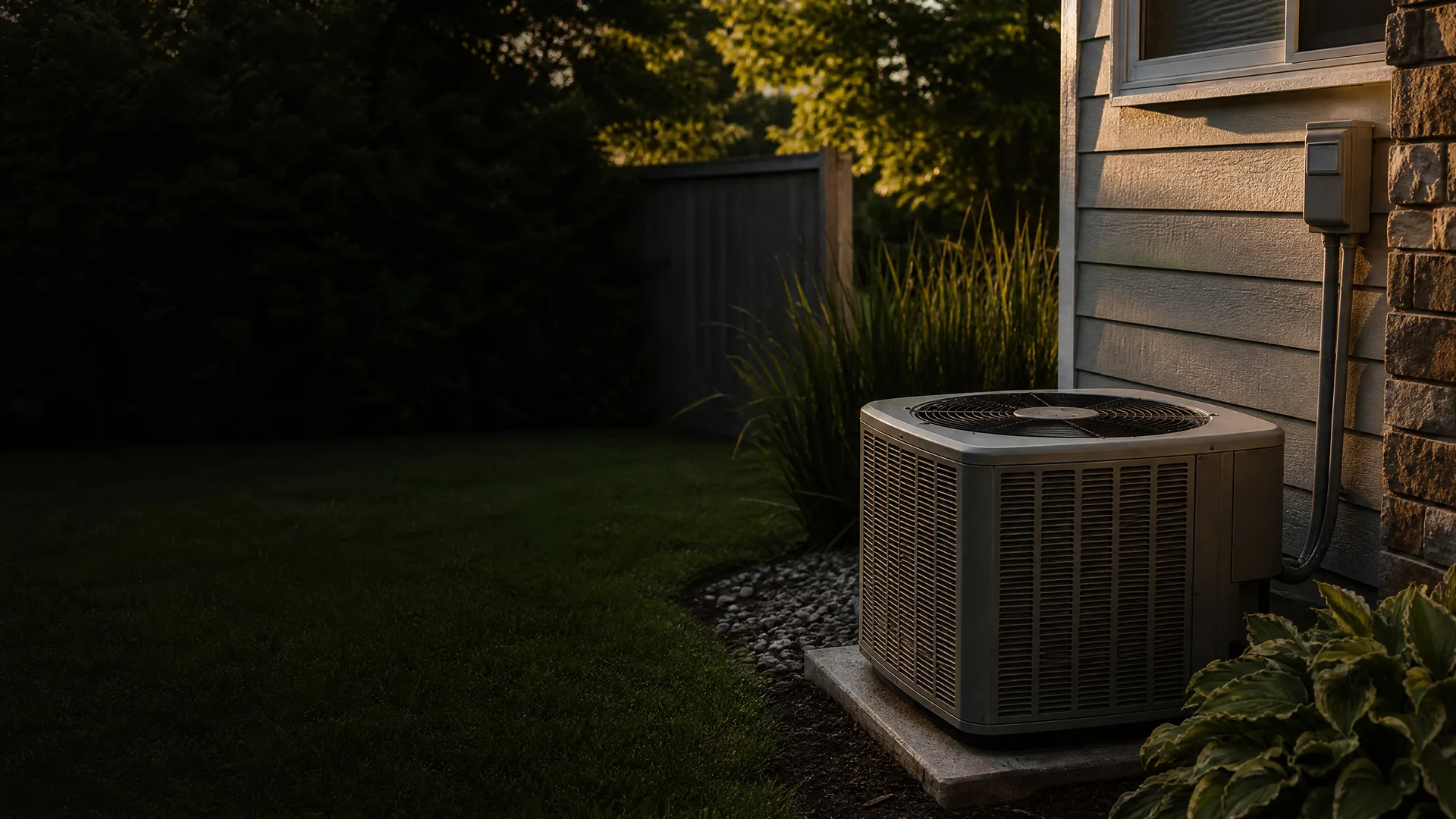
The sun's almost down but the yard still holds the heat of the day. You walk out back in bare feet to check on the condenser yourself, the way you do when the house has gone warm and quiet. The unit sits there against the fence, lines running up to the disconnect box, and the fan isn't moving. No hum, no click, nothing. You crouch down and listen for a minute anyway, hoping it starts on its own. Inside, the kids are still up, and the house is holding tonight's heat with nowhere for it to go. You straighten up, go back in, and reach for your phone instead of a tool.
A dead AC in a California summer is not an emergency the way a furnace dying in a snowstorm is. The heat here is dry, not heavy, and the house won't turn dangerous by evening. But it will cost you, because power here is already among the priciest in the country, and a house running everything else while the AC sits dark isn't saving you anything. It's just hot and expensive at the same time. Most homes around you heat with gas, so the AC is the one system doing real work against summer, and when it stops, there's nothing else picking up the slack. You've checked the thermostat, maybe the breaker. If it's still not turning on, the next step isn't more guessing in the heat. It's getting someone out who can look at the disconnect box, the capacitor, the wiring, and tell you what actually failed.
A disconnect box or a bad capacitor is a short visit and a quick fix. A contractor finds it fast because it's where most outages start.
A failed compressor or a refrigerant leak is a longer job, and the condenser may need real work before it runs again. Either way, you find out which one you're dealing with by having someone look.


If the condenser hums but doesn't start, or you smell something burning near the unit, that's worth getting looked at soon. A compressor trying to start against a bad capacitor can damage itself further the longer it runs that way. Tripping breakers more than once is another sign something's drawing more current than it should. None of this turns dangerous overnight the way a furnace failure can in a cold snap, but waiting can turn a short visit into a longer, costlier one. A contractor can tell you over the phone whether what you're describing is worth same-day attention.
If the thermostat display is dark or blank, check the batteries first. If the outside unit is just silent with no humming or clicking, the disconnect box or a tripped breaker is a reasonable place to start, and those are quick checks. A house that's sitting at 80 degrees instead of 72 is uncomfortable, but it isn't dangerous here the way it would be somewhere more humid. You can get someone scheduled for the next available slot instead of pushing for an emergency visit, and the diagnosis will likely be the same either way.
At that rate, every hour your AC doesn't run is an hour you're not paying to cool a house that still needs it. When it's down, the fix matters more here than somewhere with cheap power, because the running cost on the other side is real.
EIA-861 2025 statewide residential average
You can check the breaker, reset the disconnect box, and swap the thermostat batteries yourself. Those take a few minutes and no tools you don't already own. If one of those was the problem, the condenser should kick on within a minute or so of the thermostat calling for cool. If it doesn't, you're now guessing at a capacitor, a contactor, or a compressor without the meter or the parts to test any of them, and opening the unit further can turn a small problem into a bigger one.
A contractor shows up with a meter to check the capacitor and the voltage at the condenser, and the refrigerant gauges to find a leak if there is one. That's the difference between replacing a part that's actually bad and replacing parts in order hoping one of them fixes it. It also means the system gets checked for what caused the failure, not just the part that failed, so a weak capacitor that's about to take the compressor with it gets caught now instead of in August.





California air doesn't carry much moisture even at the peak of summer. The dew point averages 50°F across June, July and August, according to NOAA climate data, which is low enough that the air feels dry even on a hot afternoon. That matters for your air conditioner because it's not working to wring water out of the air the way units do in muggy climates. When yours won't start, the problem isn't humidity overloading the system. It's something electrical or mechanical: the disconnect box, the capacitor, the compressor itself. Dry heat doesn't strain an AC the same way, so when one quits here, it's usually a part that failed, not a system that got run down fighting damp air all season.
NASA POWER T2MDEW county cells weighted by homes
An AC that won't start usually comes down to something small: a tripped disconnect, a dead thermostat battery, a capacitor that's given out. None of that tells you which one without someone opening the panel and checking. What it does tell you is that the house keeps warming while the unit sits silent, and here that's a cost you're carrying without getting anything back for it. You don't have to track down who's free or sort through who actually works on your equipment. Send the request and that part is off your plate. A contractor who handles this gets in touch, looks at the condenser and the disconnect, and tells you straight what's wrong and what it takes to get the house cooling again. The unit on the pad outside can run quiet and out of mind, the way it did before this started. Getting there starts with the form, not with you working the phone.





After this form, you can stop searching for an air conditioner pro.
You're not committing to anything by asking.