

What to check before calling for AC repair in California

RepairCentral ACCalifornia
Step 1 of 2

What ZIP code is the job in?

What should I check before calling for AC repair?

You want to make sure everyone at home stays comfortable, and before you pick up the phone you want to rule out the easy stuff. Maybe the air coming out feels warm, or the system is running but the house isn't cooling down. A few minutes of checking can tell you whether this is something simple or something that needs a licensed contractor to look at.

Check the thermostat, the air filter and the breaker before you call

Start with the thermostat. Make sure it's set to cool and set a few degrees below the room temperature, and check that it has power if it runs on batteries. Next, pull the air filter and hold it up to light. If you can't see through it, air can't move through it either, and the system will struggle no matter what else is right. Then check the breaker panel for your AC. A tripped breaker sometimes means a one time issue, but if it trips again after you reset it, something is pulling too much current and that's a job for a contractor, not something to keep resetting. If the thermostat is set right, the filter is clean and the breaker holds, the problem is inside the system itself.

  1. Check the thermostat is set to cool, below room temperature.

  2. Check the breaker for the outdoor unit hasn't tripped.

  3. Check the air filter isn't clogged with dust.

  4. Check the outdoor unit isn't blocked by leaves or debris.

Why does the house feel warm even with the AC running

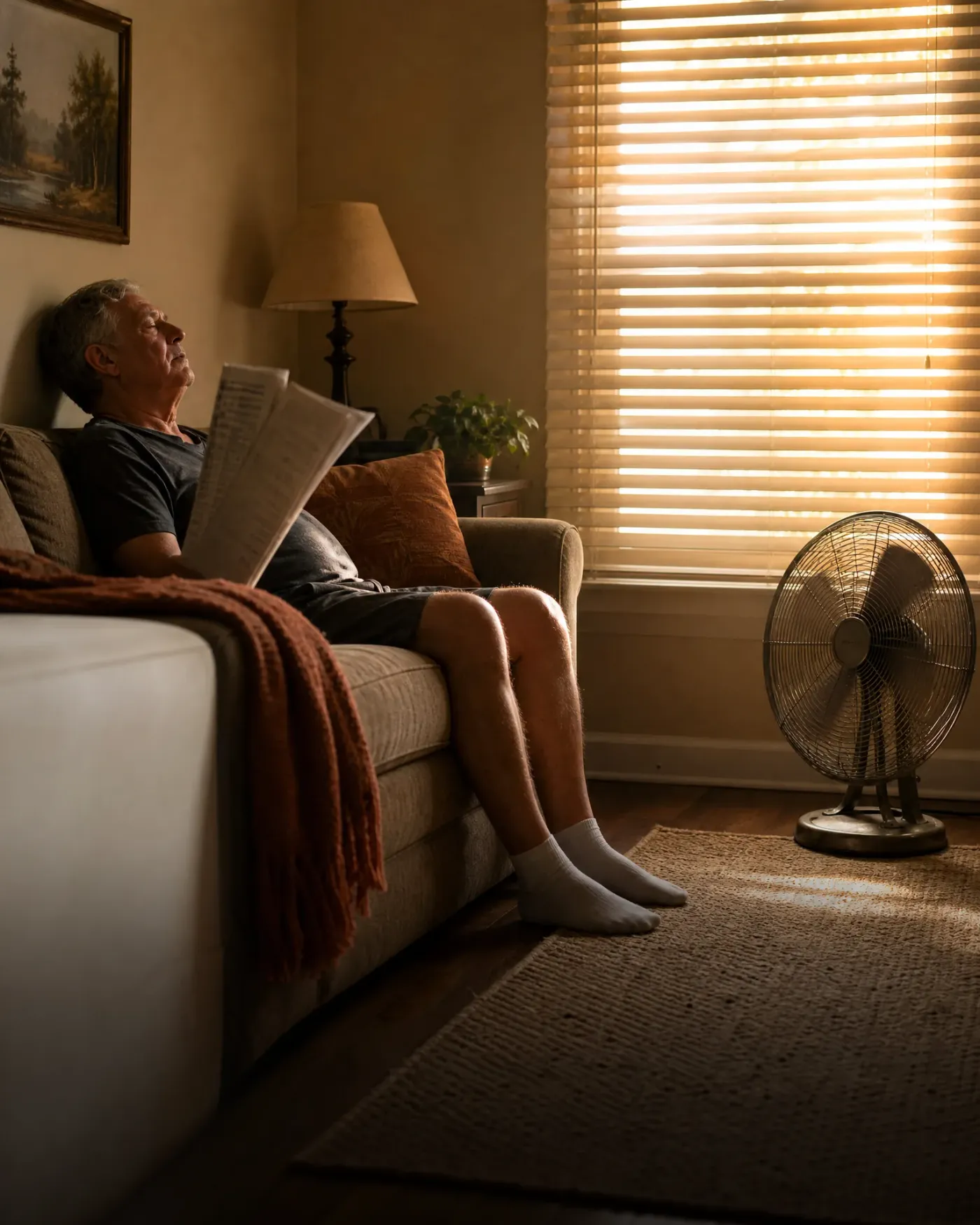
You'll notice it room by room before anything else tells you. The air from the vents feels closer to room temperature than cold. The system might run long stretches without the house catching up, or it short cycles, kicking off after a few minutes and starting again soon after. Sometimes there's a smell, musty from the vents or something burnt near the unit. Outside, the compressor might hum but the fan isn't turning, or you hear a click and nothing happens after. If the airflow stays weak for days, the compressor is working harder than it should, and that's the part that costs the most to replace.

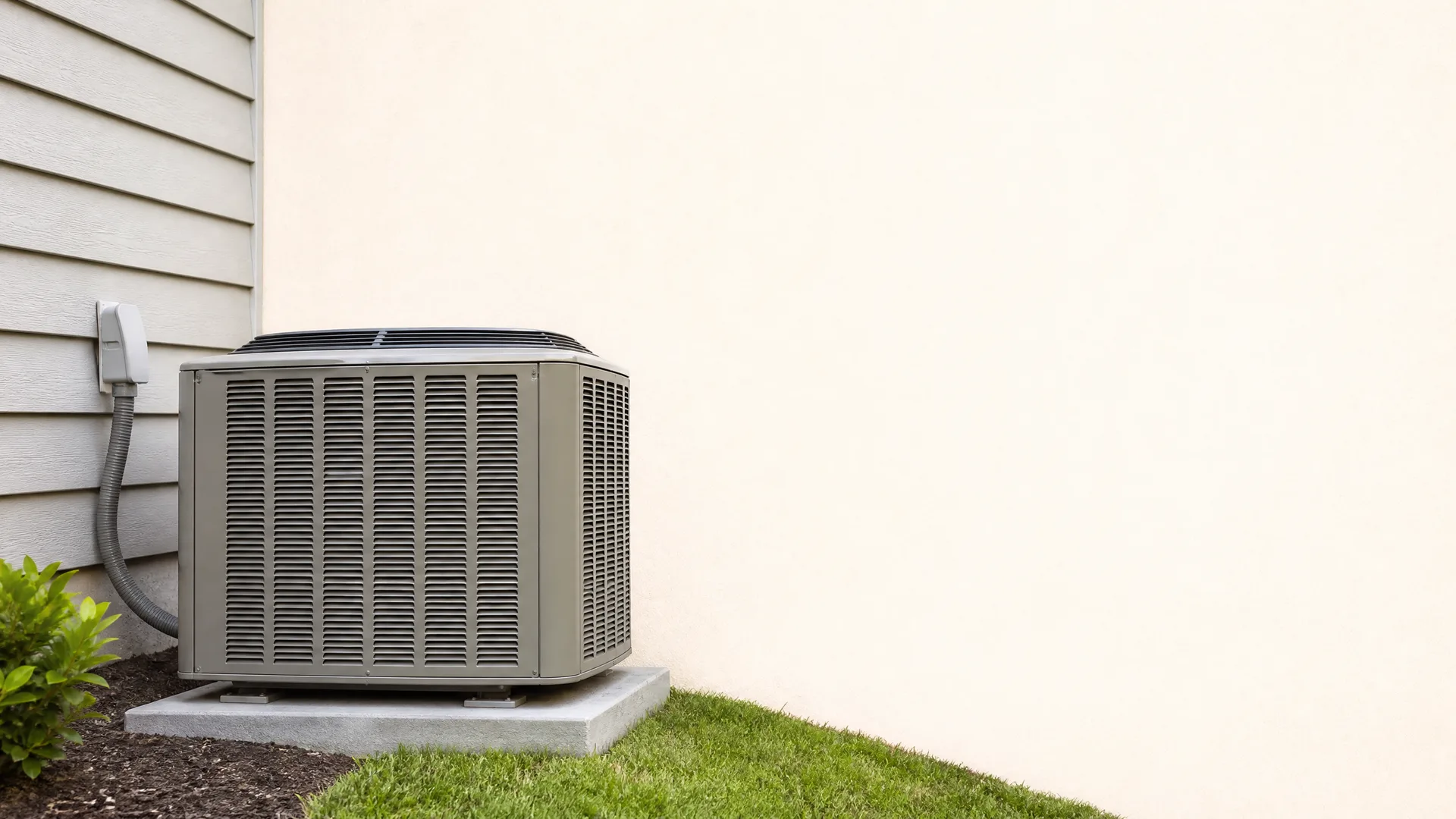
A gray outdoor air conditioner condenser unit sits on a concrete pad beside a house with horizontal lap siding, with conduit and an electrical disconnect box on the wall, dark mulch and a shrub to the left, and a concrete walkway in the foreground.

Running the way it should

Air comes out cold at the vents and the house catches up before long. The unit outside cycles on, runs, and shuts off, with the fan and compressor quiet when the thermostat is satisfied. No ice on the lines, no odd smell from the vents, no puddle on the pad.


An outdoor air conditioning condenser unit on a concrete pad beside a house with horizontal lap siding, with a shrub and mulch bed to the left and conduit and a small electrical box on the wall to the right.

Showing its age

Dirt cakes the grilles and the fins look bent or packed with debris, so the unit can't shed heat the way it needs to. It might run longer than it used to, cycle more, or make a new sound when it kicks on. Caught early, a dirty unit is a cleaning. Left alone, it's a repair call.

Call Now or Give It a Few Hours

Call now

  • The house is holding above 80 degrees and isn't catching up even after an hour of running.
  • Someone at home is heat sensitive, elderly, very young, or has a health condition that makes the heat risky.
  • You smell burning, see ice on the line outside, or hear grinding or screeching from the outdoor unit.
  • The breaker keeps tripping again after you reset it once.
  • Water is pooling around the indoor unit or dripping from the ceiling below it.

Worth a few hours

  • The air is cool, just not as cold as usual, and the house is still slowly getting there.
  • You haven't checked the filter yet and it's been a few months since it was swapped.
  • It's a mild day and the house isn't climbing past a few degrees over your setting.
  • The outdoor unit is running but you noticed leaves or a shrub crowding it and want to clear that first.
  • Nobody home is especially sensitive to the heat and the house is still livable while you sort it out.
A woman in a knitted shawl sits in a living room with a fireplace, shelves, a sofa with cushions, and a lamp by a bright window, looking off to the side.
A woman with long brown wavy hair in a green shirt over a white top stands in a living room with built-in white shelves, a ceiling fan, a potted plant and a sliding glass door.
A woman with shoulder-length gray-streaked hair in a light gray knit sweater stands smiling and looking off to the side in a living room with a sofa, houseplant, framed picture, and sunlit sliding glass door.
A woman with shoulder-length curly gray hair wearing a gray knit sweater stands near a window with a sheer curtain, looking to the side, with a blurred interior room behind her.

Hand off the search today

Only one pro gets your request, so you hear from one company.

Asking costs nothing, and the choice to hire stays yours.

An outdoor air conditioning condenser unit on a concrete pad at the corner of a house, next to vinyl siding and a plain light-colored wall, with grass and a mulch bed in the foreground.

What the compressor is doing

The compressor outside is what actually pulls the heat out of the house. When it runs, it's compressing refrigerant so it can shed heat outdoors, then send it back inside to pick up more. If the unit outside is silent while the fan inside runs, the compressor isn't working and the air moving through the vents is just room air, not cooled air. That's the difference between the house feeling stale and feeling cold.

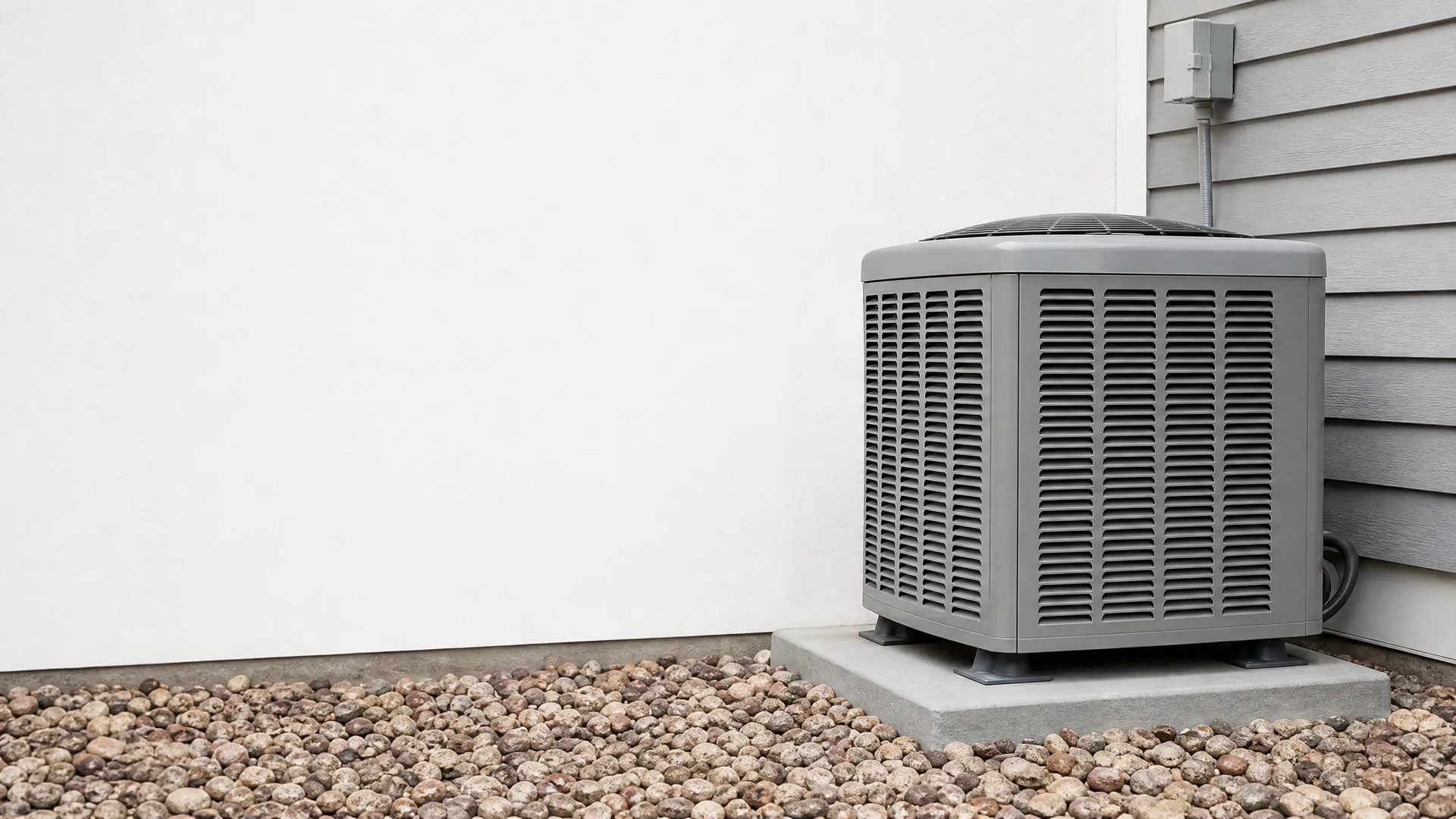
A gray outdoor air conditioning condenser unit sits on a concrete pad beside a white stucco wall and gray horizontal siding, surrounded by rounded landscaping gravel, with an electrical disconnect box mounted on the siding above.

Why the filter matters so much

A clogged filter doesn't stop the system from running, it just starves it of airflow. Less air moving across the indoor coil means the coil can get too cold and ice over, and a frozen coil can't pull heat out of anything. Once that happens, the house stops cooling even though the unit sounds like it's working fine. Checking the filter costs nothing and rules out one of the most common reasons an AC runs without results.

Power costs 31.35 cents per kilowatt-hour statewide

At that rate, a struggling air conditioner shows up fast on your bill, not just in how the house feels. A unit low on refrigerant or fighting a dirty coil runs longer to do the same job, and every extra hour it runs costs more here than almost anywhere else.

EIA-861 2025 statewide residential average

If It's Still Not Cooling

  • If the thermostat, breaker, filter and vents all check out and the house still won't cool, the problem is inside the system.
  • A unit that's low on refrigerant or fighting a dirty coil won't fix itself by running longer.
  • Ice on the line or warm air at the vents after you've ruled out the easy stuff points to a repair, not a setting.
  • A local contractor who services this equipment every summer has seen what usually fails first in a California heat wave.
  • Sending one request means one licensed contractor looking at your system, not a string of calls to field.
  • Once you've gone through the checks above, there's nothing left to troubleshoot on your own.

You've checked the thermostat, the breaker, the filter and the vents. If the house is still holding heat after that, you're not missing a setting. Something inside the system needs a hand, whether that's a refrigerant charge that's dropped low or a coil that's caked with dirt and can't shed heat the way it should. Running the unit longer won't fix either one. It just means more hours on a system already struggling, at a time of year when every one of those hours costs you.

This is where a contractor earns the call. Someone who works on air conditioners all summer in California has a good sense of what usually goes first in this kind of heat, and what to look at before anything else. That's not guesswork on their end. It's the same handful of failures showing up again and again on units just like yours.

Send one request and one licensed, local contractor looks at your system. Not three companies competing for the job, not a string of calls to sort through while the house sits warm. Just someone who knows this equipment, taking it from here. You've done the part you can do from the hallway closet and the breaker panel. The rest is theirs to find.

Sunlit corner of a room with a wooden sideboard holding a ceramic vase of olive branches and a dark wooden bowl, beside a white-framed window, a hardwood floor and woven rug.
A wooden cabinet holding a pale ceramic vase with leafy branches stands beside a beige wall in a sunlit room with hardwood floors, a jute rug, and a window showing green foliage outside.
Sunlit room corner with a beige upholstered sofa holding a rust-brown cushion, beside floor-length linen curtains at a window, over a wood floor with a woven rug.
Corner of a room with beige walls, a framed photograph, a floor-length linen curtain beside a window, an upholstered armchair with a knit pillow, white baseboards and trim, wood flooring and a pale rug.
Sunlit living room corner with a beige upholstered armchair with a cushion, linen curtains beside a wooden-framed window, green vertical panelled wall with a framed print, and a wooden table edge over a woven rug.

Hand off the air conditioner problem

Your request stays with one local pro.

Find a local pro

No fee to send it, and nothing to sign.