Send the form and the search for an installer is over.
Your air conditioner is getting old, and you're trying to figure out whether to fix it one more time or replace it. In California, that decision looks a little different than it does elsewhere. Summers here are warm but dry, so your system isn't fighting humidity the way units do in other parts of the country. That means a well-running AC can hold up for years. But power here costs more than almost anywhere else in the country, and an aging unit running on a worn compressor or a weak capacitor uses more of that expensive power to do the same job.
Most California homes heat with gas, so your air conditioner is doing one job, cooling, and doing it for months at a stretch. When it starts short cycling, blowing warm air, or running up your bill for no clear reason, that's the system telling you it's working harder than it should.
Whether the right move is a repair or a full replacement depends on things specific to your unit: its age, what's failing, what it would cost to keep patching versus putting in a new one. That's not something to guess at from a search result.
What you don't have to do is spend your afternoon on it. You don't have to call around to five different companies, explain the same problem five times, and then sit there comparing quotes you don't fully understand. Send the form once, with your situation on it, and that search becomes someone else's job instead of yours. A licensed contractor who installs these systems for a living will have what they need to tell you straight whether it's worth repairing or time to replace it.
Fill out the form below and let the finding-someone part be done.
Most of the time, repair makes sense if the unit is under 10 years old and the repair is a single part: a capacitor, a contactor, a fan motor. Past that age, the math changes. A compressor failure on an older unit usually costs close to what a new system would, so paying to fix it just delays the same decision a year or two later. In California, the strain on your system is dry heat, not humidity, so the compressor and the outdoor coil tend to be what gives out, not the indoor coil icing up. Because most homes here heat with gas, your air conditioner only has to carry the house through summer, which is part of why a unit can run 12 to 15 years before it's worth replacing. If yours is getting close to that and the repair bill is climbing, replacing it now usually costs less over time than paying for a second or third repair on the way out.
Running fine, pulling its normal draw on a power bill that's already steep.
Past 10 years old, the panels caked with grime and the compressor working harder to do the same job.
How Your AC Actually Fails
A dirty condenser coil outside makes the compressor run longer to move the same heat, which shows up as higher draw on your meter.
Refrigerant doesn't get used up, so a system low on charge has a leak somewhere in the line set or the coil.
The capacitor gives the compressor and fan motor the jolt they need to start, and a weak one causes hard starts or a hum with no spin.
Warm, dry air moves less moisture than humid air, so a California system spends more of its cycle on temperature and less on wringing out the air.
A compressor pulls double the current it needs on startup, and an aging one that can't manage that surge will trip the breaker instead of running.
The thermostat and the outdoor unit communicate through low-voltage wiring, and a break there can look like a dead system when the compressor itself is fine.
A California AC spends most of its cycle moving heat, not pulling moisture out of the air the way a system in a humid state does. That changes where the strain shows up. Outside, the condenser coil needs airflow to dump that heat, and when it's caked with dust the compressor has to run longer to do the same job. You'll see that on your power bill before you see it anywhere else. Inside the system, the capacitor is what gives the compressor and the fan motor their starting jolt. A weak one doesn't fail outright at first. It shows up as a hard start, or a hum from the outdoor unit with no fan movement. Refrigerant is a separate issue entirely. It doesn't break down or get used up over time, so if a system is low, there's a leak somewhere in the line set or the coil, and it will keep running low until that's found. Startup itself is the hardest moment for an aging compressor. It draws roughly double its normal current just to get going, and a compressor on its way out can't manage that surge, so the breaker trips instead of the unit running. One more failure mode gets missed because it has nothing to do with the compressor at all: the thermostat talks to the outdoor unit over low-voltage wiring, and a broken connection there can look exactly like a dead system when the compressor is fine and just never got the signal.
An aging AC unit doesn't just get less reliable, it gets more expensive to run every month it stays in the ground, and that matters more here than almost anywhere, since California power rates are already some of the highest in the country. A unit working harder to move the same heat pulls more from a bill that's already steep, month after month, whether or not it ever breaks down again. Figuring out which way to go, repair or replace, and then finding someone licensed to do either, usually means calling around, explaining your system's age and symptoms to each one, and lining up quotes to see who's being straight with you. That's the part worth handing off. Send the request once and a licensed contractor who installs these systems takes it from there, so you're not the one chasing bids or repeating yourself to the next name on the list while your system keeps drawing more than it should.
Working the way it should
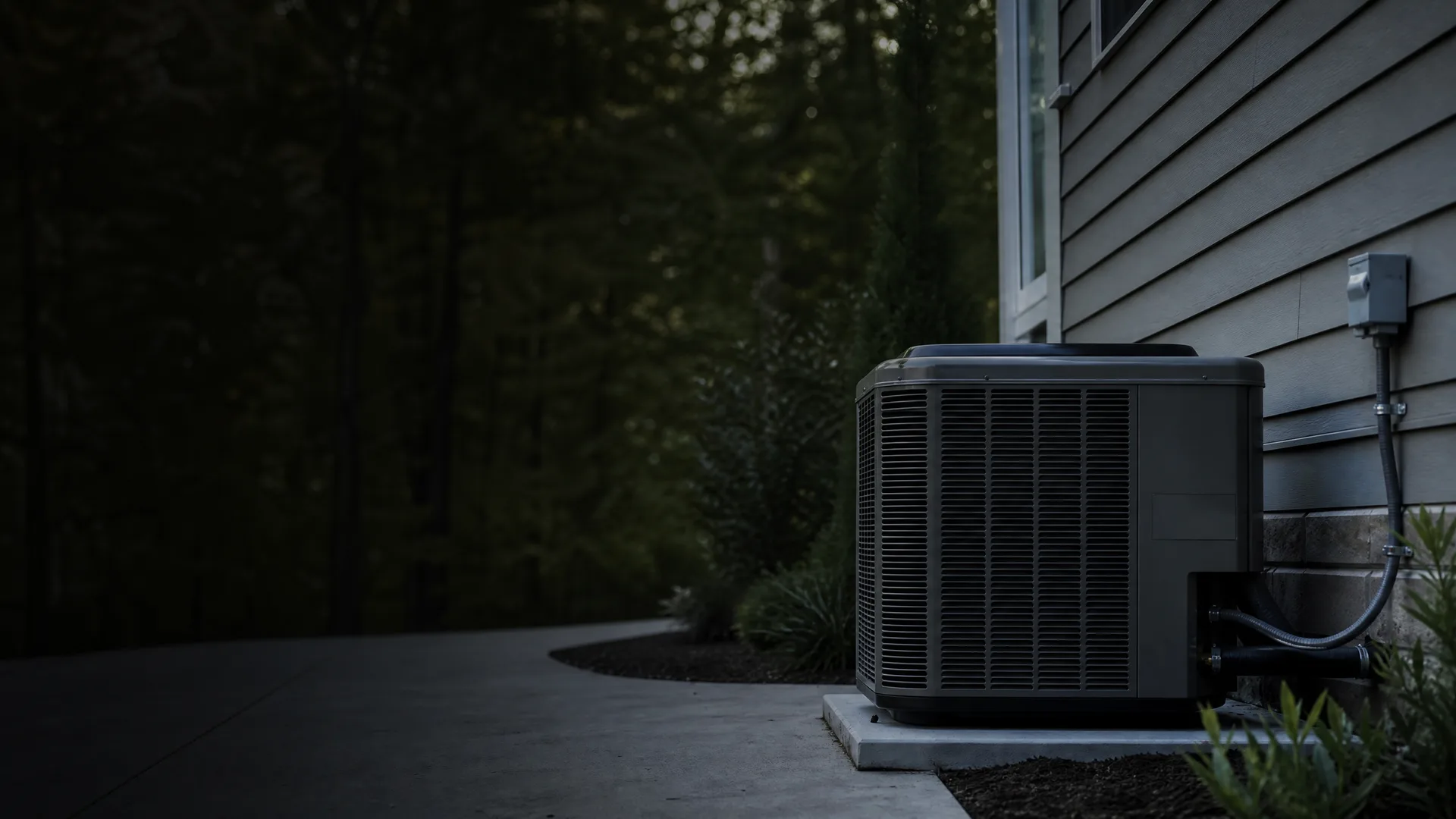
A clean unit on a solid pad, wired to its own disconnect, pulls the power it was built to pull. The compressor cycles normally and shuts off once the house is cool. On a California power bill, that normal draw is worth protecting.
Working harder than it should
Grime packed into the fins blocks airflow across the coil, so the compressor runs longer to move the same heat. A unit this weathered is also past the age where a single repair fixes much for long. Every month it stays in, the bill carries the cost.
What does an aging AC unit look like in your house
You'll notice it in the rooms, not just outside. A bedroom down the hall takes longer to cool than it used to. The system runs for a long stretch, shuts off, then kicks back on again a few minutes later. Outside, the unit might cycle on and off more often than it did a couple summers ago, or run almost constantly on a hot afternoon. Your power bill climbs even though you haven't changed how you use the house. Some homeowners notice a musty smell when the system starts up, or a faint rattle from the outdoor unit that wasn't there before. None of this means the system is about to fail tomorrow, but a unit working this hard, this often, is costing you more on every bill it touches.
A summer dew point of 50°F, averaged across June, July and August for where homes sit in California, is why the air here never feels heavy even on a hot afternoon. For your air conditioner, that's less moisture to pull out of the air before the house actually feels cool, so an aging system can still get the job done here that would leave a straining unit in a humid state short of relief. It also hides wear. In a muggy climate a weak system announces itself fast, clammy rooms, damp air. Here, the first signs are a slower cool down and a power bill that's quietly climbing, not a house that feels wet.
NASA POWER T2MDEW county cells weighted by homes
Repair it once, or put in a new system
An AC under 10 years old with one bad part is worth fixing. Past that age, especially with a failed compressor, a new system is usually the better money. That's the whole decision. Everything else is detail.
What's left is finding someone to do the work, and that part usually takes longer than people expect. You'd be looking up contractors, calling a few, explaining the same thing about your system each time, then waiting on quotes to compare before you even know who's available. Send the form on this page and that search isn't yours to run anymore. Someone else is doing the calling around.
Send one request and you're done looking
Skip the round of in-home estimates for a new air conditioner.