When to replace an AC unit in San Bernardino, CA

Find my pro

Summers in San Bernardino run hot, dry and long, and an AC unit that struggles in July usually isn't going to get better by August. If yours is running nonstop, short cycling, or you've had a repair tech out more than once this year, that's worth paying attention to now, before you're deciding in the middle of a heat wave with no cool air in the house. Power here costs more than in most of the country, so an aging unit isn't just a comfort problem, it shows up on the bill too. The question of whether to repair again or replace depends on things specific to your system and your home, like its age, the cost you're already facing, and what condition it's really in. Answer a few questions here and you'll be matched with a contractor who looks at your actual setup and gets back to you. No need to call around or sit on hold. Once you send the form, the work of finding the right person for your situation is off your plate.

Most AC units in San Bernardino are worth replacing at 12 to 15 years old, especially if the repair bills have started stacking up. The compressor and coils wear down faster here because the system runs hard for months at a stretch, from May into October, with little break to recover. A unit that age is also likely still running on an older refrigerant or a lower efficiency rating, so it costs more to run every one of those summer months, and power here already costs more than most places. If your unit is in that age range and struggled to keep the house cool last summer, waiting through another one usually means paying for a repair now and a new system within a year or two anyway. Replacing it before summer means it's installed and tested before the heat sets in, not during a week when you have no cooling at all and every contractor in the area is booked.

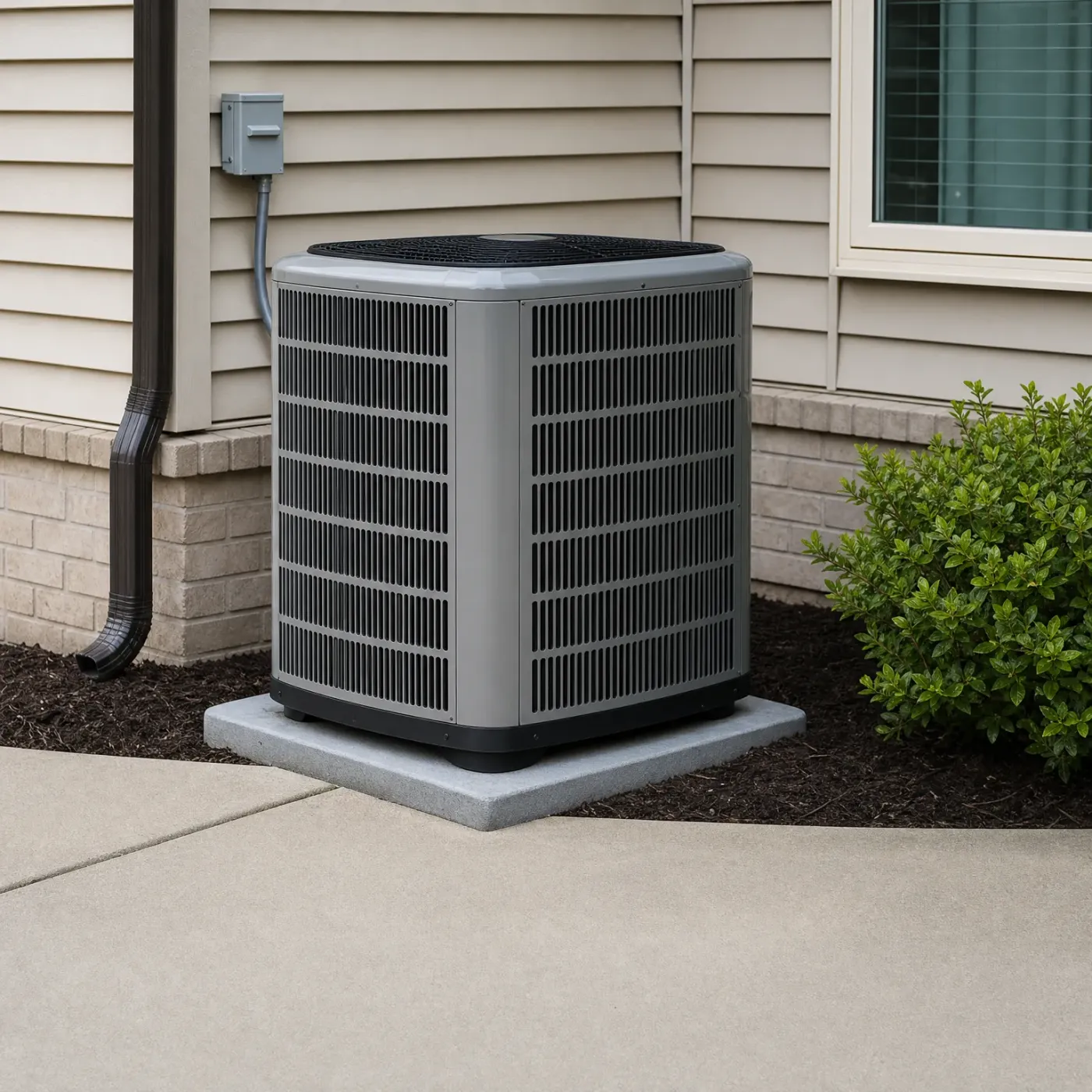
A gray outdoor air conditioning condenser unit on a concrete pad beside a house with horizontal vinyl siding, a brick foundation, downspout, electrical disconnect box, mulch bed and a green shrub.

Running the way it should

A condenser that's holding up cools on command and shuts off when the thermostat is satisfied. The fins stay clear, the pad is clean, and the unit isn't straining to keep the house at temperature through a San Bernardino afternoon.
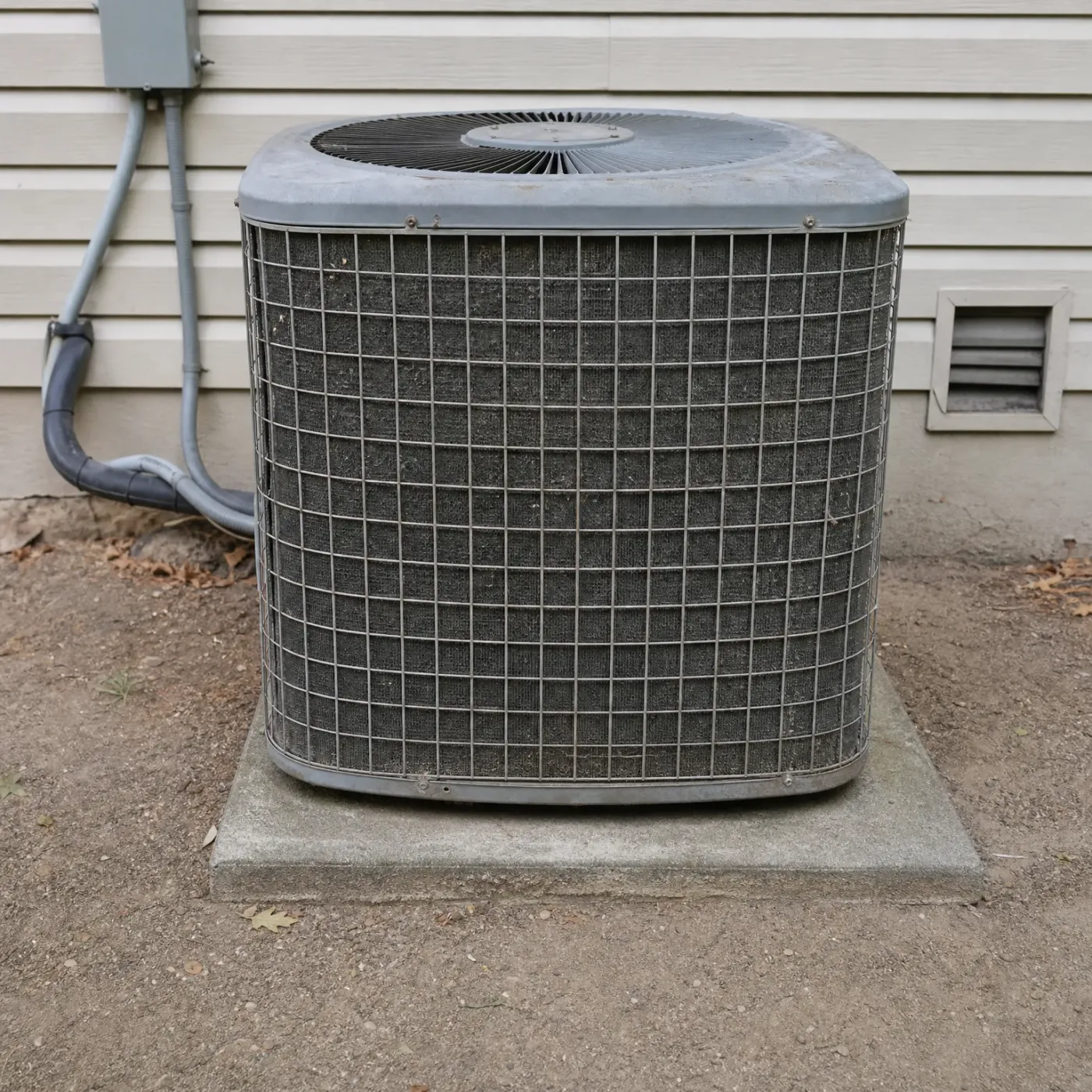

An outdoor air conditioning condenser unit with a dirty mesh coil guard sits on a concrete pad beside a house with horizontal lap siding, a wall vent, and conduit running to an electrical disconnect box.

Signs it's falling behind

Dirt packed into the grille and fins blocks airflow across the coil, so the unit works harder to move the same heat out of your house. Caked-on debris like this often points to a system that's been neglected for years, not months.

A woman in a gray turtleneck sweater sits on a couch under a blanket indoors, looking out a window toward orange autumn foliage, with a bookshelf and plants behind her.
A woman with gray shoulder-length hair in a cream knit sweater sits in an armchair under a blanket, looking out a window at orange autumn foliage, with a living room, houseplant and wooden table behind her.
A woman with gray hair in a cream knit sweater sits on a light sofa by a large window, looking out at trees with autumn foliage, with a dark mug on a wooden side table nearby.
A gray-haired woman in a dark knit sweater sits on a couch with a cream blanket and patterned pillow, looking out a window toward yellow and orange autumn trees, with wooden shelves and plants in the room behind her.

A compressor doesn't just wear out all at once. It runs on a sealed charge of refrigerant, and once that charge starts leaking, the unit loses its ability to cool even while the fan keeps spinning like nothing's wrong. Low refrigerant puts the compressor under a different kind of strain too, forcing it to work against pressure it wasn't built for, which wears it down faster. The capacitor is a smaller part with an outsized job: it gives the compressor and fan motor their starting kick, and when it weakens, you'll hear it in a hard start or a hum that never turns into a running motor. A coil caked with cottonwood seed or dust can't shed heat properly, so the compressor runs longer to reach the same setting on the thermostat. And if a unit short cycles, switching on and off every few minutes instead of settling into a long steady run, that's rarely just a dirty filter. There's also a sizing issue that catches people off guard: refrigerant lines built for an older system often don't suit a new condenser, so replacing only the outdoor unit can leave the whole system mismatched.

How an AC Unit Actually Fails

  • A compressor runs on a sealed charge of refrigerant, and once it starts leaking the unit loses capacity even if the fan still spins.
  • The capacitor gives the compressor and fan motor their starting kick, and a weak one shows up as hard starts or a unit that hums but doesn't turn over.
  • Refrigerant lines sized for an older, less efficient system often don't match what a new condenser needs, so swapping just the outdoor unit can leave the match wrong.
  • A condenser coil caked with cottonwood seed or dust can't shed heat the way it should, and that makes the compressor run longer to hit the same temperature.
  • Low refrigerant doesn't just mean weaker cooling, it means the compressor is working against a lower pressure than it was built for, which shortens its life.
  • An AC unit that cycles on and off every few minutes instead of running a long steady cycle is usually fighting a problem bigger than a dirty filter.
An outdoor air conditioning condenser unit on a concrete pad beside a house with horizontal lap siding, with a gray electrical disconnect box and conduit on the wall, mulch bed and shrub to the right, and mown grass in the foreground.
A clean condenser like this one pulls air through easily and holds its temperature through a hot San Bernardino afternoon without strain.
An outdoor air conditioning condenser unit on a concrete pad beside a house with light blue horizontal siding, with a shrub to the left and a conduit and disconnect box on the wall to the right.
Coils packed with dust force the unit to work harder for less cooling, and that strain is what pushes an old compressor toward failure.
  1. The thermostat calls for cooling and energizes the contactor.

  2. The compressor starts and sends refrigerant to the condenser coil.

  3. The fan pulls outside air across the coil to release heat.

  4. Refrigerant cools further and moves inside to the evaporator coil.

A woman in a cream knit sweater sits with eyes closed in an armchair beside an open window showing orange and yellow autumn foliage, with a mug and books on a small side table.
An older man with gray hair in a green quarter-zip sweater leans back on a couch with his eyes closed and head tilted up, in a sunlit room with windows, houseplants, a lamp, and a cushion behind him.

Get matched with an air conditioner pro in San Bernardino County

One request ends the search for an air conditioner installer.

No fee to send it, and nothing to sign.

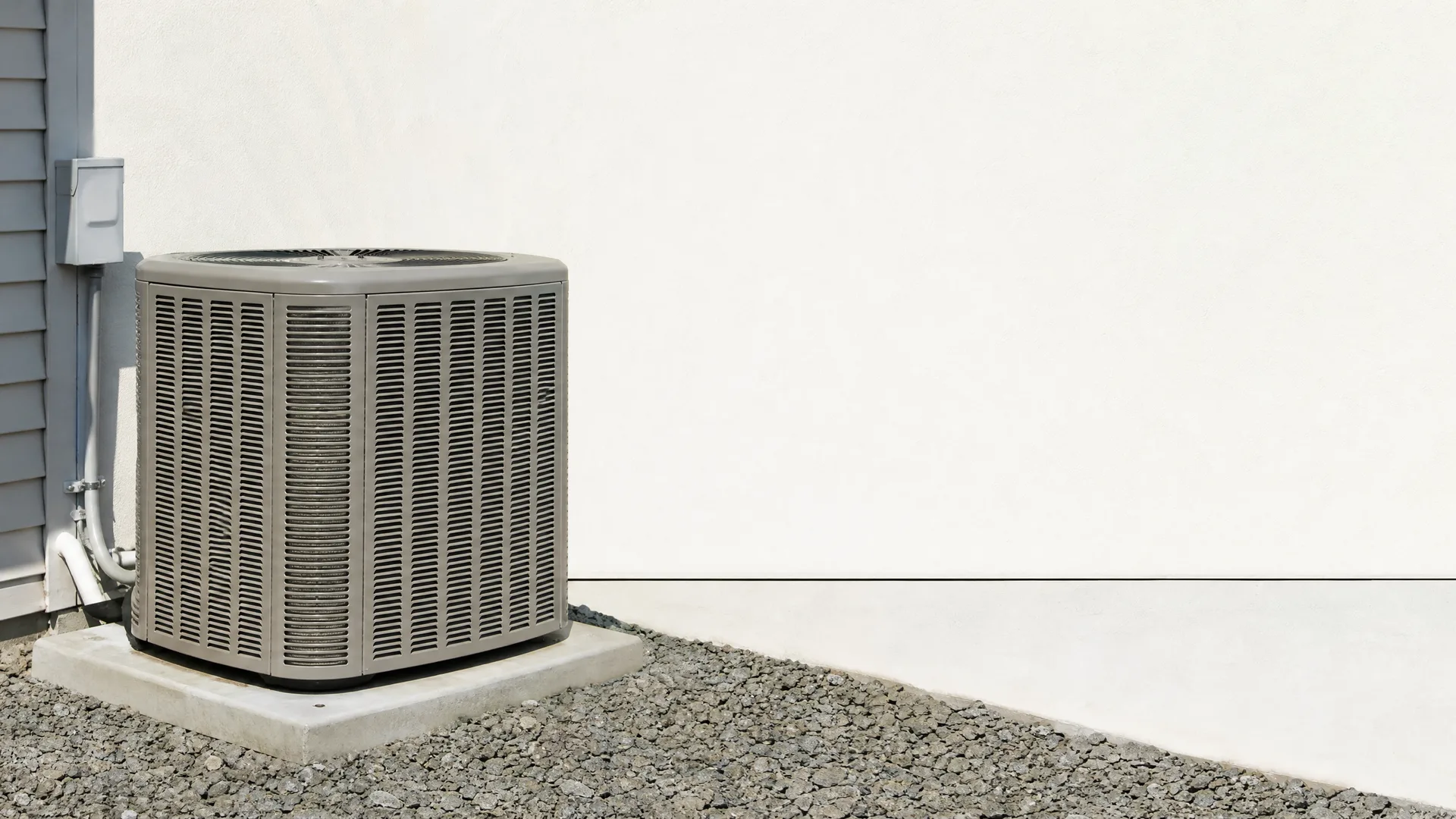
An outdoor air conditioning condenser unit sits on a concrete pad beside a plain light-colored wall, surrounded by gravel, with vinyl siding and an electrical box at the left edge.

What an aging compressor costs you

A compressor that's lost some capacity still runs, it just runs longer to do the same job. That extra runtime shows up on the power bill, and power in San Bernardino County is already among the most expensive in the country. A unit that used to hold the house at temperature in 20 minutes might need 35 now, and it's pulling that extra load through August and September with no break.

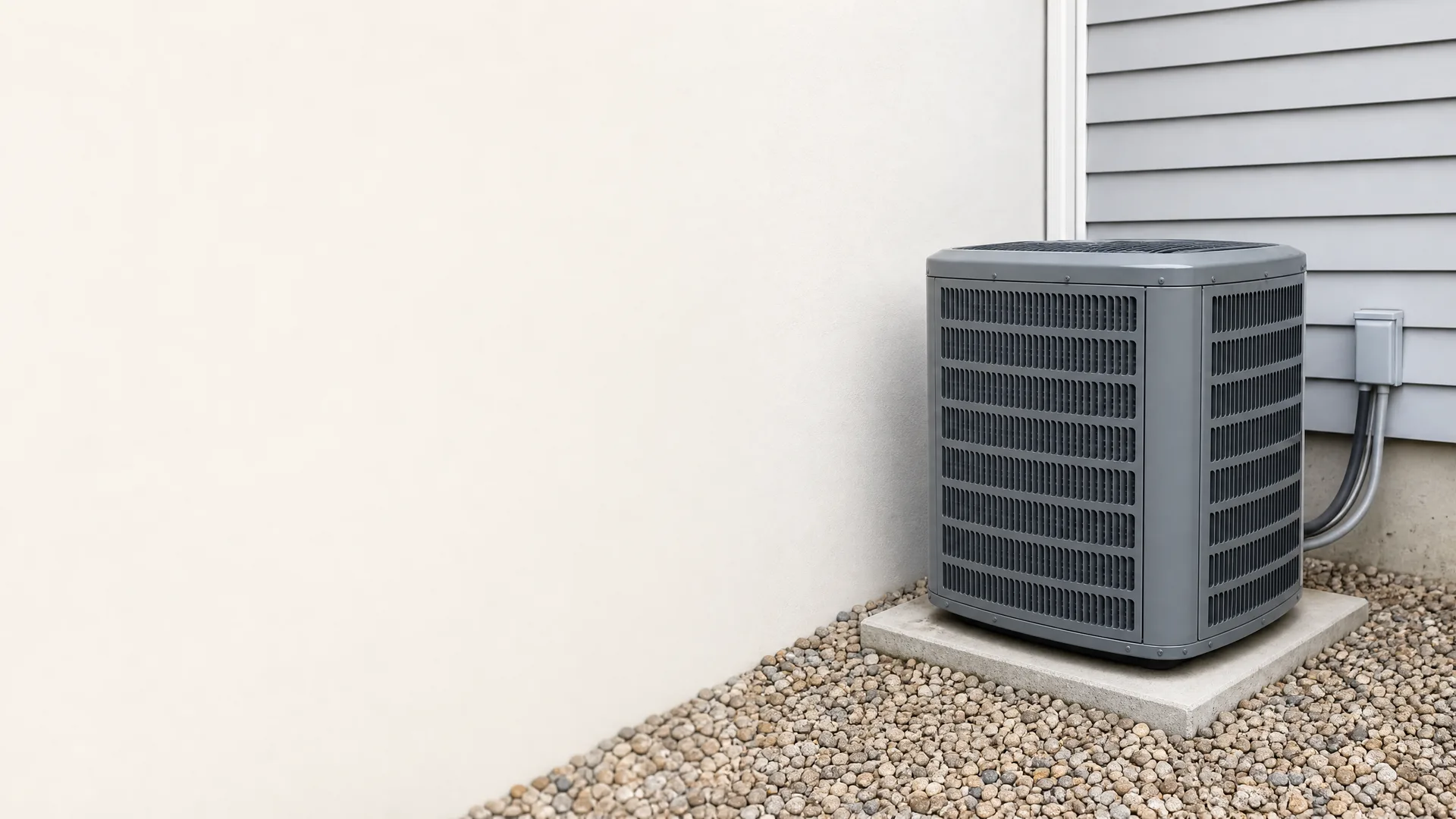
A gray outdoor air conditioning condenser unit sits on a concrete pad surrounded by gravel, beside a stucco wall and vinyl siding with an electrical disconnect box and conduit.

Why gas heat doesn't factor in

Most homes in San Bernardino heat with gas, so the furnace and the AC wear on separate schedules. That's worth knowing when a contractor looks at the system, because a furnace that's fine doesn't tell you anything about the condenser outside. The two get replaced on their own timelines here, not together, and a quote that bundles them without a reason is worth asking about.

How do I know if my AC refrigerant is leaking?

How do I know if my AC refrigerant is leaking?

Warm air from the vents, ice on the copper line, and hissing near the unit

A refrigerant leak shows up as weaker cooling before it shows up as anything dramatic. The air coming out of your vents feels warm or just barely cool, even though the system is running. Look at the copper line running to the outdoor unit. Ice or frost on it points to low refrigerant, since the coil gets too cold when there isn't enough charge moving through it. A hissing or bubbling sound near the condenser can mean refrigerant escaping at a fitting or a worn spot in the coil. None of this fixes itself, since a sealed system only loses charge through a leak. A unit that's run low once will run low again, and each time it does, the compressor works harder to make up for it.

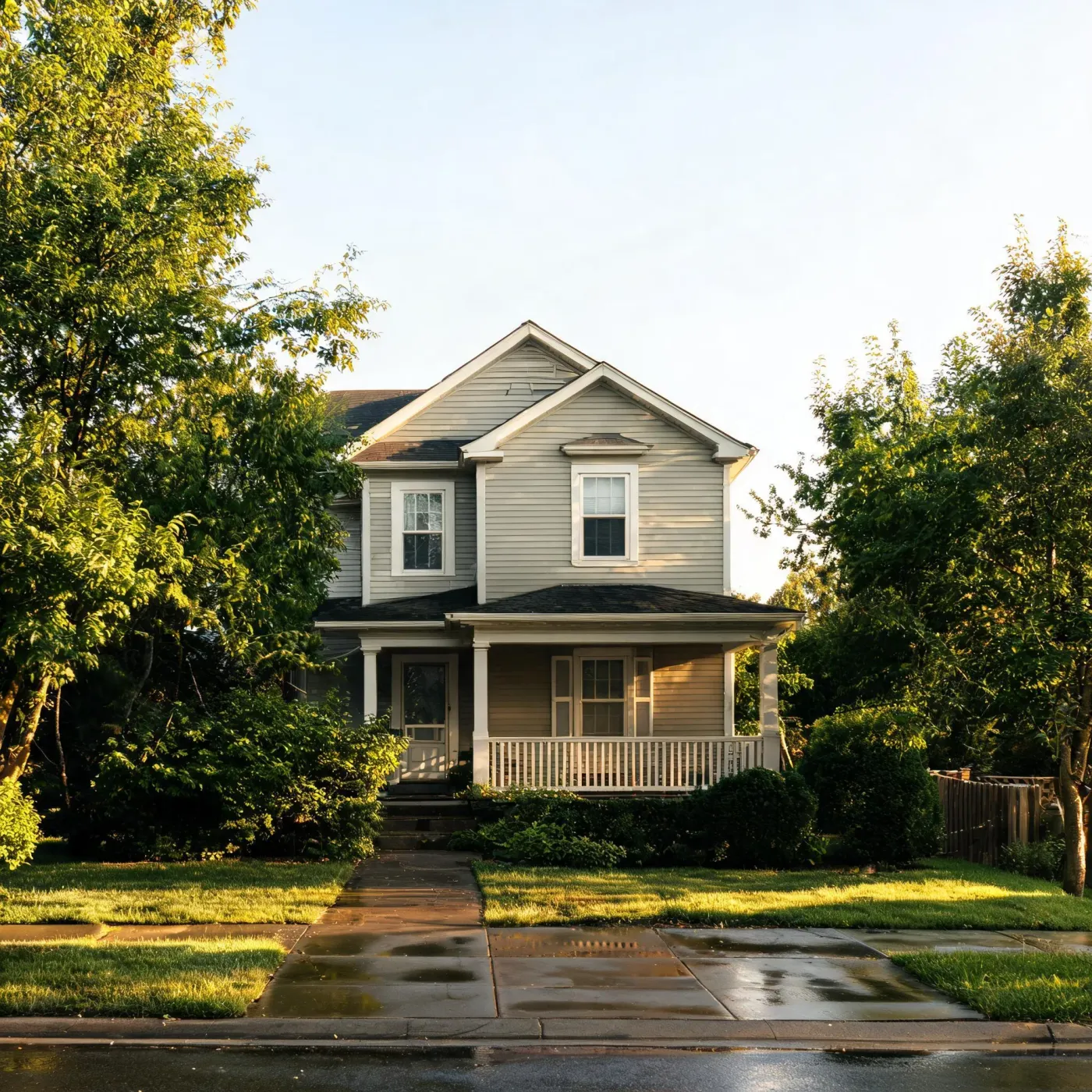
A two-story light-colored house with horizontal siding, a covered front porch with white railings and columns, flanked by green trees and shrubs, with a concrete walkway leading to a wet sidewalk and street.

San Bernardino County's summer dew point averages 47°F across June, July and August, according to NOAA climate data. That's dry air, and it changes what your AC is actually up against. A dry-climate unit sized for San Bernardino doesn't have to wring much moisture out of the air, so most of its work is just dropping the temperature. That's lighter duty than a system in a humid state faces, but it still has to run long hours once the heat sets in, and long runtime is what wears down a compressor over the years. If your unit is cooling the house fine but running most of the afternoon to do it, that's the dry heat, not necessarily a failing part.

NASA POWER T2MDEW

A woman in a cream sweater and jeans pushes open a wooden front door of a white stucco house with a tile roof, with a second person visible inside and lantern wall sconces on either side of the arched entry.

So when do you replace it

If your unit is 12 to 15 years old and the repairs keep coming, that's your answer. A system that short cycles, runs nonstop through a San Bernardino afternoon, or has pulled a tech out more than once this year is telling you it's done working hard. Waiting for it to fail outright usually costs more than deciding on your own timeline, since a dead compressor in August leaves you without options and without cool air while you wait on parts.

You don't have to figure out the right unit size or brand on your own. Once you request a match, a licensed contractor who knows what San Bernardino summers do to a system will reach out and walk the decision through with you, on your schedule rather than in the middle of a breakdown. That's the part that takes the weight off: not deciding alone, and not scrambling once the old unit finally gives out.

A large weathered ceramic vase and a shallow wooden bowl sit on a rustic wooden table beside a window with linen curtains, with a blurred sofa with cushions and a hanging fabric panel in the background.
An outdoor air conditioning condenser unit sits on a concrete pad beside a gray horizontal lap-sided house wall, with a small electrical box and conduit above and shrubs in a mulch bed to the left.

Find an air conditioner installation pro in San Bernardino County

Send the form and the search for an installer is over.

New system or replacementCentral ACSan Bernardino County, CA
Step 1 of 2

What ZIP code is the job in?