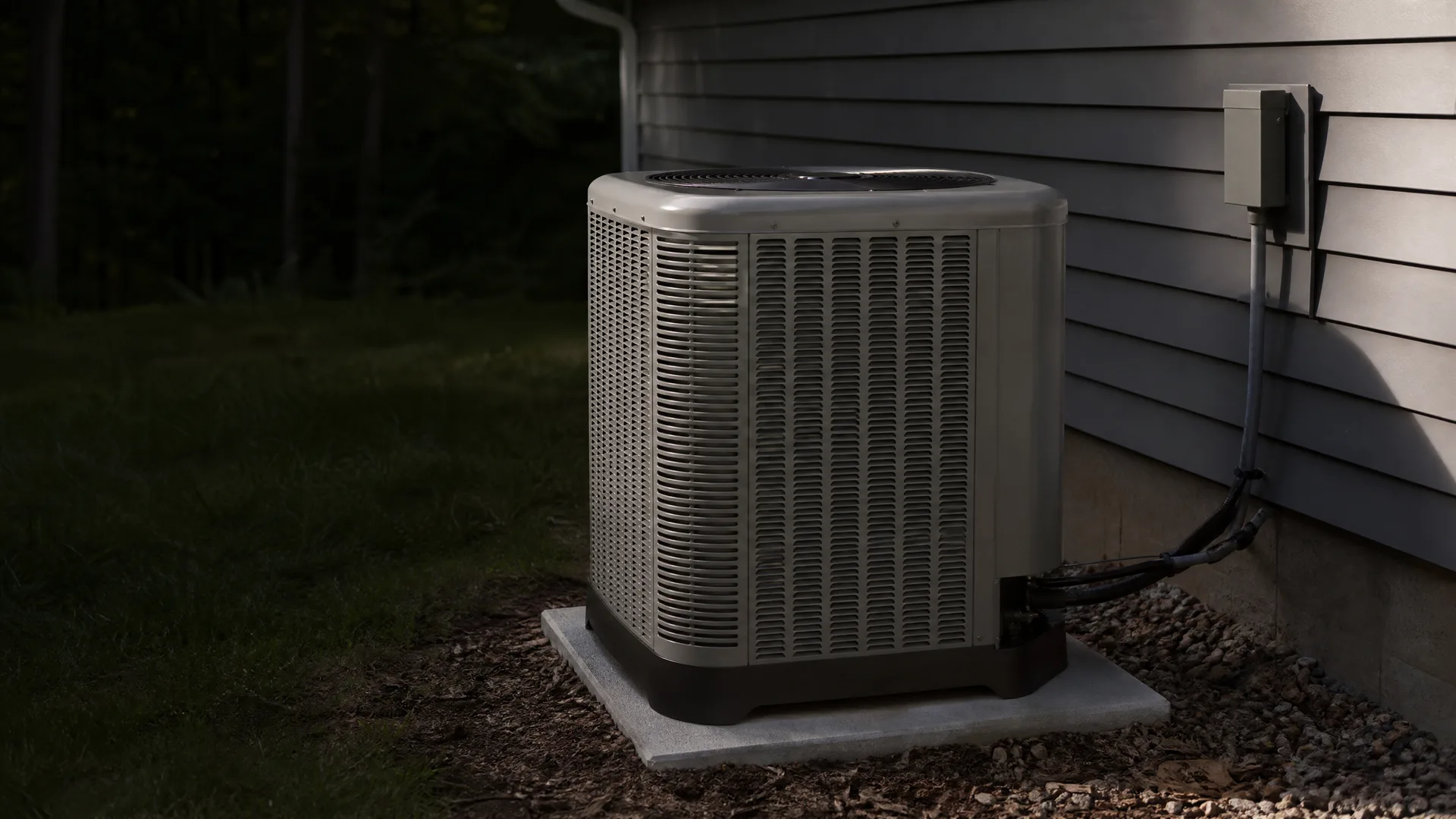
How long a central air conditioner lasts in California
Get in touch with a local installer about a new air conditioner.
A central air conditioner in California usually runs 12 to 15 years before it needs to be replaced rather than repaired. Mild summers here help. The air doesn't carry the heavy moisture that wears on a system in other parts of the country, so the strain is different than what you'd see in a humid climate.
What shortens that life is how hard the unit has to work and how well it's been kept up. With power costs among the highest in the country, a system that's losing efficiency doesn't just run worse, it costs more every month it keeps running that way. An aging unit and a high electric rate make a bad combination.
If your air conditioner came with the house, it's worth finding out how old it actually is. A unit past 12 years can still be cooling your home fine today and still be the reason your bill keeps climbing. There's a point where replacing it costs less over time than keeping it alive.
Knowing where your system stands is one thing. Deciding what to do about it, and finding someone who can look at your specific setup and tell you honestly whether it needs replacing now or can run another few summers, is another. That's not something you can tell from a search result. It depends on your unit, your home, your ductwork.
This page can connect you with a contractor who handles installations in your area and can speak to your situation directly. You tell them what you're dealing with, they reach out, and from there it's their job to sort out, not yours. You don't have to figure out the right answer on your own first.
A central air conditioner in California usually lasts 12 to 15 years before it makes more sense to replace it than keep repairing it. Mild summers are the reason. The compressor isn't fighting heavy moisture the way it would in a humid climate, so it cycles less and wears slower. What shortens that life is run time, not strain, since the unit still has to work through the warm months and every hour on the compressor counts against it. Power here costs more than almost anywhere else in the country, so a system running past its best years often shows up first in the electric bill rather than in a breakdown. By year 12 or so, it's worth asking whether a new system would cost less to run than the one you have, even if it still turns on.
Before you get your air conditioner installationAfter you get your air conditioner installation
The compressor does the heavy lifting, and it's the part that decides how long the system lasts. Every time your thermostat calls for cooling, the compressor carries the load, and that adds up over a long summer. Outside, the condenser coil collects dust and grit even in a dry climate, and a dirty coil means the compressor has to work harder to push out the same heat. The capacitor is what gives the compressor its jolt to start. When it weakens, the compressor strains on every start instead of spinning up clean. Refrigerant itself doesn't wear down or burn off. If a system is low, there's a leak in the coil or line set, not ordinary aging. Watch how the unit cycles too. One that kicks on and off every few minutes stresses the compressor more than one that runs a full, steady stretch. And often it's the outdoor fan motor that quits first. Without it moving air across the coil, heat builds up fast and the compressor takes the hit.
What actually wears out first
The compressor is the part that wears out, since it runs every time the system calls for cooling and carries the most load of any component.
A dry climate still lets dust and grit into the condenser coil outside, and a coil caked with debris makes the compressor work harder to move the same heat.
The capacitor gives the compressor its starting jolt, and a weak one forces the compressor to strain on every single start through a long California summer.
Refrigerant doesn't get used up, so a system low on charge has a leak somewhere in the coil or line set, not normal wear.
A unit that short cycles, turning on and off every few minutes instead of running full stretches, puts more wear on the compressor than one that runs steady.
The outdoor fan motor usually fails before the compressor does, and a failed fan lets heat build up around the coil fast.
At 12 to 15 years, you're not guessing about whether yours is close. You know what year it went in, or you can find out. A system pushing past 15 in California has usually earned that age, since the mild air here doesn't run a compressor as hard as it would in a humid state, but age still catches up to seals, wiring, and the refrigerant charge. Once repairs start getting called on the same unit twice in a year, the math shifts toward replacing it. Power here costs more than almost anywhere else in the country, so an aging system that's losing efficiency is costing you more every month it keeps running. Getting a read on where your unit stands, and what a replacement would actually involve for your home, is worth doing before the next heat wave makes the decision for you.
What cuts that life short
A compressor that should run 12 to 15 years here can fail much sooner if the refrigerant charge has been low for a while, or if the condenser coil outside gets ignored. Grit and dust still build up on the fins even without humidity, and a caked coil forces the compressor to work harder on every cycle. A unit sized wrong for the house has the same effect, short cycling on mild days and running flat out on the hot ones. None of this shows up right away. It shows up as a compressor that quits at year nine instead of year fourteen.
What stretches it past 15
A system that clears 15 years in California has usually had its outdoor coil kept clear and its refrigerant charge checked rather than ignored. The compressor only lasts as long as the parts protecting it. A weak capacitor left in place makes the compressor start harder every single time, and that wear adds up over years. Airflow matters too. A system that was never starved for airflow across the coil, inside or out, has one less thing pushing the compressor toward failure. None of this is dramatic work. It is the difference between a system that limps to year ten and one still running at eighteen.
Power costs 31.35 cents per kilowatt-hour statewide
At 31.35 cents per kilowatt-hour, every hour your air conditioner runs costs more here than in almost any other state. An aging compressor that has to work harder to cool your house turns that gap into real money on your bill each summer.
EIA-861 2025 statewide residential average
What an aging system means for you
Past 12 to 15 years, you notice it in how long the system runs to get the house to temperature, and in the bill that comes from running that long on power priced the way it is here. A compressor working harder pulls more electricity to do the same job it used to do easily. You might also notice the house takes longer to cool down after a hot afternoon, or that one room never quite catches up. None of that means it's finished. It means it's working harder than it used to, on every cycle, all summer.
What you risk by waiting
A compressor that finally fails usually does it on the hottest day of the year, because that's when it's working hardest. If yours is already past 15, a breakdown in August means days without cooling while you sort out whether to repair or replace, not a planned swap on your own schedule. Waiting also means paying to fix a system that may fail again within a year or two, since a compressor near the end of its life rarely stops at one problem. Replacing it on your terms, before it quits, is the only way to control when the work happens.
A summer dew point averaging 50°F means the air pulling through your condenser coil is dry. That's good for your compressor in one way: it isn't wringing moisture out of the air on top of cooling it, so it doesn't run as long per cycle as it would in a muggy climate. But dry air carries dust, and that dust lands on the coil fins outside. A coil that's caked keeps heat from moving off the refrigerant the way it should, so the compressor runs longer and hotter to get the same result. Source: NOAA climate normals.
NASA POWER T2MDEW county cells weighted by homes
A clean coil like this one lets the compressor shed heat and shut off on schedule, which is how a system reaches 15 years.
A coil this dirty makes the compressor run longer on every cycle, and that extra strain adds up on a power bill priced like California's.
1
Thermostat calls for cooling and switches on the system
2
Indoor blower pulls warm air across the evaporator coil
3
Refrigerant inside that coil absorbs the heat from the air
4
Compressor pumps the refrigerant outside under high pressure
12 to 15 years, with the coil deciding where you land
A central air conditioner in California holds up for 12 to 15 years. The mild summers here are kind to the compressor, but a dirty coil or a low charge can still cut that short, and power priced the way it is in this state turns a strained compressor into a bigger bill long before the system quits for good. If yours is past 15, or you're watching the signs climb toward that number, you already know where you stand.
Knowing the number is one thing. Deciding what to do with a system that's getting there is another, and you don't have to work that out by yourself. Once you ask, a contractor who works on systems like yours in your area gets in touch, and from there it's a conversation about your house and your equipment, not a guess you're making alone.