







Illuminated white stucco houses with red-tile roofs nestled against a dry hillside under a deep blue twilight sky.

AC Repair in San Francisco, CA

Tell us about the job

Takes about a minute. No obligation.

RepairCentral ACSan Francisco County, CA
Step 1 of 2

What ZIP code is the job in?

Summers here stay mild. The afternoon high averages 70°F in June, July and August, and most years there's no stretch of weather that really calls for air conditioning at all. A system here isn't working hard, and it isn't working long hours either. That's a lot less wear on the compressor and coil than the same unit would see somewhere hot. So when an AC here breaks down, it's rarely because it got pushed past what it could handle. More likely something just failed or got neglected, and that kind of problem is usually worth fixing.

70°F
the average summer afternoon it cools against
10 hail events
in ten years, and hail bends the fins on outdoor coils
50 wind events
in ten years, and wind drives debris into outdoor units
Isometric cutaway illustration of a house showing attic ductwork, an indoor air handler, refrigerant lines running outside, and an outdoor condenser unit on a pad.
Your air conditioner works hardest from August through September.

NOAA nClimDiv, 1991–2020 normals

Most AC failures come down to one worn part, not the whole system wearing out at once.

Find which part it is and the repair is usually straightforward from there.

Mild summers here don't stress an AC. When one fails, something broke, not the weather.

Power costs 31.97 cents a kWh statewide
Summer afternoons average 70°F
50 damaging wind events from 2015 to 2024
A mild climate, not a hard-working systemAfternoon highs average 70°F here, even in summer.

If your AC came with the house, a repair quote is a good moment to ask how old the system actually is. A unit installed decades ago is closer to the end than a contractor's bid can tell you by itself. That doesn't mean skip the repair, since most failures here are just a part giving out, not the system collapsing. But it's worth asking the contractor straight out whether this fix is worth it on a system this age, or whether the money's better put toward a new one.

It's usually worth repairing

It has an easier job here than in most places, so your air conditioner is often in decent shape. Repair is usually worth it.

Find a contractor
A man in a dark long-sleeved shirt and brown work pants carries a worn canvas tool bag up wooden porch steps toward a red-orange front door, with a potted shrub beside the entry.
An outdoor air conditioning condenser unit mounted on a concrete pad surrounded by gravel, photographed against a partly cloudy blue sky.

Some failures wait for you. Others don't.

A refrigerant leak is the clearest case. Run the system low on charge and the compressor starts working harder to move what little refrigerant is left, building up heat it isn't designed to handle. Keep it running and that heat can damage the compressor itself, turning a leak repair into a compressor replacement. A failing capacitor behaves the same way. It's what gives the compressor and fan motor the jolt they need to start. When it's weak, the motor strains on every start instead of spinning right up, and that strain wears on the motor windings. A dirty coil causes a quieter version of the same problem. Airflow drops, the system runs longer to do the same job, and heat that should leave the house stays closer to the compressor than it should. None of this means shut the system off and wait. It means a strange noise, a short cycle, or warm air where cold used to be is worth calling in before the next time it runs, not after.

What you can check yourself

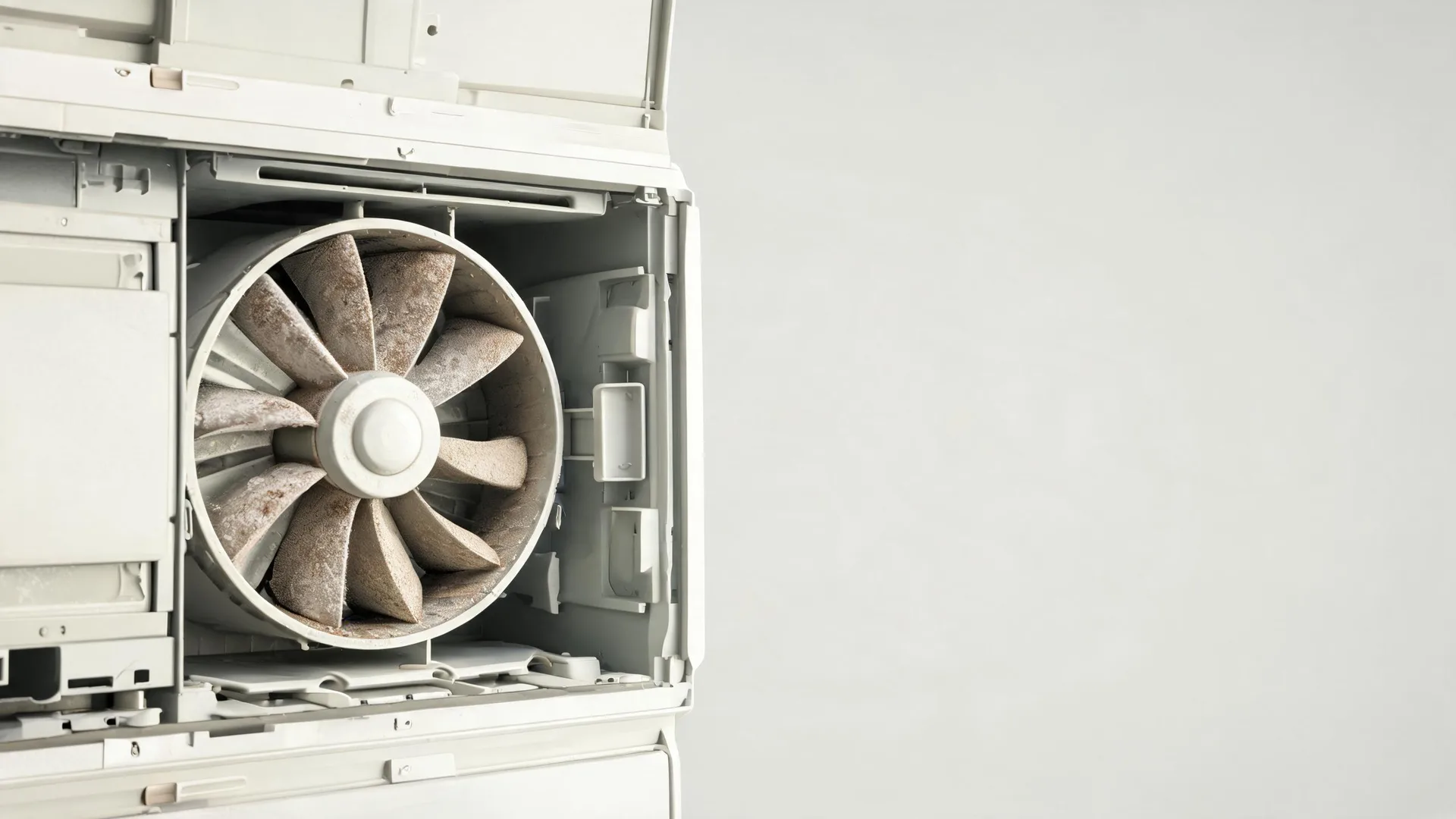
Look at the outdoor unit first. Leaves, grass clippings or a fence line grown in too close will choke airflow across the coil, and that alone can make a system blow warm air. Check the air filter too. A clogged one starves the whole system of airflow and can cause ice to form on the indoor coil. Inside, make sure the thermostat is set to cool and the batteries aren't dying, and check the breaker if the system won't come on at all.

What to leave alone

Don't pull panels off the indoor or outdoor unit or touch anything electrical behind them. Don't add refrigerant yourself even if you can get your hands on it, since the wrong pressure can damage the compressor. If you see ice on the coil or lines, turn the system off and let it thaw rather than running it to try to melt it off, since running it iced up strains the compressor.

An outdoor air conditioning condenser unit mounted on a concrete pad next to a blue-sided residential house at sunset.

A new air conditioner would save little on running costs in San Francisco County, so the repair decision comes down to the unit's condition.

  • An older air conditioner$40 a year
  • A new one at the federal minimum, 14.3 SEER2$40 a year

Estimates for a typical San Francisco County home, compared with an older unit built to the previous federal minimum, from EIA household energy data, California fuel prices and NOAA climate normals. Your home will differ.

Repair makes sense when a part like a capacitor or contactor has failed.

Replacement makes sense when the compressor has failed or the system uses R-22 refrigerant, which is no longer made.

A diagnostic starts with questions, not tools. What's the system doing, when did it start, does it happen all the time or only when the sun's been on the house all afternoon. Then the gauges go on to check refrigerant pressure, since that reading points toward several different problems depending on what it shows. From there a tech works through it in order. The capacitor gets tested for the jolt it should deliver. The contactor gets checked for a clean connection. The fan motors get checked for a free spin. The coils get checked for airflow across them. Ruling things out is most of the job. By the time there's an answer, it's usually one part, not a system falling apart, and that part has a name you'll hear plainly, not a guess dressed up as one.