El Dorado County's housing is newer than most
Half the homes in the county were built in 1983 or later. A system that came with a house from that range usually isn't old enough to write off.

Takes about a minute. No obligation.
Half the homes in the county were built in 1983 or later. A system that came with a house from that range usually isn't old enough to write off.
When the house is newer, a broken AC is more often one bad part, like a capacitor or a contactor, than a system near the end of its life. Worth having someone look before you think about replacing it.

NOAA nClimDiv, 1991–2020 normals
Your AC only has to work about two months a year here, July and August, with afternoon highs averaging 83.
A system that's only earning its keep two months a year usually has less wear on it than the age on paper suggests.



Electricity in California runs 31.97 cents per kilowatthour, among the highest rates in the country. An AC that's short-cycling, low on charge, or straining through a bad capacitor pulls more power to do the same job, or runs longer trying to. Here that shows up fast on the bill. With a system that only earns its keep two months a year, a problem left alone doesn't get much chance to average itself out before the season's over. Worth getting looked at now instead of letting it run rough through the only stretch it works.
If your system came with a newer house, it likely has plenty of life left. Repair is usually the right call.
Find a contractor
Most AC failures trace back to a handful of parts, and almost none of them fail because the refrigerant ran out on its own. A sealed system doesn't use up refrigerant. If the charge is low, it's leaking from somewhere, usually a joint or a coil, and that leak doesn't fix itself. The capacitor is the part that gives out most often, since it's what gets the compressor and fan motor started every single cycle, over and over, for years. A contactor can also wear out from the constant arcing every time it opens and closes. Coils fail differently. The outdoor coil gets caked with debris over time and loses its ability to shed heat. The indoor coil freezes when airflow is choked off, usually by a dirty filter or a failing blower, and ice on that coil will only make the problem worse the longer the system keeps running. A compressor rarely just quits out of nowhere. It's usually the last part to go after something else, like low charge or a bad capacitor, has made it work harder than it was built to for too long.
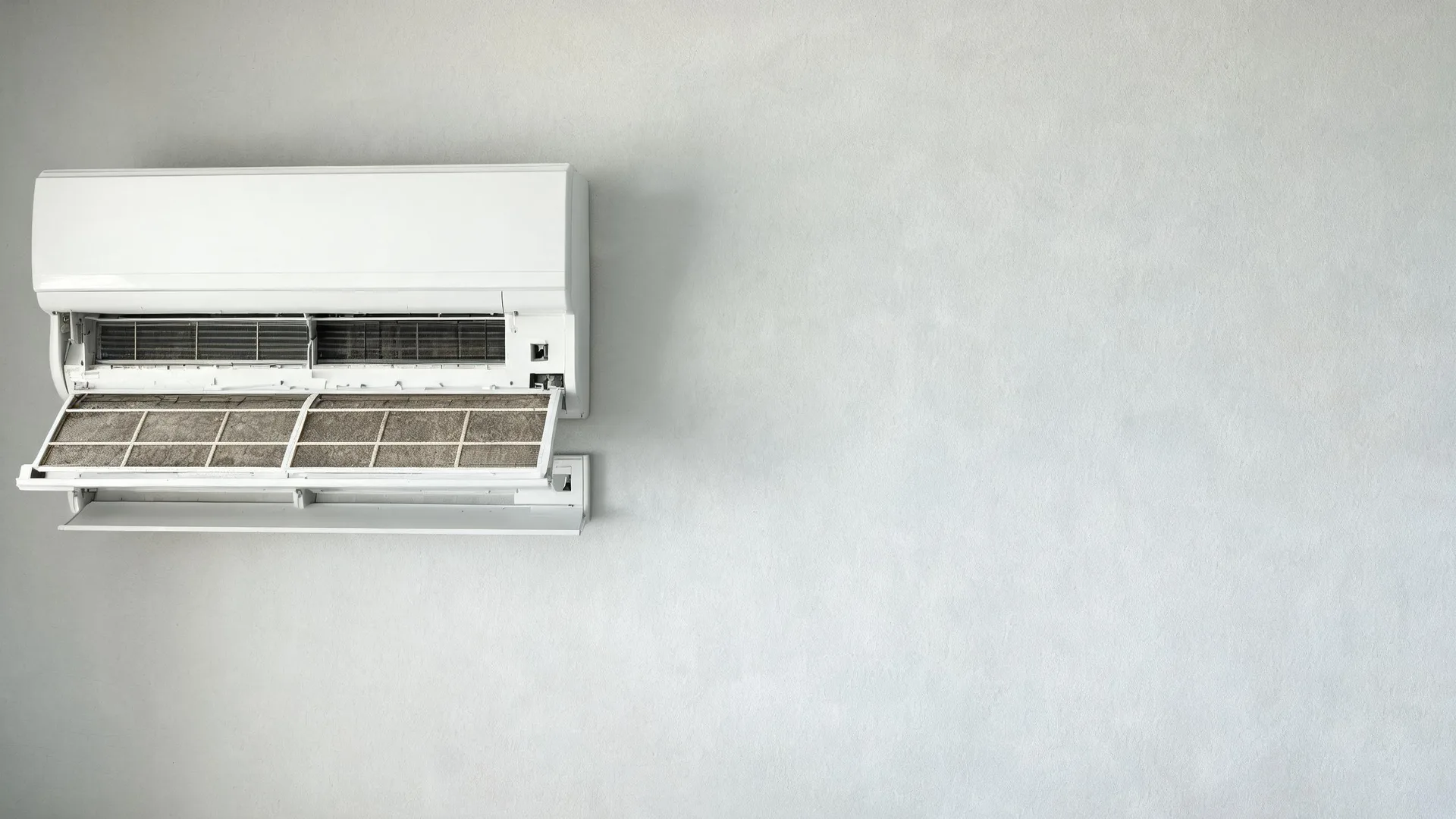
A filter clogged with dust chokes airflow across the indoor coil. The coil gets too cold, ice builds on it, and the system loses what little cooling it was managing. Pull the filter and hold it up to a light. If light barely gets through, that alone could be most of the problem.
Make sure the thermostat is set to cool and set below room temperature, and swap the batteries if it has a blank or dim display. Then check the breaker box for anything tripped. Both take a minute to rule out before deciding the system itself is at fault.
Estimates for a typical El Dorado County home, compared with an older unit built to the previous federal minimum, from EIA household energy data, California fuel prices and NOAA climate normals. Your home will differ.
Repair makes sense when a part like a capacitor or contactor has failed.
Replacement makes sense when the compressor has failed or the system uses R-22 refrigerant, which is no longer made.
A diagnostic starts before any panel comes off. A tech asks what the system is doing first. Short cycling, warm air, ice on the coil, a tripped breaker. Each one points somewhere different before a single tool comes out. Power and controls get checked next, making sure the thermostat is calling for cooling and the right voltage is reaching the unit. The capacitor and contactor get tested after that. A weak capacitor is one of the most common reasons a compressor hums but won't start. Refrigerant charge and pressures get checked with gauges, since low charge and a failing compressor both show up as warm air at the vents. Airflow gets a look too. A frozen coil or a struggling blower can look like a refrigerant problem that isn't actually there. By the end the problem has a name, not just a symptom.