Five months of this, every year
Davis runs its AC from May through September, and June through August the afternoon high averages 93°F. There's not much of a break between that first warm week in spring and the last hot stretch in fall.
Takes about a minute. No obligation.
Davis runs its AC from May through September, and June through August the afternoon high averages 93°F. There's not much of a break between that first warm week in spring and the last hot stretch in fall.
A capacitor or contactor that's starting to go will often hold on through a mild stretch and fail on the hottest afternoon. When a system runs this much heat this often, worn parts show themselves early instead of waiting.

NOAA nClimDiv, 1991–2020 normals
May is when Davis AC units go back to work after sitting idle since September.
A weak capacitor that made it through last summer is the first thing to give out under that early load.



California electricity ran 31.97 cents per kilowatthour in 2024, among the highest rates in the country. A struggling AC doesn't run cheap here. A dirty coil, a low charge, a weakening capacitor, all of them make the compressor work harder to do the same job, and every extra minute of that shows up on the bill. Power this expensive turns a small problem into a monthly cost you keep paying until someone fixes it. Getting it looked at now is cheaper than running it broken through the rest of the season.
A system that's worn from running this hard doesn't need guessing, it needs someone to find the actual part giving out. A proper diagnosis catches the capacitor or contactor before it's the reason the house is 93 degrees inside too.
Find a contractor
Half of Davis homes were built in 1983 or later, which puts a lot of AC systems well within the years they're built to run. If yours is one of them, a repair is the better move before it's a replacement. Have the tech confirm the age of the unit when they're out, not just the house, since a newer house can still have had its AC swapped out once already.
The capacitor gives the compressor and fan motor the jolt they need to start. It weakens slowly, a little more each time it cycles, until one start doesn't take. A unit that hums but won't kick on, or that starts hard and struggles, usually has a capacitor near the end of its life.
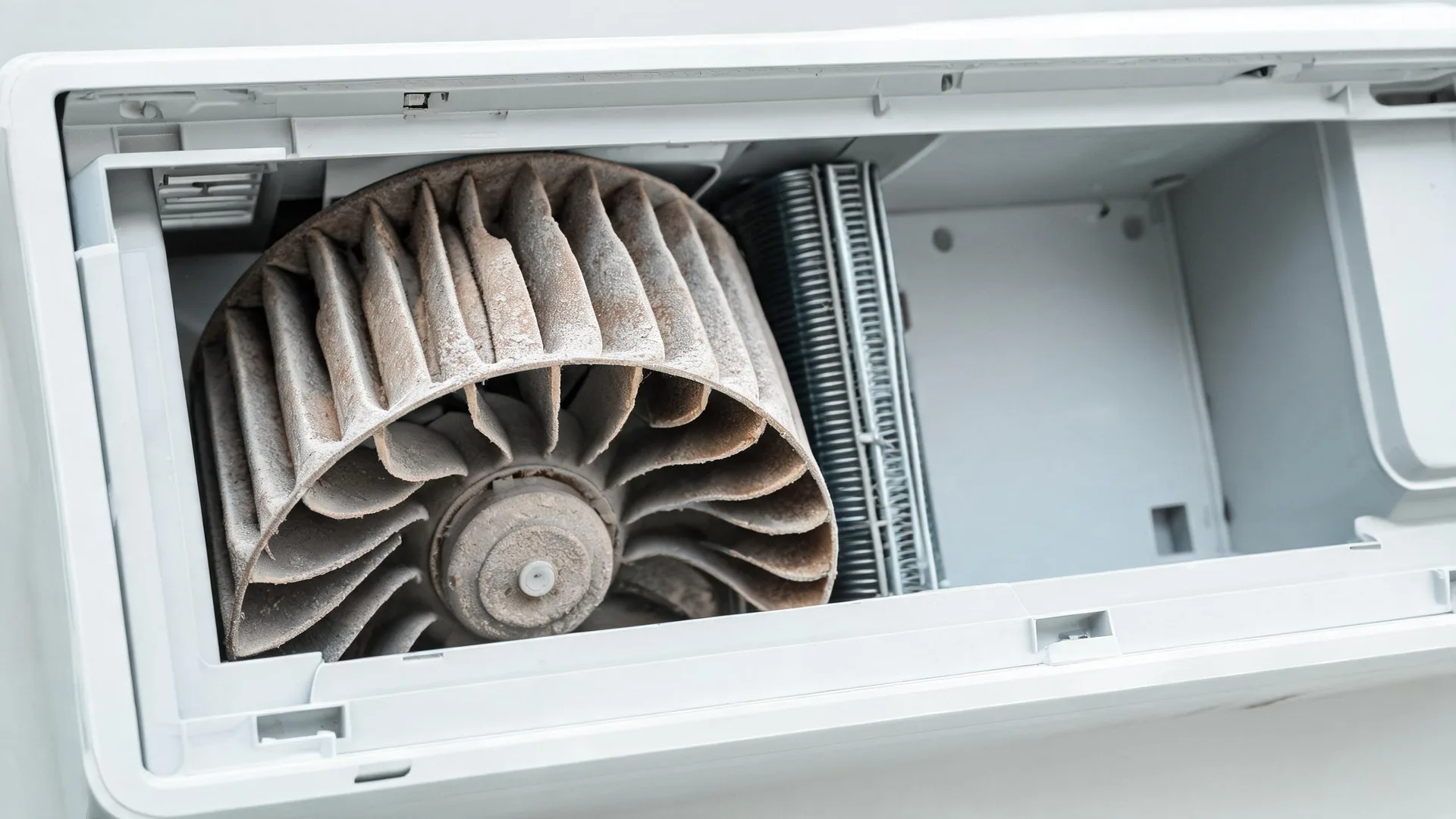
The outdoor coil has to shed heat to the air around it. When it's caked with dirt or grass clippings, it can't let go of that heat, so the compressor runs longer and hotter to do the same job. Left alone, that extra strain is what wears out a compressor years before it should fail.
Estimates for a typical Yolo County home, compared with an older unit built to the previous federal minimum, from EIA household energy data, California fuel prices and NOAA climate normals. Your home will differ.
Repair makes sense when a part like a capacitor or contactor has failed.
Replacement makes sense when the compressor has failed or the system uses R-22 refrigerant, which is no longer made.
A diagnostic visit starts outside, at the unit itself. A tech checks the capacitor and contactor first, since those are the parts most likely to be struggling, then moves to the refrigerant charge and the coil. Gauges go on the lines to see whether the system has the charge it needs or is running low. Inside, they'll check the air coming off the vents against the air going into the return, since that gap says a lot about whether the system is actually cooling or just running. They'll also check how the system cycles, because one that starts hard, runs too long, or shuts off early is usually pointing at the same worn part causing the symptom you called about. By the end, the goal is a part they can point to, not a guess.