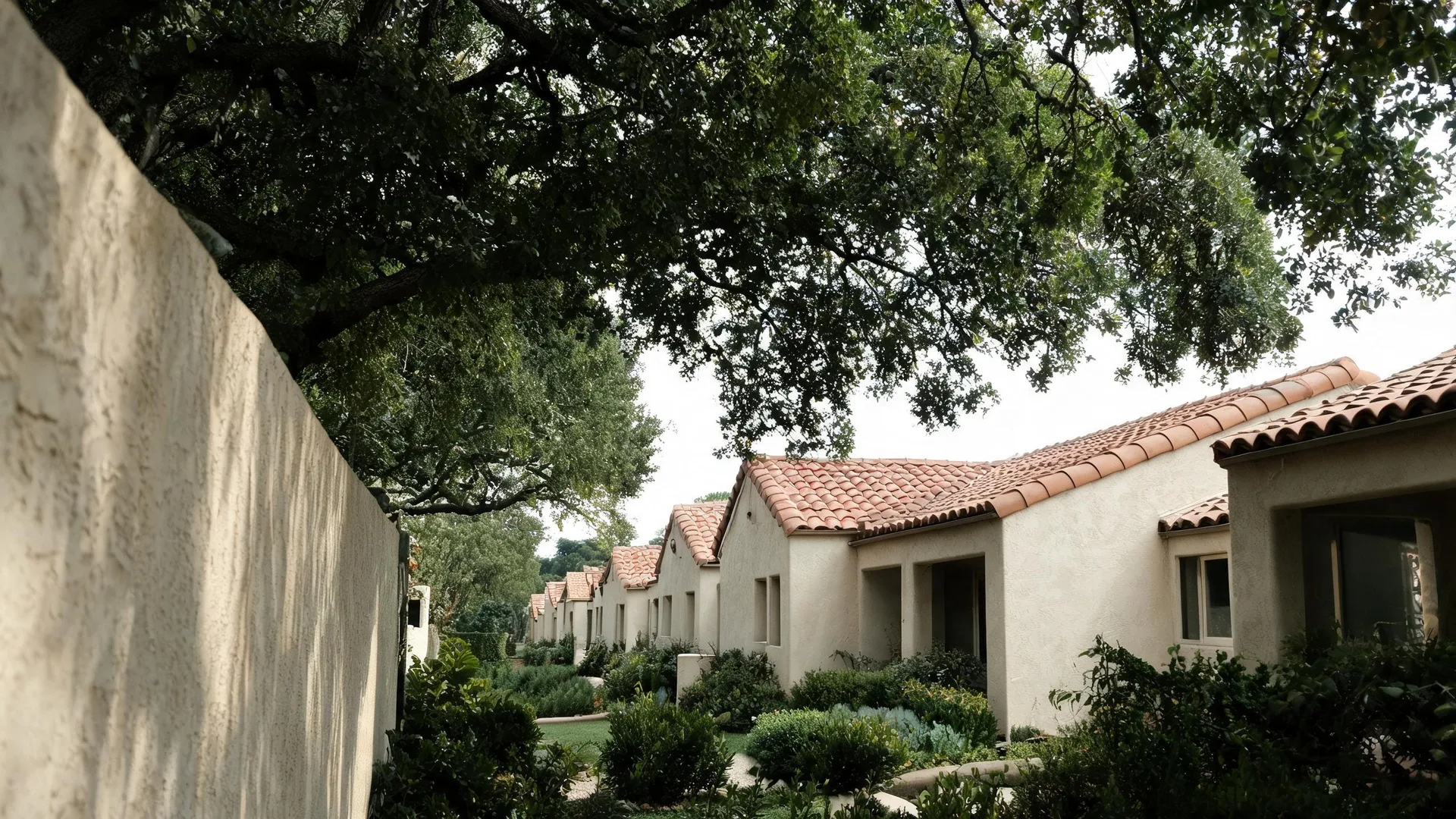






A row of white stucco buildings with red clay tile roofs behind shrubs and garden beds, seen past a tall stucco wall under overhanging oak branches.

AC Repair in Sacramento, CA

Tell us about the job

Takes about a minute. No obligation.

RepairCentral ACSacramento County, CA
Step 1 of 2

What ZIP code is the job in?

Your AC runs about five months a year here, May through September, and it's working against a 92 degree afternoon for most of June, July and August. That's a long stretch of hard running with no real break. A system under that kind of load wears sooner than one that only kicks on a few weeks a year. The capacitor, the contactor, the fan motor, all of them see more cycles here than they would somewhere milder. So when something starts acting up, it's usually not bad luck. It's wear that showed up on schedule.

5 months
May through September, your air conditioner is on duty
92°F
the average summer afternoon it cools against
2 hail events
in ten years, and hail bends the fins on outdoor coils
54 wind events
in ten years, and wind drives debris into outdoor units
Isometric line illustration of a cutaway house showing interior rooms with furniture, ductwork leading to an indoor air handler, and an outdoor condenser unit connected by a line set.
Your air conditioner works hardest from June through September.

NOAA nClimDiv, 1991–2020 normals

April is the month before cooling starts in Sacramento County.

Get the AC checked in April, before May's load finds the part that was already weak.

At 31.97 cents a kilowatt-hour, a struggling AC costs you all summer

Power costs 31.97 cents a kWh statewide
Cooling runs May through September
Summer afternoons average 92°F

Half the homes in Sacramento County were built in 1981 or later. If yours is one of them, the AC acting up right now probably isn't the system giving out. A unit that came with a newer house still has working life in it, and a repair usually gets you back the rest of that life instead of just buying time. The age of the house doesn't tell you the age of the AC itself, since units get swapped out over the years. But if yours has never been replaced, it's worth finding out before anyone talks you into a new system.

Have it diagnosed, not just patched

Get it looked at before it fails outright. A proper diagnosis finds the actual weak part, so the repair holds instead of just getting you through the next hot week.

Find a contractor
A man in a dark cap and shirt carries a worn leather tool bag up wooden porch steps toward an orange front door, with a potted shrub in a terracotta planter to the right.
An outdoor air conditioning condenser unit mounted on a concrete pad surrounded by gravel, photographed against a partly cloudy blue sky.

Find out how old it really is

Years on the unit matter more than years on the house. If the AC has never been swapped out, check the nameplate or ask whoever installed it how old it is before you decide anything. A repair on a system with real life left in it is time well spent. One that's already been replaced once is a different conversation.

What you'll actually notice first

The AC runs longer than it used to before the house cools down, or it shuts off and on more often than it should. Warm air coming out of the vents, or air that barely moves, both point to trouble. Sometimes it's a sound. A hum from outside with no air moving, a click that repeats without the fan ever starting, a rattle that wasn't there before. Any of these is the system telling you something specific, not just getting old.

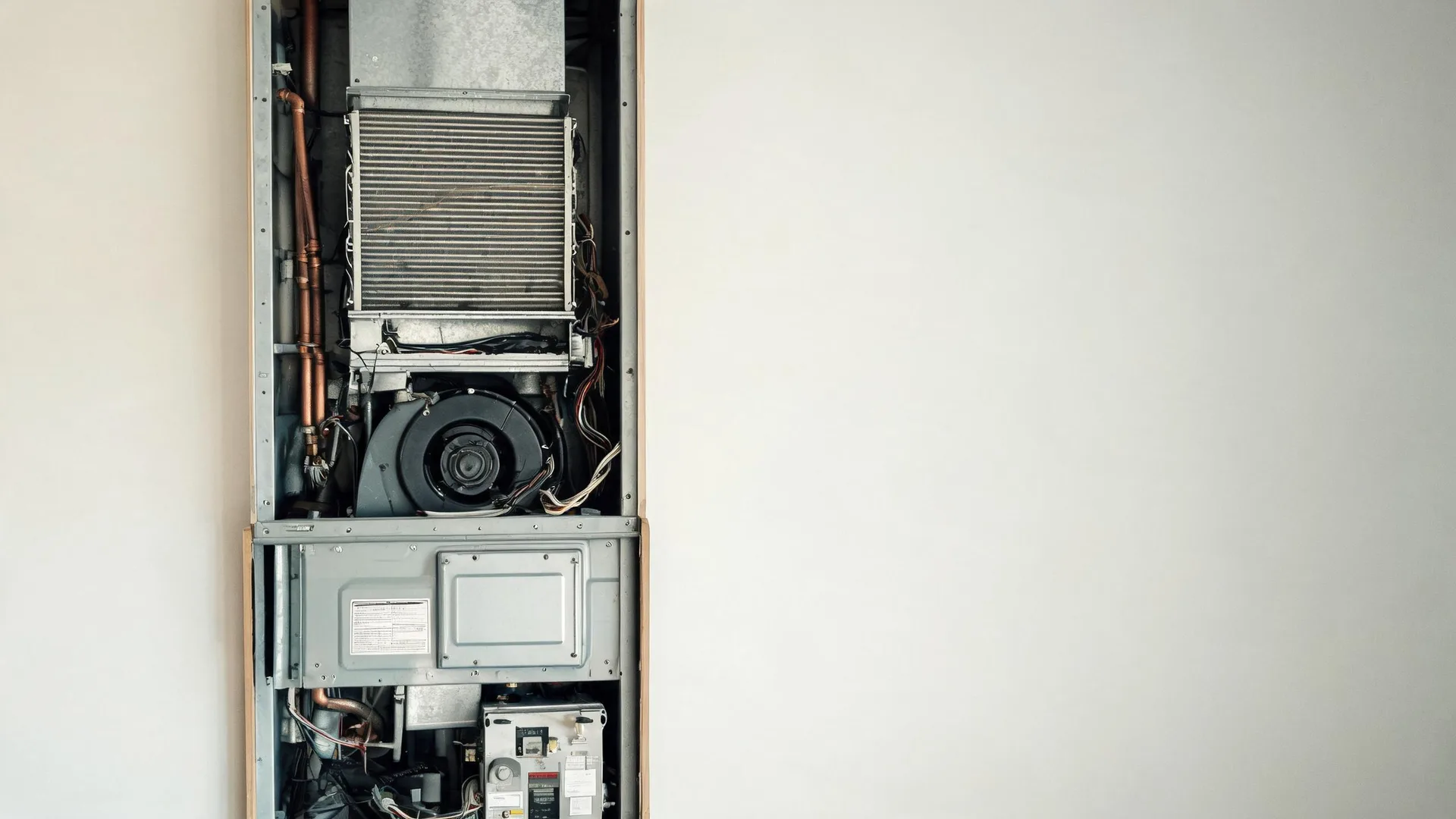
Why waiting makes it worse

A struggling compressor or a weak capacitor doesn't rest when you ignore it. It keeps trying to start under the same load, and that's what finishes off a part that was already failing. A system that's short cycling or icing up on the coil is working harder to do less, and that strain spreads to the parts around it. Catching it while it's one bad part is a different job than catching it after that part takes others with it.

An overhead view of a residential air conditioning condenser unit mounted on a concrete pad next to a house with vinyl siding.

A new air conditioner would cut about $80 a year off cooling for a typical Sacramento County home.

  • A new one at the federal minimum, 14.3 SEER2$520 a year
  • An older air conditioner$600 a year

Estimates for a typical Sacramento County home, compared with an older unit built to the previous federal minimum, from EIA household energy data, California fuel prices and NOAA climate normals. Your home will differ.

Repair makes sense when a part like a capacitor or contactor has failed.

Replacement makes sense when the compressor has failed or the system uses R-22 refrigerant, which is no longer made.

A diagnostic visit starts outside at the condenser and inside at the air handler, not with a guess. The tech checks refrigerant pressure, tests the capacitor and contactor, and watches the compressor try to start under its actual load instead of just listening to it run for a minute. Electrical readings catch a motor that's drawing more than it should, which usually means it's on its way out even if it's still spinning. The coil gets checked for ice or buildup, and the airflow gets checked separately, since a coil can be clean and still choked by a filter or a blocked return. None of this is guesswork done by ear. It's the difference between replacing the part that's actually failing and replacing the one that happened to make a noise.