An overhead view of a residential air conditioning condenser unit mounted on a concrete pad next to a house with vinyl siding.

AC Repair in San Jose, CA

Tell us about the job

Takes about a minute. No obligation.

RepairCentral ACSanta Clara County, CA
Step 1 of 2

What ZIP code is the job in?

Storms hit this county often

Santa Clara County recorded 298 severe weather events between 2015 and 2024, including 257 cases of damaging wind and 33 hail events. An outdoor AC unit sits outside through all of it, exposed to whatever wind and hail bring.

Power doesn't always hold

17% of California households went at least 24 hours without power in 2024. When the power drops, the air conditioner stops with it, and so does anything else in the house that depends on electricity.

3 months
July through September, your air conditioner is on duty
82°F
the average summer afternoon it cools against
33 hail events
in ten years, and hail bends the fins on outdoor coils
257 wind events
in ten years, and wind drives debris into outdoor units
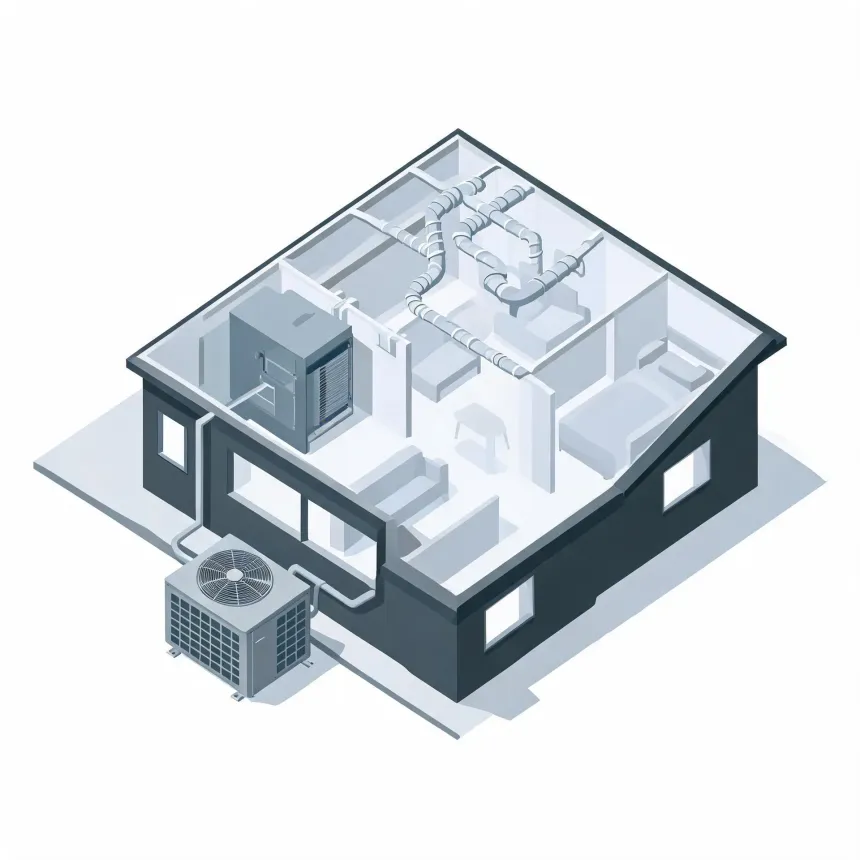
Isometric cutaway illustration of a small house showing interior rooms with furniture, ceiling ductwork and an air handler, plus an outdoor condenser unit connected by refrigerant lines beside the building.
Your air conditioner works hardest from July through September.

NOAA nClimDiv, 1991–2020 normals

AC starts running in July here.

June is when a weak part gets found before the first hot stretch finds it instead.

Every kilowatt it wastes here costs more than it would almost anywhere else

Power here costs 36.42 cents per kilowatt-hour
Cooling runs July through September
Summer afternoons average 82°F

A struggling AC doesn't fail all at once. A dirty coil, a weak capacitor, a low charge, any of these makes the unit run longer to do the same job. Here, where every kilowatt already costs more, that difference shows up fast. Waiting through another month of warm weather on a system that's working harder than it should just adds it to the bill. Getting the problem looked at now, before the next hot stretch, is the cheaper path either way.

If your AC took a hit from the weather, get it checked before it fails

If the outdoor unit took hail or wind debris this year, have it looked at even if it still runs. Dents and bent fins can hide damage that shows up as a breakdown later, and a unit that's already weak is the one that won't restart when the power comes back on.

Find a contractor
A gray metal air conditioning condenser unit mounted on a concrete pad in a flat grassy field under a partly cloudy sky.

What you can check before you call

Before calling anyone, there are a few things worth a look. Check the thermostat first. Make sure it's set to cool and set below room temperature, and if it runs on batteries, swap them. Next, go to the breaker panel and look for a tripped breaker on the AC circuit. It can trip once from a surge and reset fine, but if it trips again after you reset it, stop and leave it off. Outside, check the condenser unit itself. Clear away any leaves, grass clippings or debris piled against it, and make sure nothing is blocking airflow on any side. Look at the fan on top. If it's not spinning when the system is calling for cooling, don't try to spin it by hand. Inside, check the air filter. A filter clogged with dust and pet hair chokes off airflow and can cause the whole system to ice up. If you can see ice on the indoor coil or on the refrigerant lines, turn the system off at the thermostat and let it thaw completely before anyone touches it further. Also check that the vents around the house are open and not blocked by furniture or rugs. Last, look at the drain line near the indoor unit for standing water or a musty smell, since a clogged drain can shut the whole system down as a safety measure. None of this calls for opening the unit itself or touching electrical connections. If the breaker keeps tripping, the fan won't turn, or there's water where there shouldn't be, that's where a homeowner's job ends and a technician's begins.

A struggling part drags down the ones around it

A compressor low on charge runs hotter than it should, and the heat it builds doesn't stay put. It can cook the windings until the motor fails for good. A dirty coil makes the compressor work harder to move the same heat, which shortens its life too. The parts of an AC don't fail in isolation. One weak part raises the load on whatever is downstream of it.

Running it broken trades a repair for a replacement

Most AC problems start as something a technician can fix in an hour: a capacitor, a contactor, a clogged line. Left alone, the unit doesn't just keep working at reduced performance. It keeps stressing the same weak point until that part takes out something bigger, often the compressor itself. A compressor is the most expensive part in the system to replace, and in a lot of cases it's cheaper to replace the whole unit than just that part.

An outdoor air conditioning condenser unit positioned beside a blue-sided house at sunset.

A new air conditioner would cut about $30 a year off cooling for a typical Santa Clara County home.

  • A new one at the federal minimum, 14.3 SEER2$230 a year
  • An older air conditioner$260 a year

Estimates for a typical Santa Clara County home, compared with an older unit built to the previous federal minimum, from EIA household energy data, California fuel prices and NOAA climate normals. Your home will differ.

Repair makes sense when a part like a capacitor or contactor has failed.

Replacement makes sense when the compressor has failed or the system uses R-22 refrigerant, which is no longer made.

A repair makes sense when the part that failed is cheap next to the unit around it. A capacitor, a contactor, a fan motor: these fail on their own, and swapping one doesn't say anything bad about the rest of the system. Replacement starts to make sense when the compressor is the thing that's gone, or when the unit has needed a repair every season for a few years running. Age matters too, but not by itself. An old unit that's been maintained can outlast a young one that's been ignored. What a technician is really checking is whether the system around the failed part is still sound enough to be worth saving.