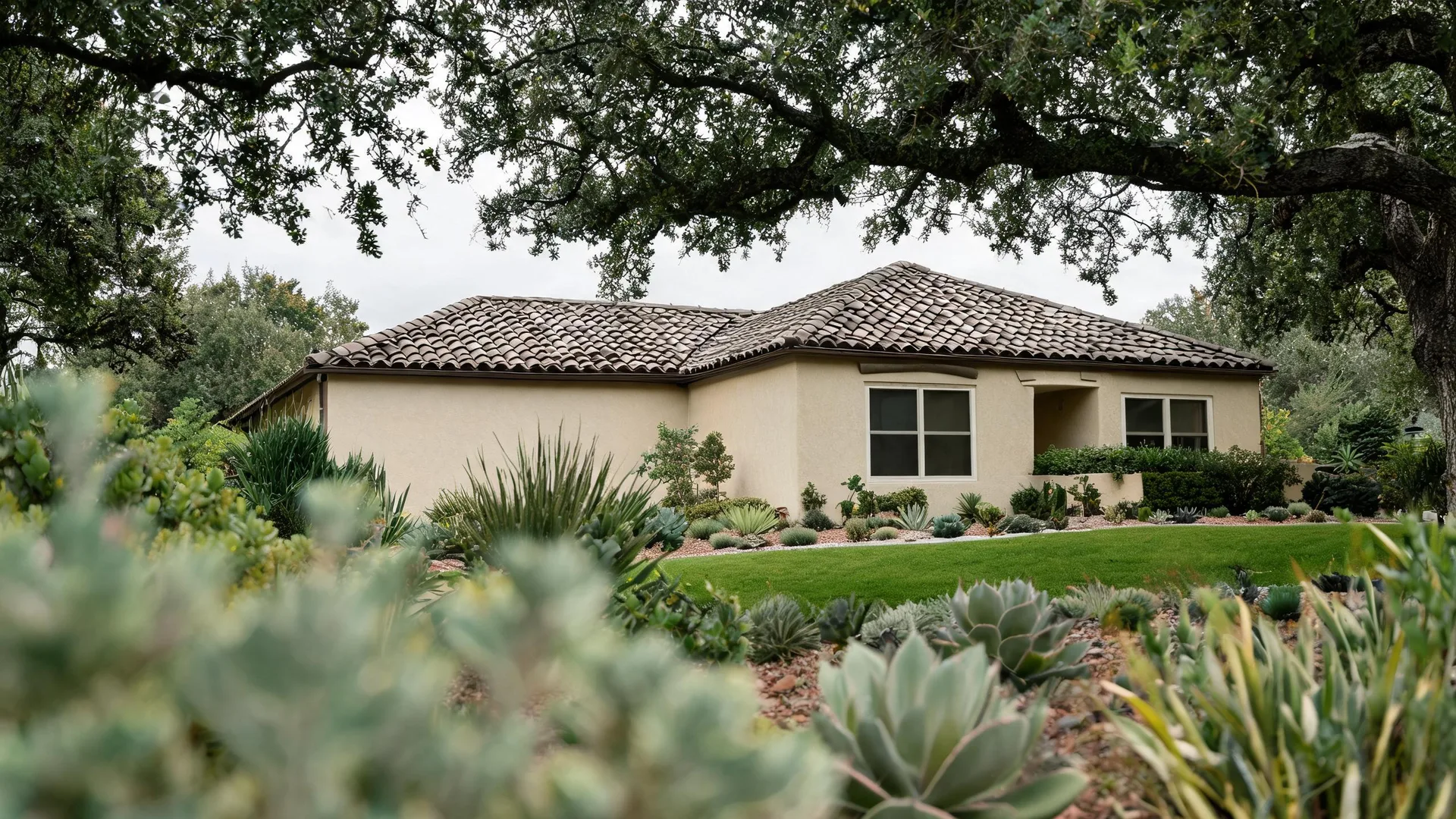






A single-story stucco house with a tile roof, framed by oak branches, with a lawn and agave and succulent plantings in gravel beds in the foreground.

AC Repair in Roseville, CA

Tell us about the job

Takes about a minute. No obligation.

RepairCentral ACPlacer County, CA
Step 1 of 2

What ZIP code is the job in?

Half the houses in Placer County were built in 1994 or later. If yours is one of them, your air conditioner is probably not that old either. A unit installed with a newer home usually still has years of service left in it, so a repair now makes more sense than a replacement. Worth checking the install date on your system before you decide anything.

2 months
July through August, your air conditioner is on duty
84°F
the average summer afternoon it cools against
6 hail events
in ten years, and hail bends the fins on outdoor coils
223 wind events
in ten years, and wind drives debris into outdoor units
Isometric line illustration of a cutaway house showing interior rooms, ceiling ductwork connected to an indoor air handler, and an outdoor condenser unit linked by refrigerant lines.
Your air conditioner works hardest from July through August.

NOAA nClimDiv, 1991–2020 normals

Your air conditioner only has to work hard about two months a year here.

A system that catches a break most of the year is usually worth repairing when something goes wrong in July or August.

Roseville's AC gets two months of real work, and July is when the weak part gives out

Cooling runs July through August
Summer afternoons average 84°F
223 damaging wind events from 2015 to 2024

Wind is the other thing working against your AC here. Placer County saw damaging wind 223 times between 2015 and 2024, and a unit outside takes that straight on. A cabinet that's been rattled around is more likely to have a loose connection or a fitting that's worked itself open than one that's just old. That's a different problem than wear from running hard, and it's usually a quicker fix. Worth mentioning to the tech what the system was doing before it started acting up, including anything odd the last time the wind kicked up.

Repair it

If your system came with a newer house, it likely has plenty of life left. Repair is usually the right call.

Find a contractor
A man in a brown jacket, dark pants, boots and a cap walks up porch steps toward an open orange door, carrying a canvas tool bag beside a potted shrub.
A gray residential air conditioner condenser unit mounted on a concrete pad in an open grass field.

Know the age before you decide anything

Check the install date before you call anyone out. If the system is original to the house, a parts number on the unit or a sticker inside the service panel will usually tell you when it went in. That date matters more than how the unit looks or sounds right now, since a newer compressor or control board is worth putting a part into.

A weak capacitor turns into a dead compressor

A capacitor that's losing strength makes the compressor strain to start each cycle. Run it that way long enough and the compressor windings take the damage instead. A capacitor is a simple swap. A compressor is not, and a failed one usually means replacing the whole unit.

Low refrigerant lets the coil freeze over

When the charge is low, the evaporator coil gets too cold and ice builds up on it. Keep the system running and that ice blocks airflow completely, which starves the compressor of the cooling it needs to survive. What starts as a small leak can end as a compressor replacement if the system keeps cycling.

An outdoor central air conditioning unit mounted on a concrete pad beside a blue-sided house at sunset.

A new air conditioner would cut about $30 a year off cooling for a typical Placer County home.

  • A new one at the federal minimum, 14.3 SEER2$220 a year
  • An older air conditioner$250 a year

Estimates for a typical Placer County home, compared with an older unit built to the previous federal minimum, from EIA household energy data, California fuel prices and NOAA climate normals. Your home will differ.

Repair makes sense when a part like a capacitor or contactor has failed.

Replacement makes sense when the compressor has failed or the system uses R-22 refrigerant, which is no longer made.

A diagnostic visit starts before any panel comes off. A tech will ask what the system is doing. Short cycling, running nonstop, blowing warm, tripping a breaker, each points somewhere different. Then comes the gauge set on the refrigerant lines and a meter on the electrical parts, since those checks rule out or confirm most of what goes wrong. Capacitor strength gets tested under load, not just by looks. A capacitor can look fine and still be too weak to do its job. The coil gets checked for ice or blocked airflow, and the contactor gets checked for pitting from years of switching on and off. Most visits end with a clear answer, which part failed, why it failed, and whether anything else is close behind it.