




A row of cream stucco houses with red tile roofs behind trimmed hedges and shrubs, framed by a stucco wall in the foreground and overhanging tree branches above.

AC Repair in Napa, CA

Tell us about the job

Takes about a minute. No obligation.

RepairCentral ACNapa County, CA
Step 1 of 2

What ZIP code is the job in?

May is when it's worth getting a failing AC looked at here, before June turns the heat on for the season. Cooling in Napa County only runs about four months, June through September, and a system that sat idle since September isn't tested again until that first hot day. Weak parts don't show themselves sitting still. A capacitor on its way out, a low charge, a tired contactor, they hold on through the off months and then give out under the first real load. That's why the first few weeks of the season see so many service calls. Getting it checked in May catches the problem before the heat does.

4 months
June through September, your air conditioner is on duty
87°F
the average summer afternoon it cools against
1 hail events
in ten years, and hail bends the fins on outdoor coils
72 wind events
in ten years, and wind drives debris into outdoor units
Isometric line illustration of a cutaway house showing interior rooms, ceiling ductwork, an indoor air handler unit, and an outdoor condenser connected by lines along the exterior wall.
Your air conditioner works hardest from June through September.

NOAA nClimDiv, 1991–2020 normals

A tech starts a diagnostic visit by asking what the system is doing, short cycling, running warm, not starting at all.

The symptom the owner describes tells the tech where to check first, the capacitor, the charge, the contactor.

At 31.97 cents a kilowatt-hour, a struggling AC gets expensive fast

Power costs 31.97 cents a kWh statewide
Cooling runs June through September
Summer afternoons average 87°F

Most AC problems announce themselves before the system quits outright. Short cycling is one, the unit kicks on, runs a few minutes, shuts off, then starts again. That usually points to a dirty filter choking airflow or a thermostat sensor reading the room wrong. Warm air blowing from the vents with the system running is another, and it can mean the charge is low or the compressor itself is failing. A unit that won't start at all is often a capacitor that's given out or a contactor stuck open. Ice on the refrigerant line, a hissing sound, a musty smell from the vents, each of these points somewhere specific. None of them get better by waiting.

A struggling AC costs more to ignore here than to fix

At 31.97 cents a kilowatt-hour, a bad capacitor or a low charge doesn't just risk a breakdown, it runs up the bill every day it's left alone. Get it looked at now and it's a repair. Wait, and it's a repair plus months of paying extra to run a system that's already struggling.

Find a contractor
A gray metal air conditioning condenser unit mounted on a concrete pad in a flat grassy field under a partly cloudy sky.

What you can check yourself before the service call

Before calling anyone, look at the thermostat first. Make sure it's set to cool and set below room temperature, not just sitting on the same number it's been on for weeks. Check the breaker panel too. A tripped breaker will stop the whole system cold, and it's a simple flip to test, though if it trips again right away, stop and leave it off. Go outside and look at the condenser, the unit sitting in the yard. Clear anything piled against it, leaves, grass clippings, a stray branch. Airflow around that unit matters, and a blocked one can't shed heat right. Pull the air filter and hold it up to a light. If you can't see light through it, that's likely choking the system and worth swapping before anything else. Walk the vents inside the house and make sure none are closed or blocked by furniture. Last, look at the line running into the house from the outdoor unit. Ice anywhere on it means something is wrong with the charge, and that's not a homeowner fix, that one needs a gauge set and a trained eye.

A low charge gets lower

A system low on refrigerant makes the compressor work harder to move heat out of the house. That extra strain shows up as heat building in the compressor itself, and refrigerant also carries the oil that keeps its moving parts from wearing on each other. Keep running it low and the compressor can seize for good, turning a charge-and-check into a full replacement.

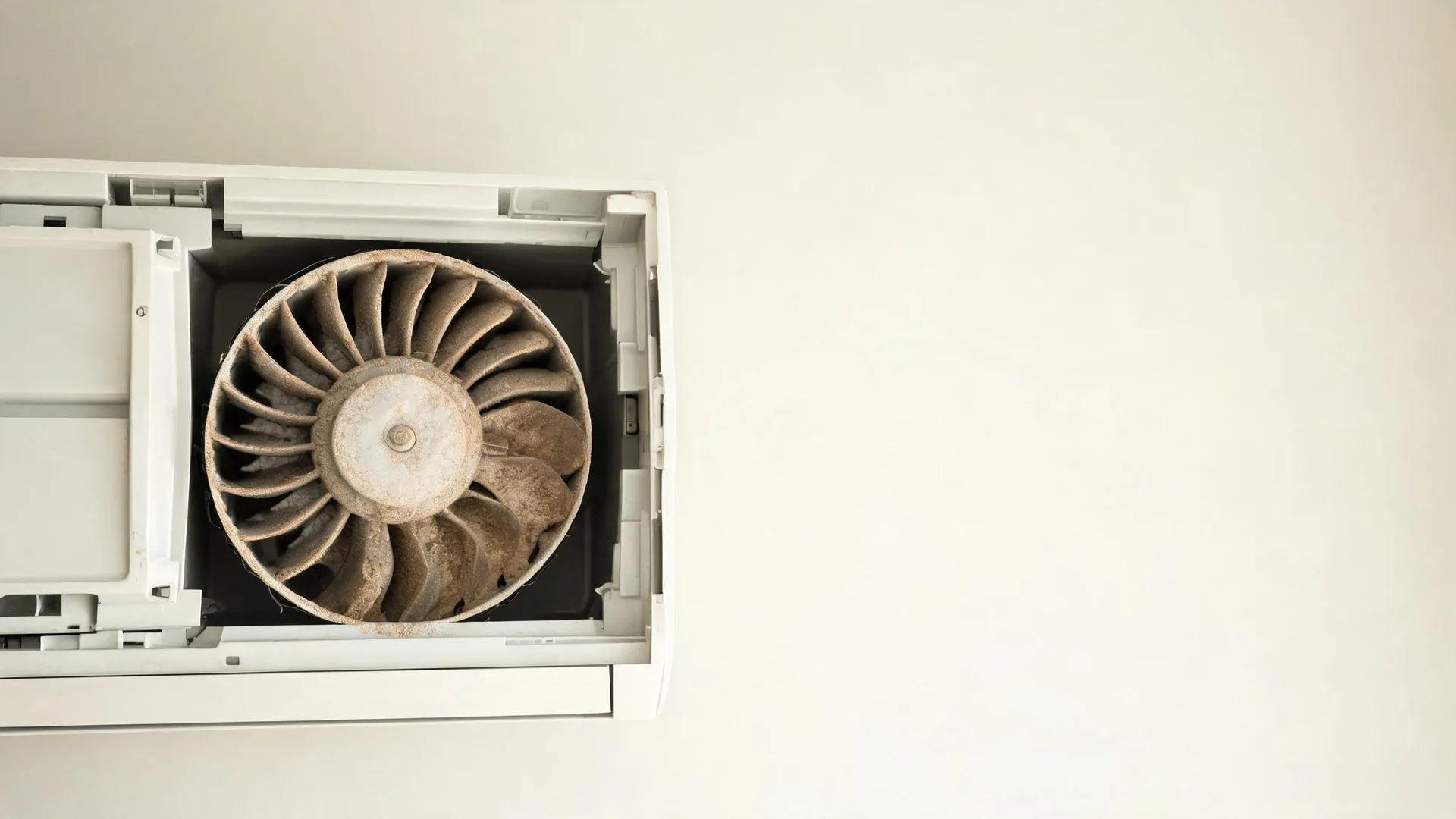
A failing part rarely fails alone

A weak capacitor makes the compressor or fan motor draw more current trying to start. That extra draw heats the motor windings every time it kicks on. A contactor with worn or pitted contacts feeds the motor power in a way it wasn't built to take. Either one can take the motor down with it if nobody catches it first.

Aerial view of a residential air conditioning condenser unit mounted on a concrete pad next to a house with vinyl siding and a sliding glass door.

A new air conditioner would cut about $50 a year off cooling for a typical Napa County home.

  • A new one at the federal minimum, 14.3 SEER2$320 a year
  • An older air conditioner$370 a year

Estimates for a typical Napa County home, compared with an older unit built to the previous federal minimum, from EIA household energy data, California fuel prices and NOAA climate normals. Your home will differ.

Repair makes sense when a part like a capacitor or contactor has failed.

Replacement makes sense when the compressor has failed or the system uses R-22 refrigerant, which is no longer made.

Repair makes sense when one part has failed and the rest of the system is sound. A capacitor, a contactor, a fan motor, these are replaceable on their own without touching anything else, and a compressor that's still turning over is worth protecting with a timely fix. Replacement starts to make more sense when the compressor itself is failing, or when the same system keeps coming back with a new problem every time an old one gets fixed. A compressor can't be repaired, only replaced, and because it's the most expensive part in the system, a failing one changes the math. Age matters too, though not on its own. A system nearing the end of its working life that needs a major repair is a different call than a young system with the same problem. A tech who's inside the unit can tell you which kind of situation you're looking at.