






A row of stucco buildings with red clay tile roofs behind trimmed hedges, seen along a textured wall with a large overhanging oak tree above.

AC Repair in Madera, CA

Tell us about the job

Takes about a minute. No obligation.

RepairCentral ACMadera County, CA
Step 1 of 2

What ZIP code is the job in?

Madera County saw 282 severe weather events between 2015 and 2024. Most of that was wind and winter storms, with damaging wind hitting 88 times and winter storms affecting the county 185 times. Hail showed up 6 times, and 3 tornadoes touched down in that stretch. An outdoor AC unit sits outside through all of it, exposed to wind-blown debris and hail that can bend the fins or crack the fan blades. A unit can keep running after that kind of hit and still be worse off than it was. If a storm has come through, it's worth having the unit looked at even if the air coming out still feels cold.

4 months
June through September, your air conditioner is on duty
87°F
the average summer afternoon it cools against
6 hail events
in ten years, and hail bends the fins on outdoor coils
88 wind events
in ten years, and wind drives debris into outdoor units
Isometric line illustration of a cutaway house showing interior rooms, ceiling ductwork connected to an indoor air handler, and an outdoor condenser unit linked by refrigerant lines.
Your air conditioner works hardest from July through August.

NOAA nClimDiv, 1991–2020 normals

Cooling starts in June here.

May is the month to get a weak AC looked at, before the first real load hits it.

A broken AC costs more here per hour than almost anywhere else

Power here costs 38.41 cents per kilowatt-hour
Climate zone 3B
Cooling runs June through September
These houses are newer than mostHalf the homes in Madera County were built in 1988 or later

A failing AC does not just run worse, it runs longer trying to make up for whatever is wrong with it. A weak capacitor or a low refrigerant charge makes the compressor work harder for the same result, and every extra minute it runs shows up on the bill at some of the highest power rates in the country. Waiting does not save money here. It costs more each week the problem sits. If the unit is short cycling, blowing warm air some of the time, or just running longer than it used to, get it looked at now rather than after another month of bills.

If a storm came through, get the unit checked

If the unit took a hit from wind-blown debris or hail at some point, it may be running worse than it looks. Bent fins and a cracked fan blade don't always stop a unit from running. They just make it work harder. Have it checked before you assume it's fine.

Find a contractor
A man in a cap, dark shirt and tan work pants walks up concrete steps toward a red front door, carrying a canvas tool bag with tools in its side pocket.
A gray residential air conditioner condenser unit mounted on a concrete pad in an open grass field.

Built to last longer than the problem

A unit installed with a newer house still has most of its working life ahead of it. That points toward fixing what's wrong rather than replacing the whole system. A compressor or a coil failing well before its time is usually a sign of something specific, a refrigerant leak, a control board issue, something a contractor can find and fix on its own. Worth asking what actually failed before anyone talks about replacing the unit.

Warm air from a cold system

If the air coming out isn't as cold as it used to be, the problem is usually the refrigerant charge or the compressor itself. A unit low on refrigerant will still blow air, just not cold air, and running it that way makes the compressor work harder than it should. This doesn't fix itself. It gets looked at or it gets worse.

Short cycling wears out the parts that start it

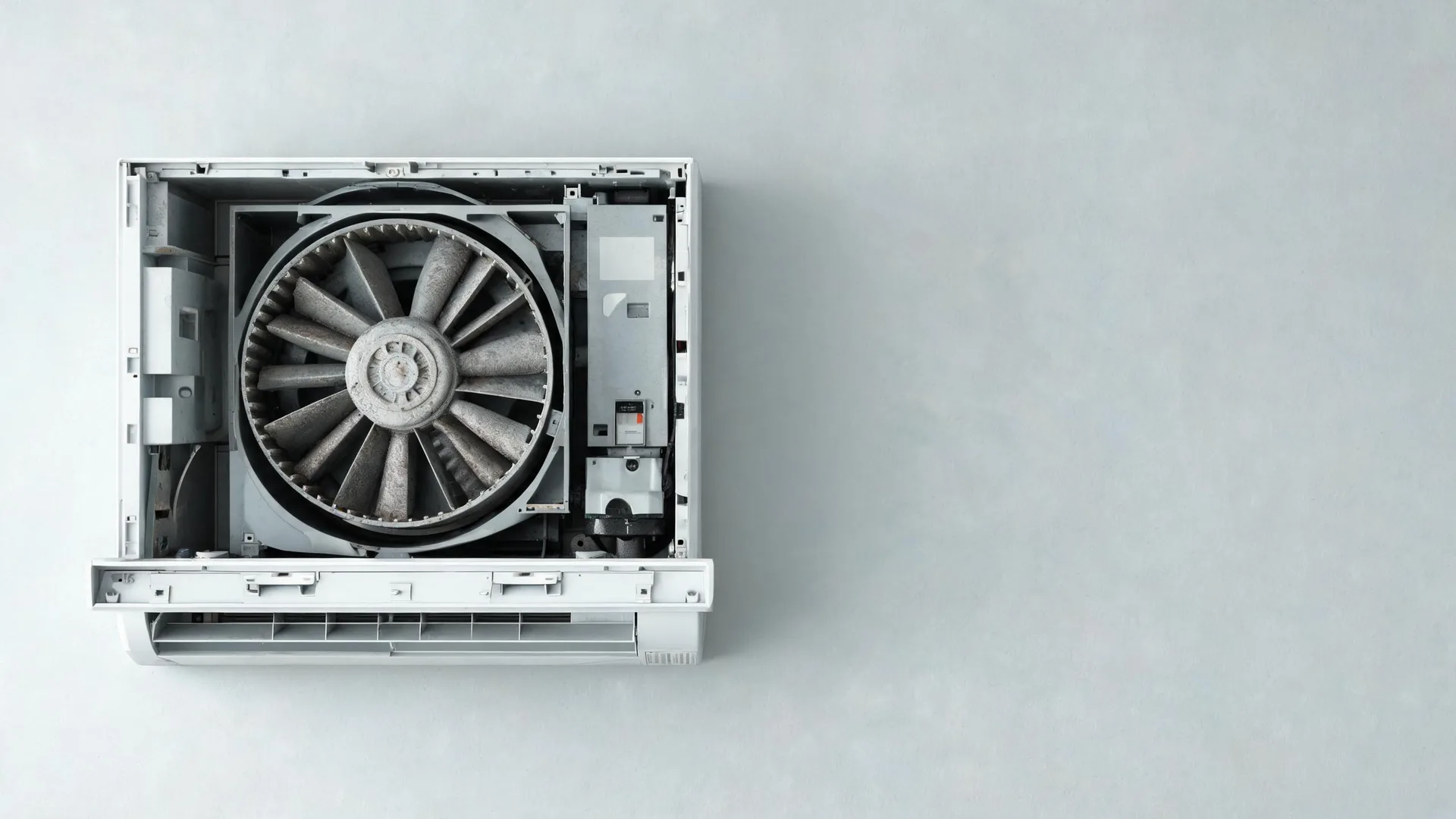
An AC that shuts off a few minutes after it starts, then kicks back on, is short cycling. Every start draws a hard jolt of current through the compressor and the capacitor, and a unit that starts and stops all day puts far more wear on those parts than one that runs a full cycle and shuts off normally. Short cycling is a sign something is already failing, not a quirk to ignore.

Aerial view of a gray outdoor air conditioning condenser unit mounted on a concrete pad next to a house with vinyl siding.

A new air conditioner would cut about $50 a year off cooling for a typical Madera County home.

  • A new one at the federal minimum, 14.3 SEER2$320 a year
  • An older air conditioner$370 a year

Estimates for a typical Madera County home, compared with an older unit built to the previous federal minimum, from EIA household energy data, California fuel prices and NOAA climate normals. Your home will differ.

Repair makes sense when a part like a capacitor or contactor has failed.

Replacement makes sense when the compressor has failed or the system uses R-22 refrigerant, which is no longer made.

A repair fixes what actually failed. A capacitor, a contactor, a fan motor, a refrigerant leak, these are specific parts doing specific jobs, and a contractor can replace one without touching the rest of the system. Replacement makes sense when the compressor itself is going. That's the part that moves refrigerant through the whole system, and it's not something anyone patches. A compressor failure late in a unit's life is often the point where repair stops making sense, because the next part to go is usually something else just as central. Age matters less than what broke and why. A unit that's had one odd failure, a blown capacitor, a bad run of storms, is a different case than one where the compressor is failing on its own with nothing else going on. Ask what actually failed before deciding what the fix should be.