





Low-angle view along a stucco house wall with pink bougainvillea, a gravel yard in the foreground, and a large tree beside a tile-roofed building under an overcast sky.

AC Repair in Chico, CA

Tell us about the job

Takes about a minute. No obligation.

RepairCentral ACButte County, CA
Step 1 of 2

What ZIP code is the job in?

Chico runs its AC from June through September, with afternoon highs near 90 in the peak of summer. That is steady use, but nothing about it is extreme for a central air system built to handle it. If yours is struggling, the cause is usually something ordinary. A weak capacitor. A low refrigerant charge. A dirty coil or a clogged filter choking off airflow. A contractor who checks the right things first can usually find the actual cause instead of guessing, and most of these problems are worth fixing rather than replacing the whole system.

4 months
June through September, your air conditioner is on duty
90°F
the average summer afternoon it cools against
3 hail events
in ten years, and hail bends the fins on outdoor coils
38 wind events
in ten years, and wind drives debris into outdoor units
Isometric line illustration of a cutaway house showing interior rooms with furniture, ceiling ductwork, an indoor air handler, and an outdoor condenser unit connected by lines.
Your air conditioner works hardest from June through September.

NOAA nClimDiv, 1991–2020 normals

Chico's AC season starts in June.

May is the month to get a weak part looked at, before the first real load hits it.

Chico sees its share of rough weather, but none of it targets your AC

135 severe weather events from 2015 to 2024
17% of homes statewide lost power a day or more in 2024
38 damaging wind events from 2015 to 2024
Chico's homes skew newerHalf the homes in Butte County were built in 1981 or later.

Electricity in California runs 31.97 cents per kilowatthour, among the highest rates in the country. An AC system that's short on refrigerant or dragging a weak capacitor doesn't just cool poorly, it pulls more power to do less, and at that rate the difference shows up fast. A unit running all afternoon, day after day through the hot months, has a lot of hours to rack up that extra cost. Fixing the actual problem, not just living with it, is what stops the bleeding.

Get the usual fix

Nothing about this area is especially hard on it. It's most likely the usual problem with the usual fix.

Find a contractor
A gray residential air conditioner condenser unit mounted on a concrete pad in an open grass field.

Left alone, small problems reach for bigger parts

A system low on refrigerant doesn't just cool poorly, it runs longer trying to make up for it. That extra runtime puts more hours on the compressor than it was meant to carry, and a compressor is the one part that isn't a simple swap. A dirty coil does something similar. Airflow drops, the coil can't shed heat the way it should, and ice starts to form on the line. Run it in that state and the ice builds instead of melting, which blocks airflow even further. A weak capacitor follows its own path. Every time the compressor struggles to start, it draws a hard surge of current it wasn't designed for, and that strain is what eventually takes the compressor down with it. None of these fail a system outright on day one. They let it keep running, worse each time, until the part they were stressing gives out too.

Capacitors wear out before they quit

A run capacitor holds the compressor and fan motor steady under load, and it weakens slowly over years of heat cycling. Long before it fails outright, it shows up as a hard start, a slow fan, or a unit that hums but doesn't kick on. Once it's identified as the cause, replacing it is straightforward.

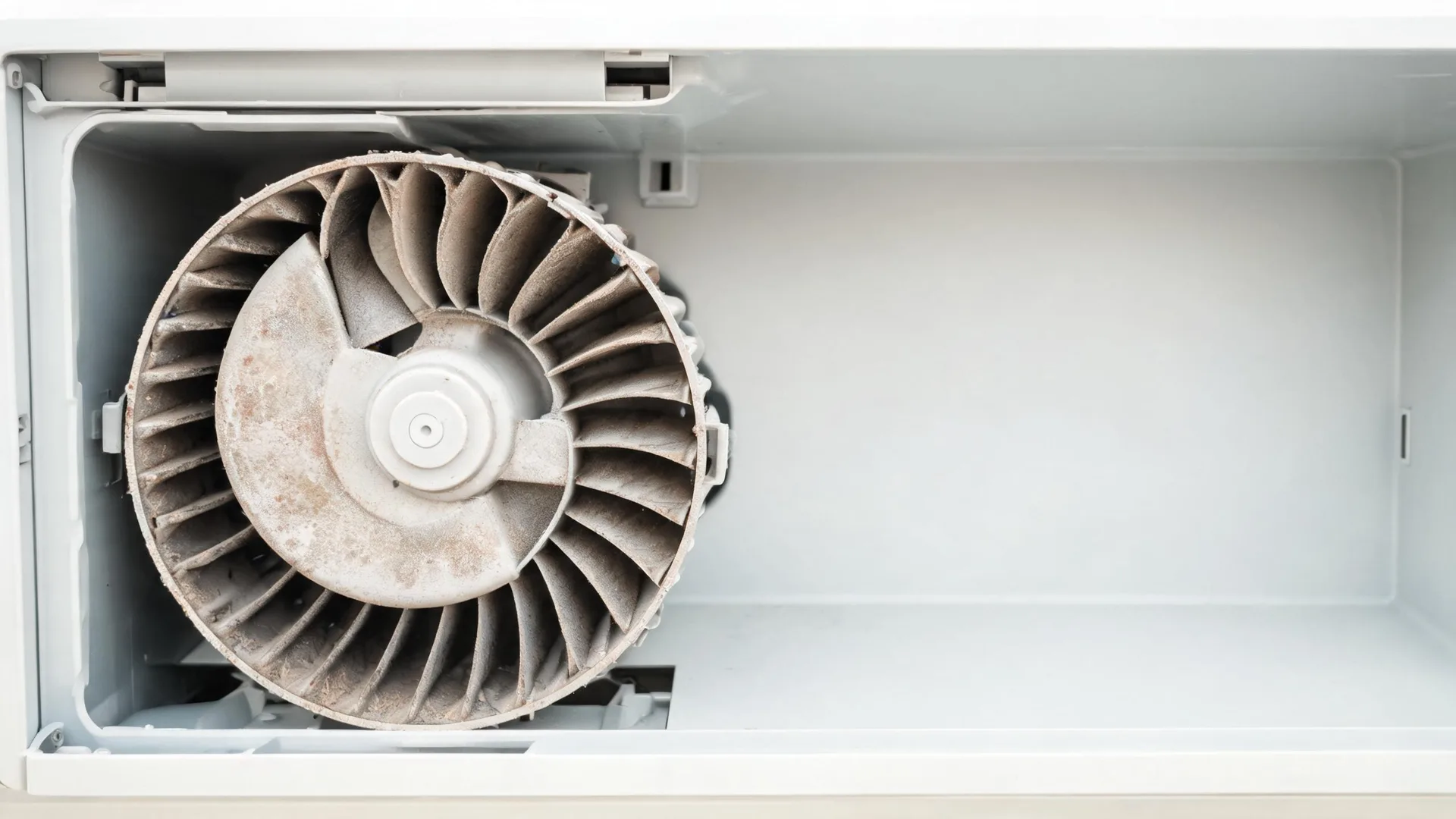
Airflow problems masquerade as refrigerant problems

A clogged filter or a coil caked with dust chokes the air moving across it. Weak cooling, ice on the lines, a system that runs long without catching up, all of that looks like a refrigerant leak but often isn't. Checking airflow first rules out the simpler cause before anyone opens up the refrigerant side.

An outdoor air conditioning condenser unit positioned on a concrete pad next to a blue-sided house, surrounded by green shrubs and flowering hydrangeas at sunset.

A new air conditioner would cut about $70 a year off cooling for a typical Butte County home.

  • A new one at the federal minimum, 14.3 SEER2$470 a year
  • An older air conditioner$540 a year

Estimates for a typical Butte County home, compared with an older unit built to the previous federal minimum, from EIA household energy data, California fuel prices and NOAA climate normals. Your home will differ.

Repair makes sense when a part like a capacitor or contactor has failed.

Replacement makes sense when the compressor has failed or the system uses R-22 refrigerant, which is no longer made.

A diagnostic visit starts outside at the condenser, listening to how it runs and checking that the fan spins freely and the compressor isn't struggling to start. Inside, the tech checks the filter and the return air, since weak airflow shows up everywhere downstream and has to be ruled out early. Gauges go on next to check refrigerant pressure against what the system is supposed to be running. Electrical readings on the capacitor and contactor catch the parts that are wearing out but haven't failed yet. The goal is to find the one actual cause, not to start swapping parts and see what helps.