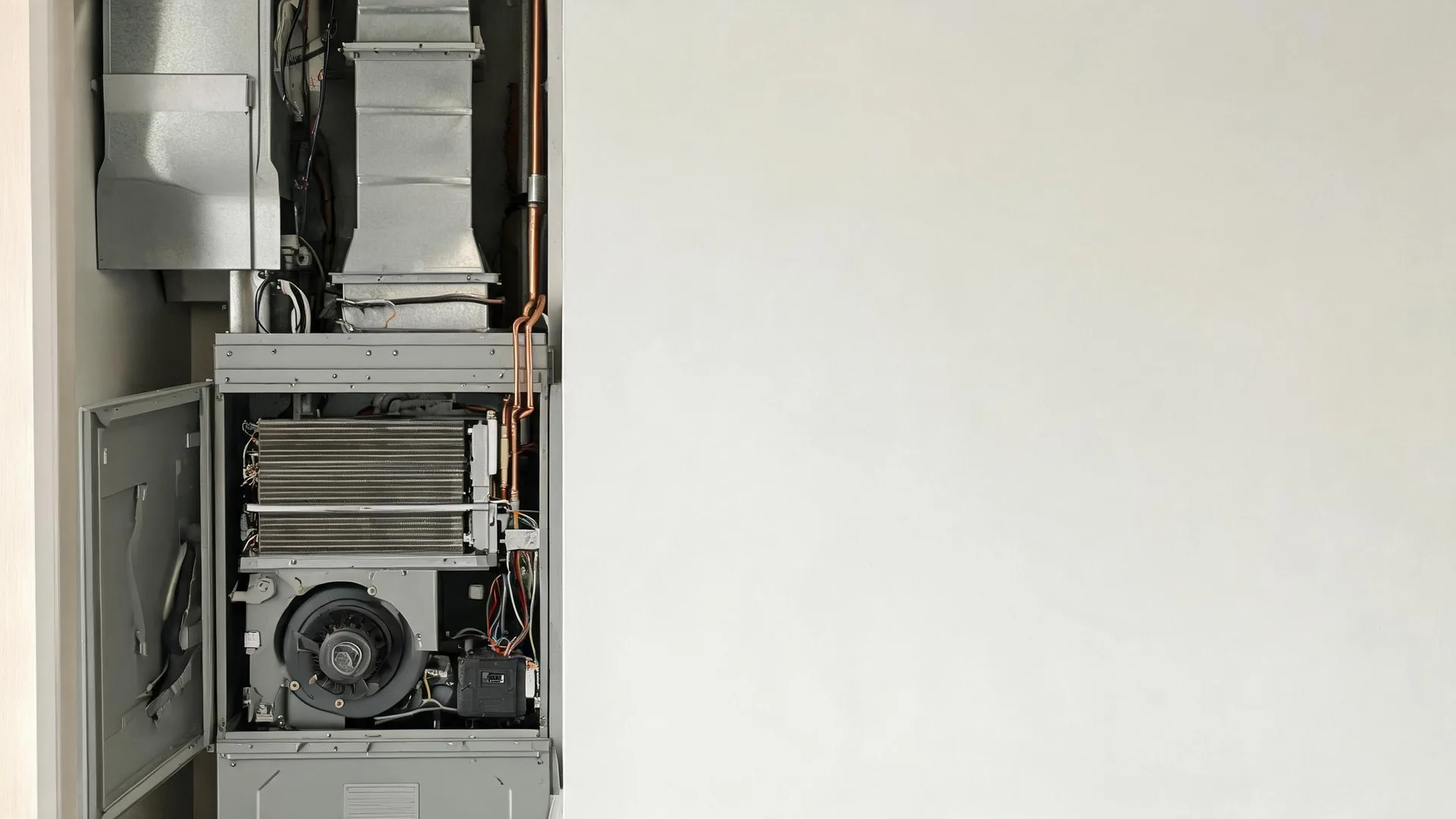
Summers here don't push an AC hard
San Rafael afternoons average 71°F in June, July and August. A system here just isn't running against the kind of heat a system in a hotter inland town has to work against.
Takes about a minute. No obligation.
San Rafael afternoons average 71°F in June, July and August. A system here just isn't running against the kind of heat a system in a hotter inland town has to work against.
When a system here needs work, it's rarely because the heat wore it out. More often it's an age-related part failure or something that got missed, which is usually worth fixing rather than replacing.
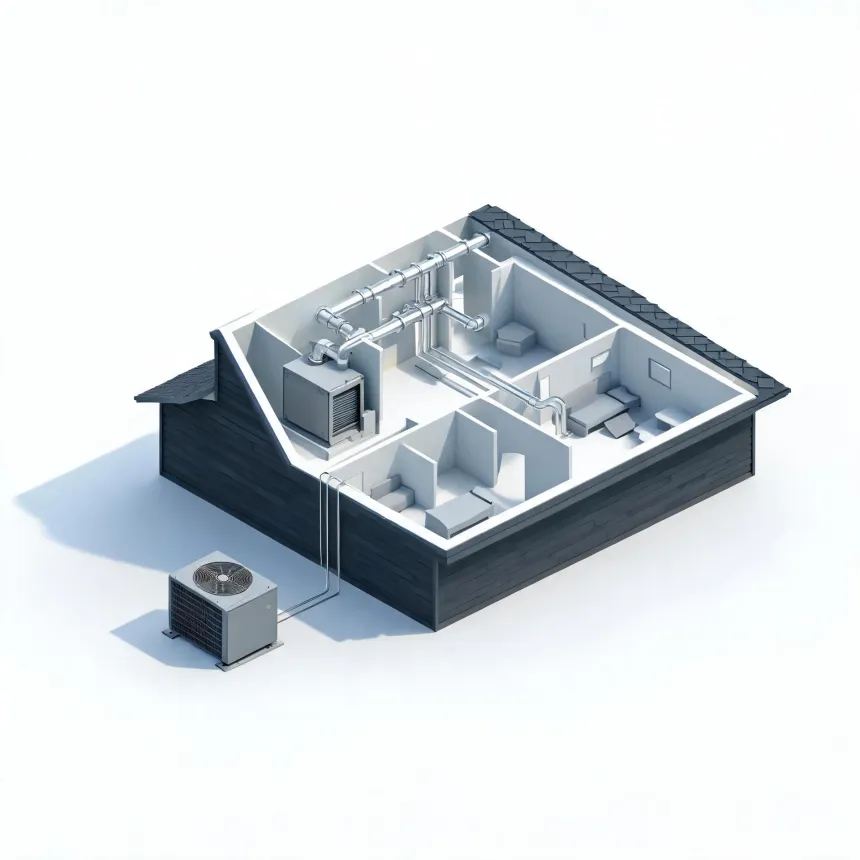
NOAA nClimDiv, 1991–2020 normals
Electricity in California ran 31.97 cents per kilowatt-hour in 2024.
A repair that gets your AC back to cooling the way it should is worth more here than in most states.




Before anyone comes out, check the thermostat batteries and make sure it's set to cool, below room temperature. Go to the breaker panel and look for a tripped breaker. AC units have their own circuit, and a tripped one is often the whole problem. Check the outdoor unit for anything blocking airflow around it, leaves, grass clippings, a fence too close. Pull the air filter and hold it up to a light. If you can't see light through it, that's likely choking the system, and it can cause ice to form on the indoor coil. If you do see ice on the lines or indoor unit, shut the system off and let it thaw fully before anyone tries to diagnose it further. Walking through these first tells the tech what's already been ruled out.
A system on its original parts doesn't owe you a warning before something fails. If yours came with the house, ask the tech how much is left in it before you put money into the repair.
Find a contractor
A system that's struggling still runs, and that's the problem. A weak capacitor makes the compressor pull harder to start each cycle, and every cycle it survives leaves it a little closer to not starting at all. A dirty coil makes the compressor work against higher head pressure, and heat that should be moving outside stays in the refrigerant instead. A low charge makes the system run longer to reach the same temperature, and the compressor spends more of the day under strain than it was built for. None of these stop the AC outright. They let it keep going while something inside pays for it, and the part that usually pays is the compressor. Shutting the system off when something looks wrong doesn't fix anything, but it stops the clock.
A run capacitor holds a charge that weakens with every start cycle, and a contactor's switch pits a little more each time it closes. Both fail by age more than by use, so a system that barely runs still reaches the end of one eventually. When the capacitor goes, the compressor or fan motor hums but doesn't start. When the contactor goes, the outdoor unit may not start at all.
A system doesn't use up refrigerant the way a car uses gas. If the charge is low, it left through a leak, usually at a joint, a coil, or a fitting that's corroded or vibrated loose over time. Topping it off without finding the leak just means doing it again later, and running low on charge for long stretches is hard on the compressor.
Estimates for a typical Marin County home, compared with an older unit built to the previous federal minimum, from EIA household energy data, California fuel prices and NOAA climate normals. Your home will differ.
Repair makes sense when a part like a capacitor or contactor has failed.
Replacement makes sense when the compressor has failed or the system uses R-22 refrigerant, which is no longer made.
A diagnostic starts outside at the condenser, checking that the fan spins freely and the coil isn't caked with debris. The tech will check capacitor readings against what the part is rated for, since a capacitor can test weak well before it fails outright. Refrigerant pressures get checked next, on both the low and high side, because that tells whether the charge is right and whether the compressor is moving heat the way it should. Inside, the tech checks the evaporator coil and the blower, since restricted airflow on either end shows up as a pressure problem even when the refrigerant itself is fine. Electrical connections at the contactor and disconnect get checked too, since a loose or pitted connection can cause the same symptoms as a failing part. All of it is aimed at finding which part is actually failing, rather than guessing from the symptom alone.