





Illuminated white stucco houses with terracotta roofs clustered on a dry hillside at dusk.

AC Repair in Marysville, CA

Tell us about the job

Takes about a minute. No obligation.

RepairCentral ACYuba County, CA
Step 1 of 2

What ZIP code is the job in?

Cooling runs about five months here, May through September, with afternoon highs averaging 91°F in June, July and August. That's a long stretch of hard running, and it's usually why a system starts acting up. The compressor cycles on and off all day just to keep pace with that heat, and the parts that wear, the capacitor, the contactor, the fan motor, feel it sooner than they would somewhere milder. A unit that's struggling in this kind of heat is telling you something specific, not just getting old. Worth having a contractor look at what's actually failing before you decide what it needs.

5 months
May through September, your air conditioner is on duty
91°F
the average summer afternoon it cools against
1 hail events
in ten years, and hail bends the fins on outdoor coils
54 wind events
in ten years, and wind drives debris into outdoor units
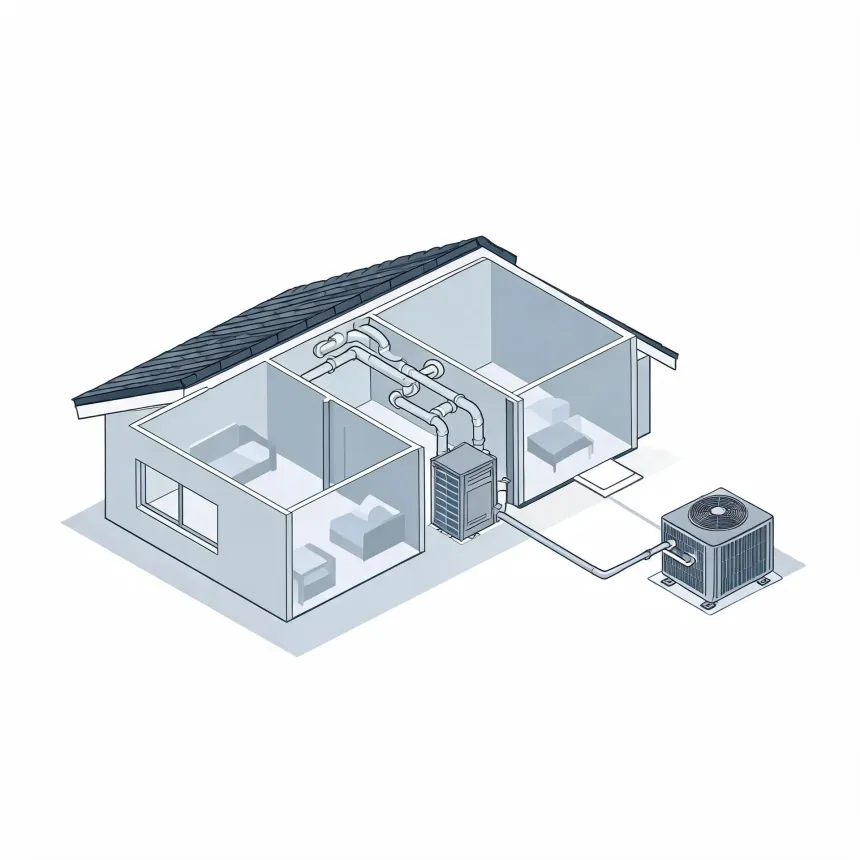
Isometric line illustration of a cutaway single-story house showing interior rooms, ductwork, an indoor air handler or furnace, and a refrigerant line running to an outdoor condenser unit on a pad.
Your air conditioner works hardest from June through September.

NOAA nClimDiv, 1991–2020 normals

Check the filter before anything else. A clogged one starves the system of airflow and can make it look like it's failing when it isn't.

If the filter's clean and the air still isn't cold, the problem is inside the unit, and that's a job for someone with gauges, not a screwdriver.

May is when a weak AC shows what it can't handle

Cooling runs May through September
Summer afternoons average 91°F
Power costs 31.97 cents a kWh statewide
Marysville runs newer AC than most of CaliforniaHalf the homes in Yuba County were built in 1986 or later.

California homes paid 31.97 cents per kilowatthour in 2024, among the highest rates in the country. An AC that's struggling doesn't just cool poorly, it pulls more power to do less. A unit low on refrigerant or running on a weak capacitor has to work longer to hit the same temperature, sometimes without ever getting there. The longer that goes on, the more it costs you to keep the house cool. Worth getting it looked at soon instead of riding it out.

Get the real cause diagnosed, not just the symptom

Find out what's actually wearing out before you pay to fix it. A contractor can tell you whether it's the capacitor, the contactor, or something else working too hard against this heat.

Find a contractor
An outdoor air conditioning condenser unit mounted on a concrete pad surrounded by gravel, photographed against a partly cloudy blue sky.

Long before it quits, the unit tells you it's struggling

Most AC failures don't happen out of nowhere. The system gives some warning first, if you know what to listen for. Short cycling is one of the first signs, where the unit kicks on, runs a few minutes, then shuts off before the house actually cools. That's usually a sign the compressor is struggling to stay running, often because a capacitor is weak. A warm stretch of air from the vents when the unit's been running a while points the same direction, or it can mean the refrigerant charge has dropped. Listen for the sound too. A hard click or a hum with no startup means the compressor is trying to start and can't. Any of these is worth a call before the unit stops cooling for good.

A weak capacitor burns out the compressor it's feeding

When a capacitor is going bad, the compressor still tries to start on every cycle, drawing hard against a part that can't give it the jolt it needs. That strain lands on the compressor windings. A capacitor is a simple swap. A failed compressor can mean a new outdoor unit.

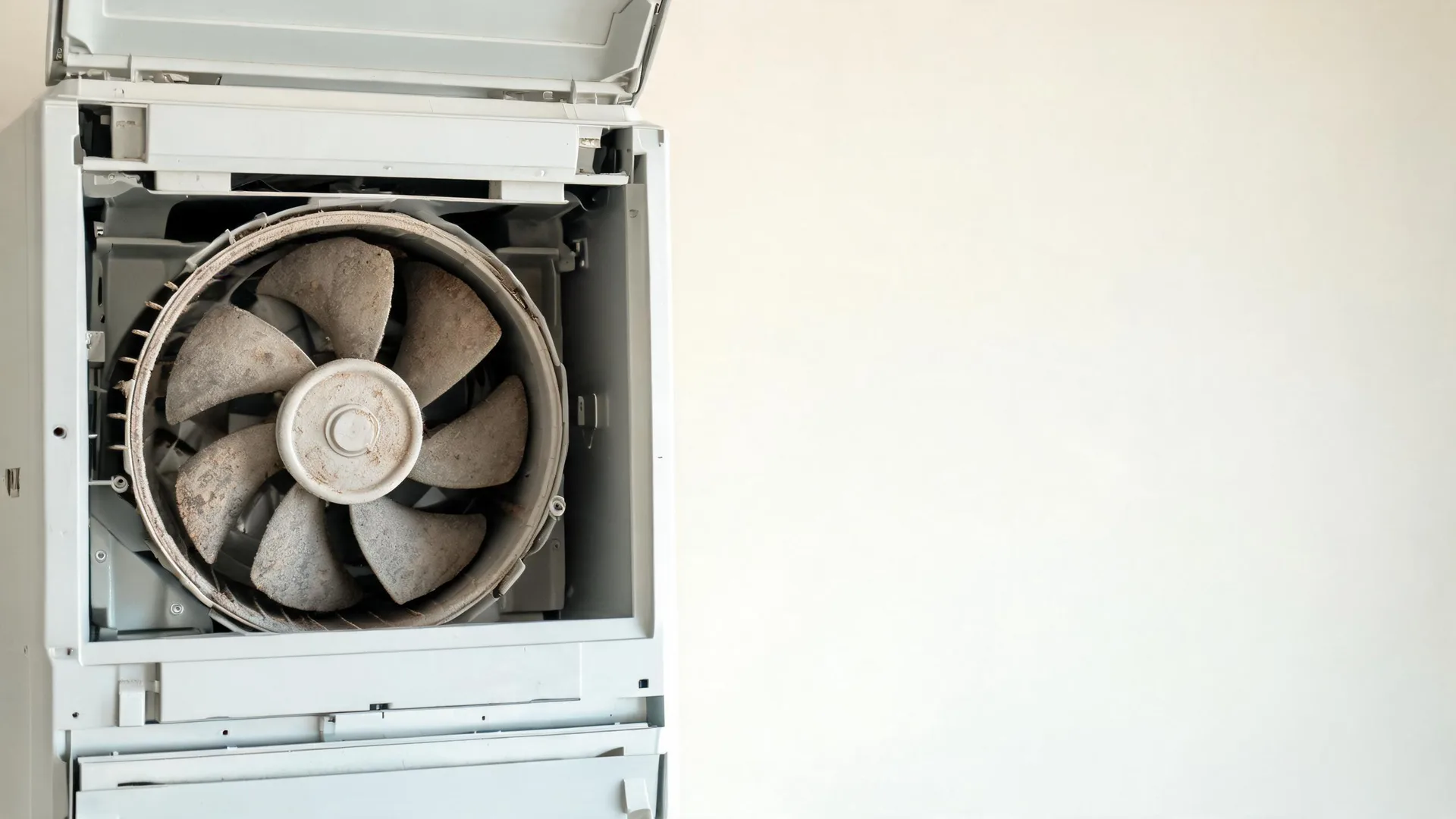
Low refrigerant lets the compressor run hot and dry

Refrigerant carries oil through the compressor to keep it lubricated. When the charge is low, the compressor pumps harder to move less, and it heats up with less oil circulating to protect it. Left alone, a slow leak that was a simple patch becomes a compressor that won't start at all.

Overhead view of a gray outdoor AC condenser unit on a concrete pad beside a mulched garden bed and a house with vinyl siding.

A new air conditioner would cut about $80 a year off cooling for a typical Yuba County home.

  • A new one at the federal minimum, 14.3 SEER2$510 a year
  • An older air conditioner$590 a year

Estimates for a typical Yuba County home, compared with an older unit built to the previous federal minimum, from EIA household energy data, California fuel prices and NOAA climate normals. Your home will differ.

Repair makes sense when a part like a capacitor or contactor has failed.

Replacement makes sense when the compressor has failed or the system uses R-22 refrigerant, which is no longer made.

A diagnostic visit starts outside at the unit itself. A tech checks refrigerant pressure with gauges, looks at the capacitor's output, and watches how the compressor behaves when it kicks on. Inside, they'll check the air coming off the coil against the air going into it, which tells them whether the system is actually moving heat or just moving air. Electrical readings come next, since a motor or compressor drawing too much current is usually close to failing even if it still runs today. None of this is guesswork. The numbers either point at a part or they rule it out, and that's what tells you whether you're looking at a quick repair or something bigger.