





A long stucco wall recedes along the left side toward stucco houses with red clay tile roofs, framed by overhanging tree branches and low shrubs.

AC Repair in Clearlake, CA

Tell us about the job

Takes about a minute. No obligation.

RepairCentral ACLake County, CA
Step 1 of 2

What ZIP code is the job in?

May is a good time to get a weak AC looked at here, before June starts the four months it has to work. Cooling runs June through September in Lake County, and whatever was marginal last September tends to fail in the first hot stretch, not partway through. A capacitor that was already weak, a low charge that was already low, gets found out fast once the system runs daily instead of sitting idle. Fixing it before that first week means the contractor is solving one problem instead of chasing a breakdown on the hottest day so far.

4 months
June through September, your air conditioner is on duty
86°F
the average summer afternoon it cools against
1 hail events
in ten years, and hail bends the fins on outdoor coils
18 wind events
in ten years, and wind drives debris into outdoor units
Isometric cutaway illustration of a single-story house showing interior rooms, ductwork and an air handler in the attic space, and an outdoor condenser unit connected by lines at the exterior wall.
Your air conditioner works hardest from July through August.

NOAA nClimDiv, 1991–2020 normals

Four months of cooling a year is a short season for an AC to work hard in.

A system here has less wear behind it, so most repairs are worth making instead of walking away from.

At 31.97 cents a kilowatt-hour, a system running wrong is costing you right now

Power costs 31.97 cents a kWh statewide
Cooling runs June through September
Summer afternoons average 86°F

A warm house is the first thing most people notice, but how it feels tells you something. Air that comes out barely cool, or not cold at all, usually means the compressor isn't doing its job or the system is low on refrigerant. A unit that runs and runs without the house ever catching up often has a dirty coil or a fan that isn't moving enough air across it. Short cycling, where it kicks on and off every few minutes, points to an electrical problem or a thermostat that's lost track of what it's sensing. Any grinding, squealing or a hard clunk when it starts is worth calling in before it gets worse, since those sounds usually mean a motor or bearing is on its way out. Water pooling near the indoor unit means a drain line is clogged somewhere, and that one gets worse the longer it sits.

Worth fixing before the season asks more of it

Get a repair quote before a replacement quote. Afternoon highs average 86°F here through June, July and August, and that four month stretch is what the system has to hold up through. A working repair gets it through that season without betting on a new system instead.

Find a contractor
A man in a dark shirt jacket and tan work pants, seen from behind, carries a worn canvas duffel bag up stone steps toward an orange front door flanked by a potted shrub.
A gray residential air conditioner condenser unit mounted on a concrete pad in an open grass field.

What to check before the service call

Pull the filter and hold it up to a light. If you can't see light through it, that's likely why the air is weak or the house won't cool down, and it's an easy fix. Go outside and look at the condenser. Clear away any leaves, grass clippings or weeds pressed against the fins, and make sure nothing is sitting on top of it blocking the airflow. Check the thermostat is set to cool, not just fan, and if it runs on batteries, put fresh ones in. Walk the house and make sure no vents got closed or blocked by furniture or rugs. Last, check the breaker box. If the AC breaker has tripped, you can reset it once. If it trips again, leave it off and call someone. A breaker that keeps tripping is an electrical fault, and flipping it back and forth can damage the compressor.

A weak start turns into a dead compressor

A low charge or a struggling capacitor still moves some heat, so the system keeps limping along instead of shutting itself off. The compressor pulls harder every cycle trying to make up for it, and heat is what kills a compressor. Let it run that way long enough and you go from a repair to a full replacement.

Waiting doesn't buy you time, it spends it

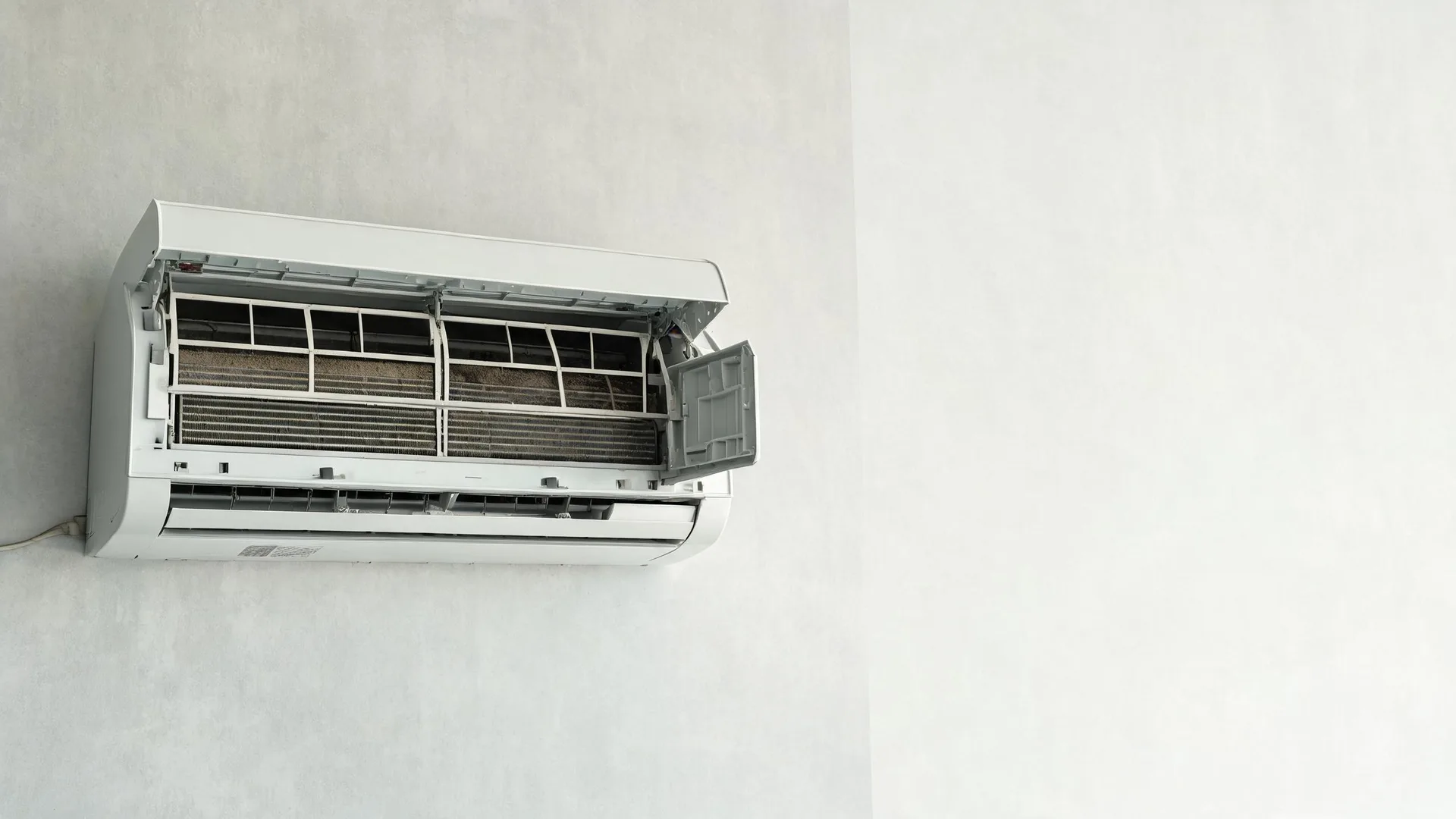
A dirty coil or a clogged drain line only moves in one direction once the system keeps running. More hours of operation means more dirt packed onto the coil and more water backing up the drain. The fix doesn't get harder because the parts changed, it gets harder because the problem had longer to build.

Overhead view of a gray residential air conditioning condenser unit mounted on a concrete pad beside a house with asphalt shingle roofing.

A new air conditioner would cut about $50 a year off cooling for a typical Lake County home.

  • A new one at the federal minimum, 14.3 SEER2$300 a year
  • An older air conditioner$350 a year

Estimates for a typical Lake County home, compared with an older unit built to the previous federal minimum, from EIA household energy data, California fuel prices and NOAA climate normals. Your home will differ.

Repair makes sense when a part like a capacitor or contactor has failed.

Replacement makes sense when the compressor has failed or the system uses R-22 refrigerant, which is no longer made.

A diagnostic visit starts before anyone touches the unit. The tech asks what the system is doing, when it started, and whether it's constant or comes and goes, because that points to different parts. Then they check pressures at the condenser, check the amp draw on the compressor and fan motor, and look at the temperature split between the air going into the system and the air coming out of it. That split tells them whether the system is actually moving heat the way it should. Electrical parts get tested with a meter rather than guessed at, since a capacitor can look fine and still be weak. By the end, the tech should be able to point to the one part causing the problem and explain what happens if it's left alone.