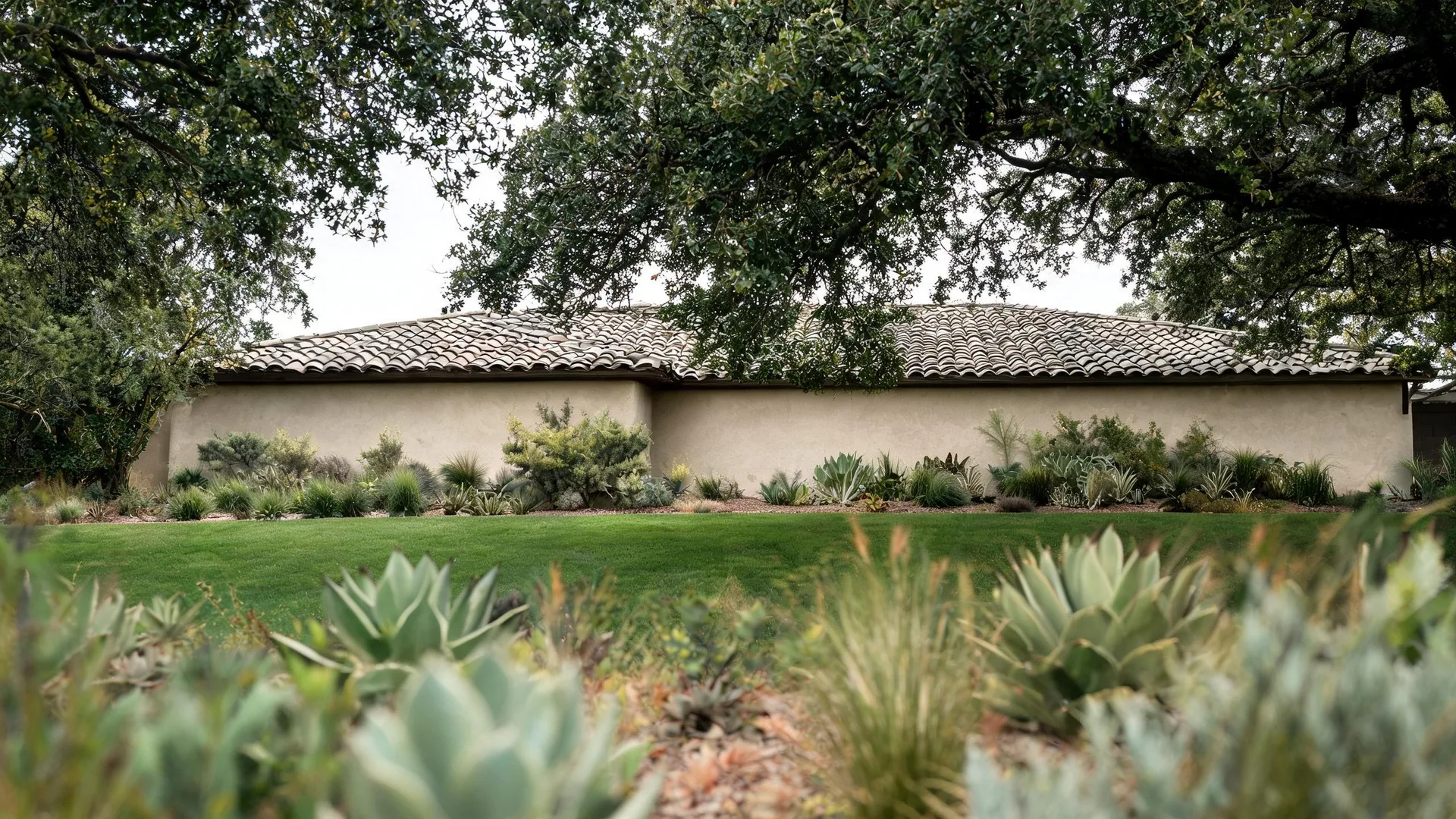





A single-story stucco house with a clay tile roof behind a lawn, framed by large oak branches above and agaves and grasses in the blurred foreground.

AC Repair in Modesto, CA

Tell us about the job

Takes about a minute. No obligation.

RepairCentral ACStanislaus County, CA
Step 1 of 2

What ZIP code is the job in?

Cooling runs May through September here, five months of the compressor cycling on most days. June through August the afternoon high averages 91 degrees, and that's the stretch that wears a system down. A capacitor or a compressor doing that work day after day ages faster than one that only has to work a few hot weeks a year. If your AC is struggling, the heat here is likely a bigger part of the reason than anything in how it's been used.

5 months
May through September, your air conditioner is on duty
91°F
the average summer afternoon it cools against
1 hail events
in ten years, and hail bends the fins on outdoor coils
18 wind events
in ten years, and wind drives debris into outdoor units
Isometric cutaway illustration of a single-story house showing interior rooms with furniture, attic ductwork connected to an indoor air handler, and an outdoor condenser unit on a pad linked by refrigerant lines.
Your air conditioner works hardest from June through September.

NOAA nClimDiv, 1991–2020 normals

Half the homes in Stanislaus County were built in 1981 or later.

A newer system in a newer house has usually got years left in it. That makes repair worth doing.

May is when a weak part gives out

Cooling runs May through September
Summer afternoons average 91°F
Power costs 31.97 cents a kWh statewide

Electricity in California ran 31.97 cents per kilowatt-hour in 2024, well above what most states pay. A unit that's low on refrigerant or running on a weak capacitor pulls more power to do the same job, and at that rate it shows up fast. The fix doesn't get cheaper by waiting. Each month it runs wrong is a month billed at that same high rate for less cooling than you're paying for.

Get it diagnosed before the heat finds the next weak part

A system working this hard all summer deserves a real diagnosis, not a guess. A contractor can tell you whether it's a worn capacitor, a low charge, or something else, and fix the part that's actually failing.

Find a contractor
An outdoor residential air conditioning condenser unit mounted on a concrete pad, surrounded by gravel with a blue sky in the background.

If the house is newer, fix it and move on

If your AC came with the house and the house is newer, get it repaired rather than planning around a replacement. Ask the contractor what they find once they're inside. If the compressor and coil look original and sound, that's confirmation, and the repair is the end of it. Years of running this hard will have put wear on specific parts, not the whole unit.

A weak capacitor forces the compressor to work harder

A capacitor that's starting to fail still lets the AC start, just slower, and that slower start strains the compressor every single cycle. Run it that way for weeks and the compressor itself takes damage that a capacitor swap alone won't undo.

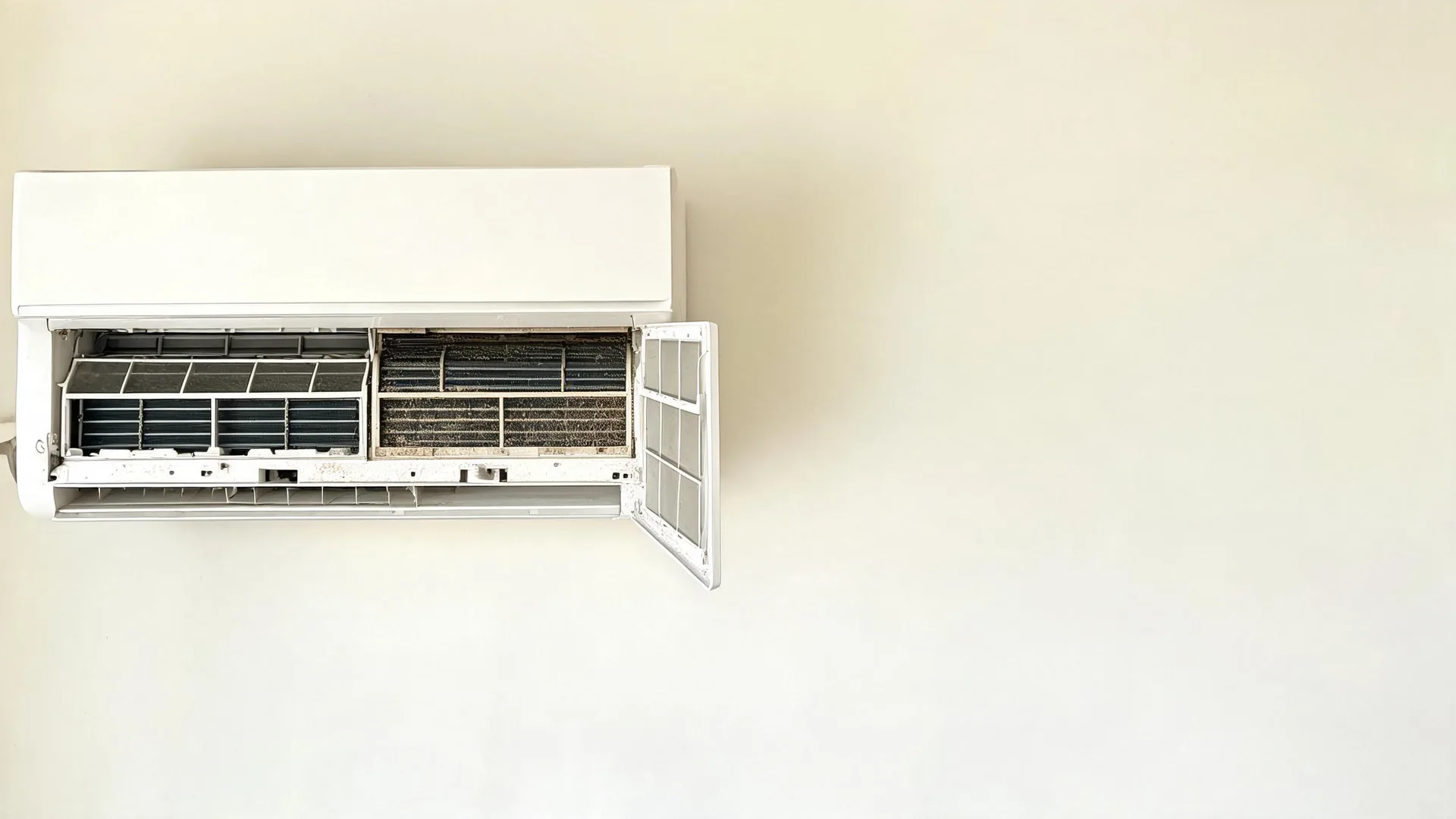
Low refrigerant lets the compressor run too hot

Refrigerant does more than cool the air, it also carries heat away from the compressor itself. A system low on charge runs that compressor hotter than it's built for, and heat damage to a compressor usually means replacing the whole unit instead of a simple recharge.

An overhead view of a residential air conditioning condenser unit mounted on a concrete pad next to a house with vinyl siding.

A new air conditioner would cut about $80 a year off cooling for a typical Stanislaus County home.

  • A new one at the federal minimum, 14.3 SEER2$500 a year
  • An older air conditioner$580 a year

Estimates for a typical Stanislaus County home, compared with an older unit built to the previous federal minimum, from EIA household energy data, California fuel prices and NOAA climate normals. Your home will differ.

Repair makes sense when a part like a capacitor or contactor has failed.

Replacement makes sense when the compressor has failed or the system uses R-22 refrigerant, which is no longer made.

A repair is worth doing when the damage is contained to one part, and most AC failures start that way. A capacitor, a contactor, a fan motor, these fail on their own without taking the rest of the system down with them. Replacement starts to make sense when the compressor itself is damaged, since that's the one part that effectively costs as much as starting over. Age matters too, but not in a straight line. A unit can run fine for years on original parts and then have a bad season where several things give out close together, and that pattern is different from one part failing once. A contractor who's inside the unit can tell you which situation you're actually in, rather than guessing from the symptoms alone.