




Aerial view of a residential air conditioning condenser unit mounted on a concrete pad next to a house with vinyl siding and a sliding glass door.

AC Repair in Salinas, CA

Tell us about the job

Takes about a minute. No obligation.

RepairCentral ACMonterey County, CA
Step 1 of 2

What ZIP code is the job in?

Salinas doesn't ask much of an air conditioner. Cooling here runs about three months, July through September, with afternoons around 85 degrees. That's a mild stretch compared to most places this machine runs. Wind and hail do show up in the county, but neither one targets an AC unit specifically, so if yours is down, the weather probably isn't why. More likely it's a worn capacitor, a low refrigerant charge, or a clogged coil, the same things that wear out on any system after enough summers. Worth having someone look at the actual part before guessing further.

3 months
July through September, your air conditioner is on duty
85°F
the average summer afternoon it cools against
18 hail events
in ten years, and hail bends the fins on outdoor coils
156 wind events
in ten years, and wind drives debris into outdoor units
Isometric line illustration of a cutaway house showing interior rooms, ceiling ductwork, an indoor air handler unit, and an outdoor condenser connected by lines along the exterior wall.
Your air conditioner works hardest from July through September.

NOAA nClimDiv, 1991–2020 normals

Cooling in Salinas starts in July.

If your AC has sat since September, June is the month to find out if it still works.

Electricity here isn't cheapCalifornia electricity ran 31.97 cents per kilowatt-hour in 2024, more than most of the country pays.

Half the houses in Monterey County were built in 1976 or earlier, half after. An AC unit doesn't care which, since it's not part of the house. What matters is whether your system came with the home or got swapped in later, and how many summers it's run since then. An older unit and a newer one fail for the same reasons, they just get there on different schedules. If you don't know the age of yours, the panel inside the cabinet usually has a manufacture date on it.

Get the usual fix

Nothing about this area is especially hard on it. It's most likely the usual problem with the usual fix.

Find a contractor
A man in a cap, dark long-sleeved shirt and tan work pants carries a worn duffel bag as he climbs concrete steps toward an orange front door, with a potted shrub beside the entry.
A gray metal air conditioning condenser unit mounted on a concrete pad in a flat grassy field under a partly cloudy sky.

What actually wears out

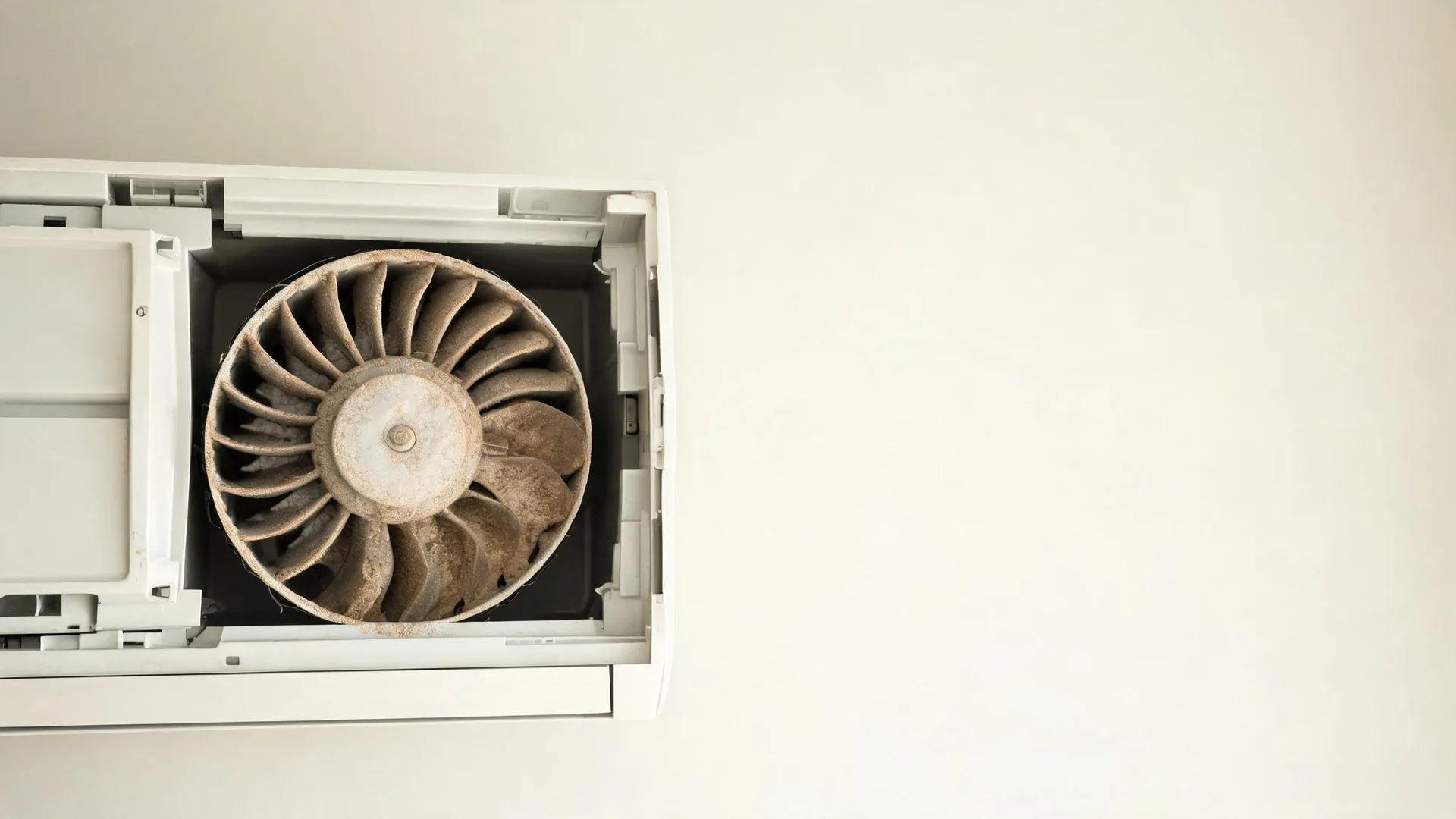
A capacitor is usually what gives out first. It kicks the compressor and the fan motor on, and the strain of doing that over and over, year after year, wears it down until one day the unit hums but doesn't start, or doesn't start at all. A contactor goes a similar way, the switch gets pitted from arcing every time it closes, until it sticks or stops making contact. Refrigerant doesn't get used up, but it does leak out slowly through a worn fitting or a rubbed-through line, and a system low on charge has to run longer to do less, which stresses the compressor that's left carrying the load. Coils get blamed for a lot that's really just dirt. A coil caked with dust and yard debris can't shed heat the way it's built to, so the system runs long and hard trying to hit the same temperature it used to hit easily. None of this is about one bad day. It's about how many cycles a part has been through.

What you'll notice first

Warm air out of the vents when the thermostat is set low enough to run. Short cycling, where the unit kicks on and shuts off again within a few minutes instead of running a full cycle. Long stretches of running without the house actually cooling down. Ice on the refrigerant line or the coil, which seems backwards for a machine that's supposed to be cold but usually means airflow or charge is off. Any new sound, a hard clunk at startup, a rattle that wasn't there before, a hum with no start.

What it means for the call

A new sound or a weak cycle is worth having someone look at before the unit quits outright, since a capacitor or a contactor usually gives some warning before it fails completely. Warm air or no air at all, or a breaker that trips when the unit starts, means stop waiting and get it looked at. Checking a capacitor or a refrigerant charge takes a tech only minutes, and catching the problem early usually means less work than waiting until the compressor is stressed.

Overhead view of an air conditioning condenser unit on a concrete pad next to a house with asphalt shingle roofing and vinyl siding.

A new air conditioner would cut about $30 a year off cooling for a typical Monterey County home.

  • A new one at the federal minimum, 14.3 SEER2$210 a year
  • An older air conditioner$240 a year

Estimates for a typical Monterey County home, compared with an older unit built to the previous federal minimum, from EIA household energy data, California fuel prices and NOAA climate normals. Your home will differ.

Repair makes sense when a part like a capacitor or contactor has failed.

Replacement makes sense when the compressor has failed or the system uses R-22 refrigerant, which is no longer made.

A diagnostic visit usually starts outside at the condenser, since that's where most AC trouble actually lives. A tech checks the capacitor first, since it's the most common failure and it's quick to test. From there it's the contactor, the refrigerant charge, and the coil, in whatever order the symptoms point to. Airflow gets checked too, since a weak return or a clogged filter can mimic a refrigerant problem and send someone chasing the wrong fix. Once the actual part is identified, the tech can say whether it's a repair worth doing or a sign the system's done. Most of this gets sorted without opening anything up or taking the unit apart.