A single-story tan stucco house with a covered porch and concrete block wall, viewed from beneath a dark roof overhang across a gravel yard with a bare-branched tree.

AC Repair in Bishop, CA

Tell us about the job

Takes about a minute. No obligation.

RepairCentral ACInyo County, CA
Step 1 of 2

What ZIP code is the job in?

The air here is dry, not heavy

Summer afternoons in Bishop average 94°F, but the dew point only sits around 32°F. The air doesn't carry much moisture. Your system isn't fighting the kind of heavy, wet air that wears on coils and drainage elsewhere. Five months of cooling a year is a normal stretch, not an extreme one.


So look for the ordinary cause

A system here failing is almost always the same handful of things that fail on any air conditioner. A capacitor giving out. A dirty coil. A low refrigerant charge. A worn contactor. Nothing about Bishop's climate points to something unusual. The job is finding which one it is and fixing that part correctly.

5 months
May through September, your air conditioner is on duty
94°F
the average summer afternoon it cools against
3 hail events
in ten years, and hail bends the fins on outdoor coils
116 wind events
in ten years, and wind drives debris into outdoor units
Isometric cutaway illustration of a single-story house showing interior ductwork and an air handler connected by lines to an outdoor condenser unit on a pad beside the building.
Your air conditioner works hardest from June through September.

NOAA nClimDiv, 1991–2020 normals

Your AC starts its season in May, after sitting idle since September.

If a part was already weak, the first hot stretch is when it gives out.

Storms here can knock out power. They don't explain a failing AC

168 severe weather events from 2015 to 2024
17% of homes statewide lost power a day or more in 2024
116 damaging wind events from 2015 to 2024
Your AC may be older than you thinkHalf the homes in Inyo County were built in 1975 or earlier.

Electricity here runs 34.19 cents per kilowatt-hour, higher than most counties in the country, and California as a whole already pays more than most states. An AC that's low on charge or struggling with a dirty coil has to run longer to do the same job, and every one of those extra hours costs more here than it would almost anywhere else. That's true whether the fix turns out to be small or not. A problem that just makes the system work harder is easy to ignore, right up until the bill shows what that extra running time cost.

Know what you're repairing before you fix it

If your system came with the house, ask the contractor how much life is left in it before you pay for a major repair. On an older unit, that answer should come before the repair does.

Find a contractor
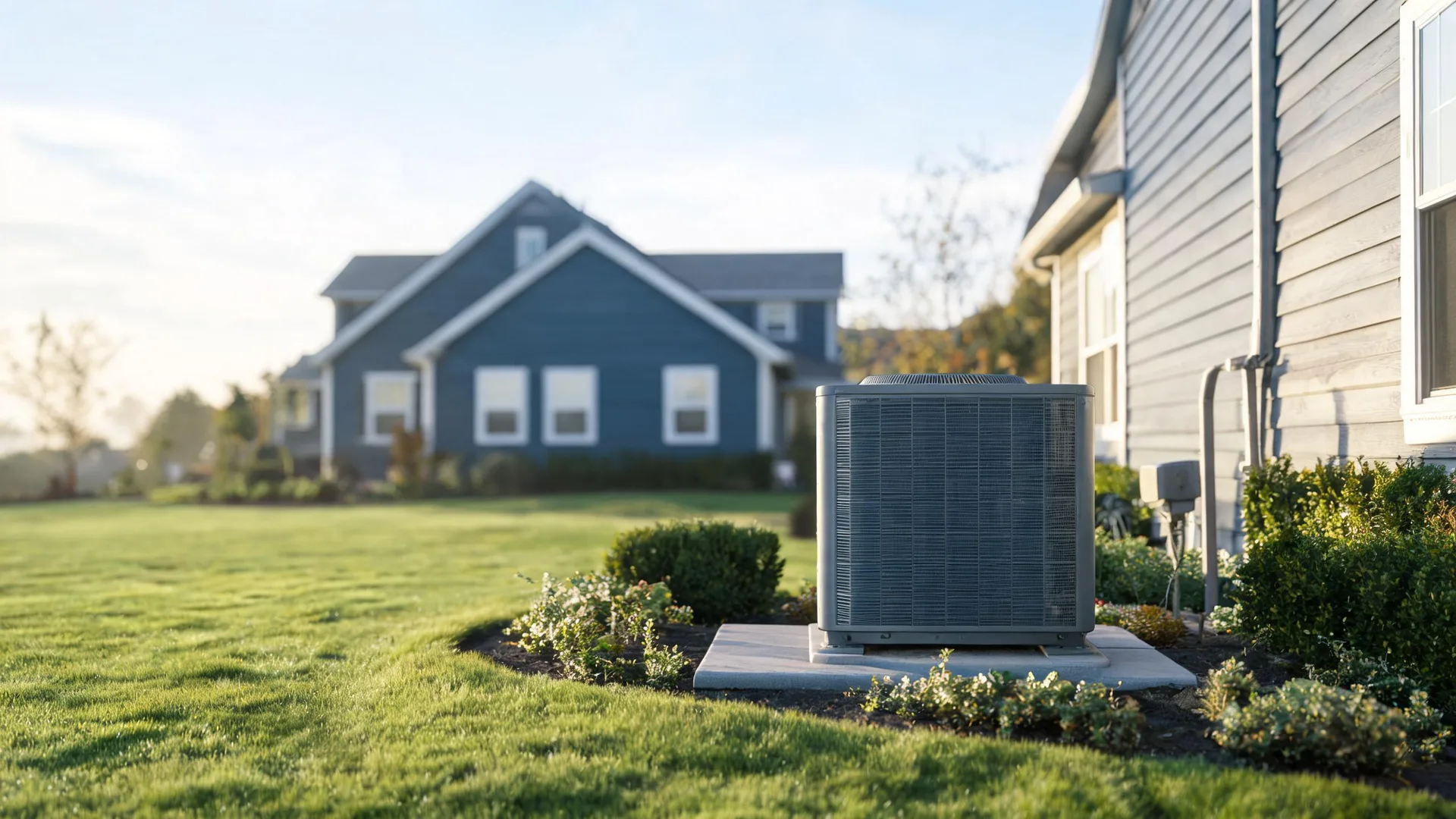
A gray residential air conditioner condenser unit mounted on a concrete pad in an open grass field.

What your AC is telling you

Most of the time the system tells you something is wrong before it quits altogether. Warm air coming out of the vents when the thermostat is set low is usually the first thing people notice. Sometimes it means the compressor has stopped working, sometimes it just means the refrigerant charge is low. Short cycling, where the unit kicks on and off every few minutes instead of running a full cycle, points to a different problem, often electrical, sometimes a thermostat issue. A hissing or bubbling sound near the lines usually means a refrigerant leak. A hard rattle or squeal from the outdoor unit is a motor or a bearing going bad, not something to wait out. Water pooling near the indoor unit means the condensate drain is clogged or the pan has cracked, and that one gets worse the longer it sits because it starts damaging whatever it's dripping onto. A burning or musty smell is worth shutting the system off for and getting someone to look at right away. None of these fix themselves. A capacitor that's starting to weaken will keep weakening. A coil that's a little dirty gets dirtier. The part that's struggling now is the part that quits later, usually on the hottest day it has to work.

Check the thermostat and the breaker first

Make sure the thermostat is set to cool and the temperature is actually below room temperature, not just on. Check the breaker panel for a tripped breaker on the AC circuit, and look for a shutoff switch near the indoor unit or outdoor unit that may have been bumped off. These sound too simple to be the problem, but they're the most common reason a system seems dead when nothing is actually broken.

Check the filter and the outdoor unit

Pull the air filter and hold it up to light. If you can't see through it, swap it out, since a clogged filter chokes airflow and can cause the whole system to work harder or freeze up. Walk outside and look at the condenser unit. Clear away leaves, grass clippings or anything stacked against it, and make sure the fan on top isn't obstructed. If the coils look caked with dirt or debris, that's worth mentioning to whoever comes out, but don't spray them down yourself. A bent fin or a damaged line is easy to make worse without the right tools.

An overhead view of a residential air conditioning condenser unit mounted on a concrete pad next to a house with vinyl siding.

A new air conditioner would cut about $100 a year off cooling for a typical Inyo County home.

  • A new one at the federal minimum, 14.3 SEER2$690 a year
  • An older air conditioner$790 a year

Estimates for a typical Inyo County home, compared with an older unit built to the previous federal minimum, from EIA household energy data, California fuel prices and NOAA climate normals. Your home will differ.

Repair makes sense when a part like a capacitor or contactor has failed.

Replacement makes sense when the compressor has failed or the system uses R-22 refrigerant, which is no longer made.

Waiting on a repair doesn't make the problem smaller. A capacitor that's weakening keeps weakening, and a system low on charge keeps running longer than it should to hit the temperature on the thermostat. Every one of those extra hours gets billed at California's rates, among the highest in the country. Get the cause found and fixed, and the system goes back to running the way it was built to, not the way it's been limping along.