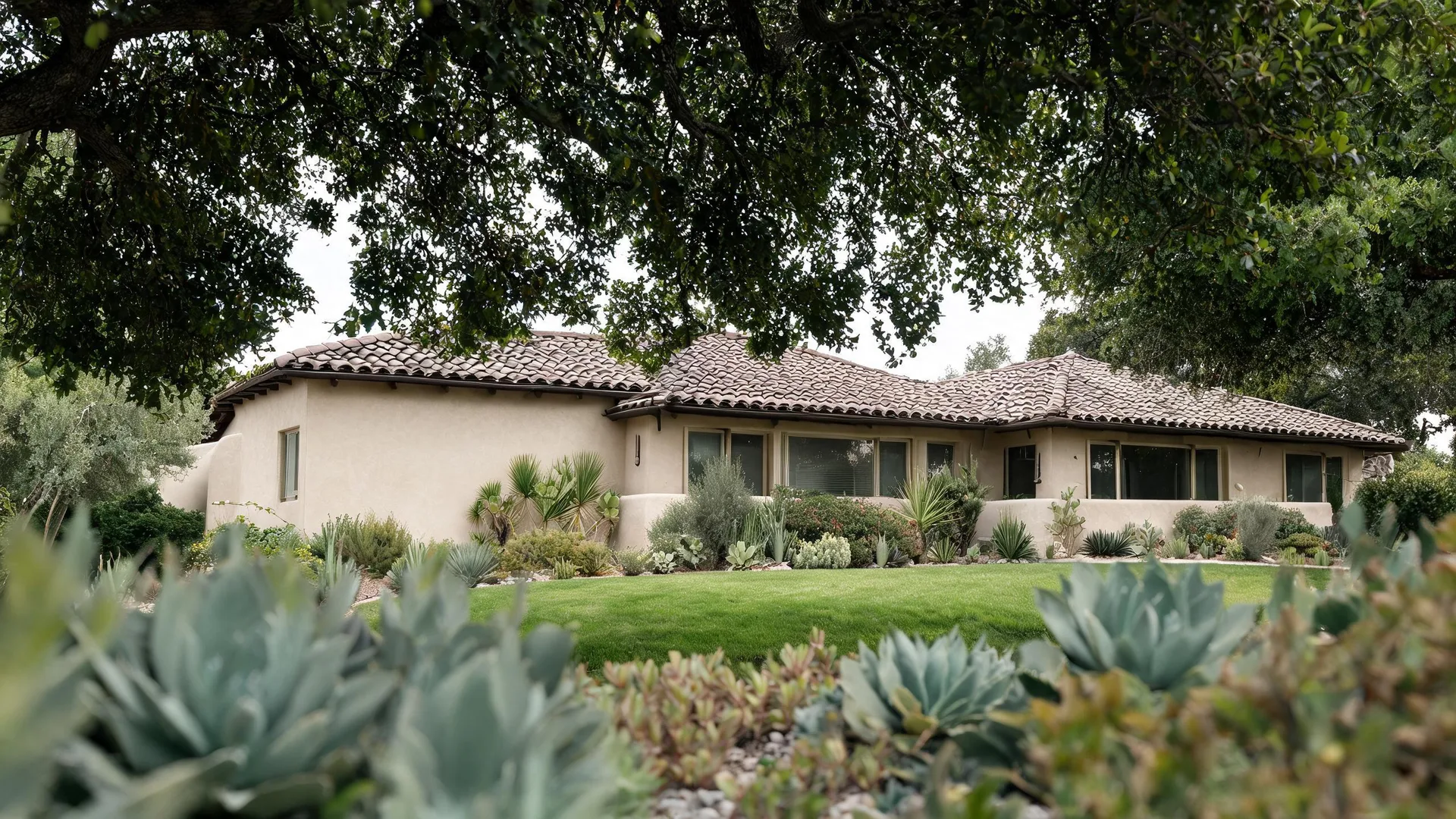
A single-story stucco house with a clay tile roof behind a lawn, framed by overhanging oak branches and foreground agave and succulent plantings.

AC Repair in Bakersfield, CA

Tell us about the job

Takes about a minute. No obligation.

RepairCentral ACKern County, CA
Step 1 of 2

What ZIP code is the job in?

A dirty condenser coil is the quiet killer

The outdoor unit sheds heat through that coil, and when it's caked with dust and cottonwood fluff, the system has to work harder to do the same job. Run that way long enough and the compressor overheats or just wears out early. Washing the coil off is routine maintenance. A failed compressor is not.


A weak capacitor shows up as a fan that won't spin

The capacitor gives the compressor and fan motor the jolt they need to start. When it weakens, you'll hear the unit hum and trip off, or the fan will sit still while the compressor tries to run alone. Left alone, that strain can take the compressor down with it, so a humming unit is worth a call before it goes quiet for good.

5 months
May through September, your air conditioner is on duty
93°F
the average summer afternoon it cools against
8 hail events
in ten years, and hail bends the fins on outdoor coils
711 wind events
in ten years, and wind drives debris into outdoor units
Isometric cutaway illustration of a house showing attic ductwork, an indoor air handler, refrigerant lines running outside, and an outdoor condenser unit on a pad.
Your air conditioner works hardest from June through September.

NOAA nClimDiv, 1991–2020 normals

AC runs here from May through September.

The first hot weeks of May put load on parts that sat idle all winter, so that's when a weak one gives out.

Bakersfield sees more storms than most places, and the outdoor unit sits right in it

777 severe weather events from 2015 to 2024
17% of homes statewide lost power a day or more in 2024
711 damaging wind events from 2015 to 2024

California homeowners paid 31.97 cents per kilowatthour in 2024, among the highest rates in the country. An AC that's low on charge or dragging a dirty coil doesn't cool the house right, and it pulls more power trying to. That difference shows up on the bill every month the system runs this way, not just once. A unit that's humming, short-cycling, or blowing warm air is spending your money while it fails. Fixing it now is cheaper than paying that difference for as long as it sits broken.

A newer system is usually worth repairing

Half the homes in Kern County were built in 1984 or later, which means a lot of these systems haven't hit the age where replacement makes more sense than repair. If yours came with a newer house, it's a good candidate for a fix rather than a swap.

Find a contractor
A man in a cap, dark shirt and tan work pants, seen from behind, carries a worn canvas tool bag up porch steps toward an orange front door, with a potted shrub beside the entry.
An outdoor residential air conditioning condenser unit mounted on a concrete pad, surrounded by gravel with a blue sky in the background.

The system tells you before it quits

An AC that's been running for years develops habits, and a change in those habits is the first thing worth noticing. Short cycling is one of them. The system kicks on, runs a few minutes, and shuts off before the house cools. Something is tripping it early, maybe a dirty filter, maybe a sensor out of place, maybe refrigerant running low. Warm air from the vents while the outdoor unit clearly runs points to the compressor or the charge, not the thermostat. Ice on the indoor coil usually means airflow is restricted somewhere, often the filter, sometimes a blower that's quit pulling its weight. A unit that cycles on and off far more than it used to is putting more wear on the compressor and the contacts with every extra start. None of these fix themselves with time. They get worse, and they get worse faster the longer they run that way.

Check the filter first

Pull it out and hold it up to a light. If you can't see through it, swap it. A clogged filter starves the system of airflow, and that alone can cause warm air at the vents, ice on the indoor coil, or short cycling. It's the one thing worth ruling out before anything else.

Look at the outdoor unit, then leave it alone

Check that nothing is pressed against it, no leaves, no grass clippings, no fence built too close. Clear a couple feet around it if you can. But don't open the panel or touch the wiring. The capacitor inside can hold a charge even with the power off, and that part of the job belongs to someone who does it for a living.

An overhead view of a residential air conditioning condenser unit mounted on a concrete pad next to a house with vinyl siding.

A new air conditioner would cut about $100 a year off cooling for a typical Kern County home.

  • A new one at the federal minimum, 14.3 SEER2$640 a year
  • An older air conditioner$740 a year

Estimates for a typical Kern County home, compared with an older unit built to the previous federal minimum, from EIA household energy data, California fuel prices and NOAA climate normals. Your home will differ.

Repair makes sense when a part like a capacitor or contactor has failed.

Replacement makes sense when the compressor has failed or the system uses R-22 refrigerant, which is no longer made.

A diagnostic starts outside at the unit itself, reading the pressures and checking the amp draw on the compressor and fan motor before anything gets opened up. Those numbers point to whether the charge is right and whether the compressor is pulling more current than it should. Inside, the indoor coil and blower get checked for airflow, since restricted air shows up as ice on the coil or warm air at the vents even when the outdoor unit is fine. The capacitor gets tested under load, not just looked at, because a weak one can still pass a glance and still fail to start the compressor an hour later. Electrical connections get checked too, since a loose or corroded one causes the same short cycling as a bad part. By the end, the tech knows which part is failing and why, not just that the system isn't cooling.