






White stucco Spanish Colonial Revival houses with red tile roofs glow with warm light against a dry hillside at dusk.

AC Repair in San Bernardino, CA

Tell us about the job

Takes about a minute. No obligation.

RepairCentral ACSan Bernardino County, CA
Step 1 of 2

What ZIP code is the job in?

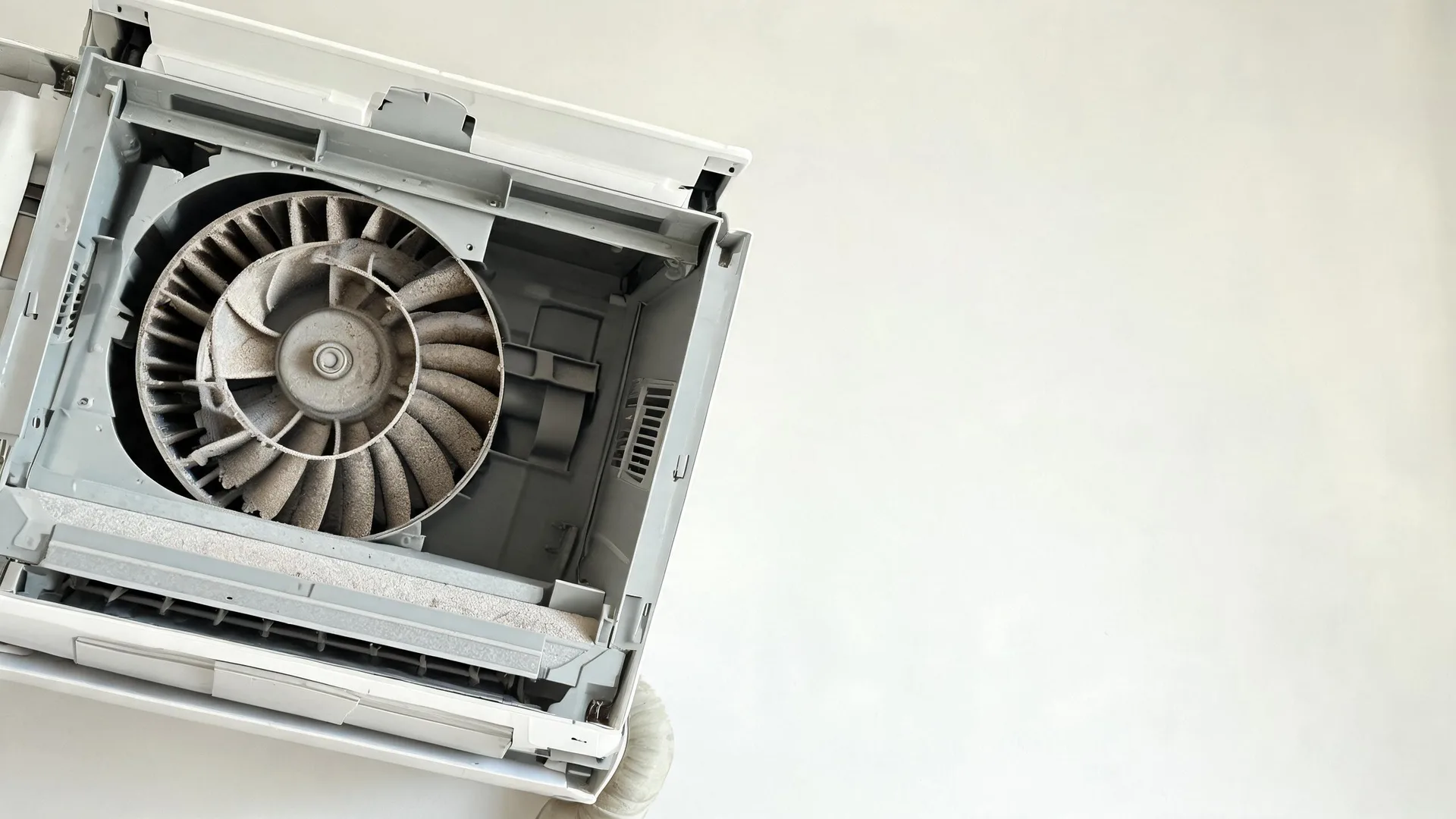
Warm air coming out of the vents is the one most people catch first. It usually means the compressor has quit or the charge is low. Short cycling is the other big one, when the unit kicks on, runs a couple minutes, then shuts off before the house cools at all. That's hard on every part of the system and it won't fix itself. Water pooling near the indoor unit points to a clogged condensate line or a cracked drain pan. And if the air is moving but weak, check the blower wheel before anything else, it collects dirt over time and loses its push. A unit that runs constantly without ever satisfying the thermostat is telling you it's lost too much capacity to keep up.

6 months
May through October, your air conditioner is on duty
99°F
the average summer afternoon it cools against
13 hail events
in ten years, and hail bends the fins on outdoor coils
425 wind events
in ten years, and wind drives debris into outdoor units
Isometric line illustration of a cutaway house showing interior rooms, a furnace or air handler with ductwork, and an outdoor condenser unit beside the building.
Your air conditioner works hardest from June through September.

NOAA nClimDiv, 1991–2020 normals

Half the homes in San Bernardino County were built in 1983 or later.

A system that came with a newer house still has working life in it, so repair is usually worth it.

May is when a weak AC gets found out

Cooling runs May through October
Summer afternoons average 99°F
425 damaging wind events from 2015 to 2024

California runs 31.97 cents per kilowatthour, among the highest in the country. A system that's short cycling or low on charge isn't just uncomfortable, it's pulling power and not doing the job it should. The longer a struggling AC keeps running like that, the more it costs you to keep it limping along. That's worth weighing against the price of having someone come look at it now.

Repair it

If your system came with a newer house, it likely has plenty of life left. Repair is usually the right call.

Find a contractor
A man in a dark gray t-shirt and brown work pants, seen from behind, carries a worn leather tool bag up wooden porch steps toward an orange front door.
A gray residential air conditioner condenser unit mounted on a concrete pad in an open grass field.

The parts that wear out, and why

Most AC failures trace back to a handful of parts, and they tend to go the same way every time. The capacitor gives the compressor and fan motor the jolt they need to start, and it weakens with every cycle until one day it can't deliver that jolt at all. The contactor is the switch that sends power to the outdoor unit, and its contacts pit and burn from years of making and breaking that connection until they stick or stop conducting. The compressor itself usually isn't the first thing to fail, it's often the last, worn down after running low on charge or against a dirty coil for a long stretch. Refrigerant doesn't get used up, so a system low on charge has a leak somewhere in the line set or the coil, and that leak only gets worse left alone. None of these parts fail because a system is old on paper. They fail because of how many times they've cycled and how hard each cycle was.

Check the thermostat and the breaker first

Make sure the thermostat is set to cool and the set point is actually below room temperature. A thermostat on a dead battery, or set to fan instead of auto, looks exactly like a bigger problem. Check the breaker panel too. A tripped breaker or a flipped switch at the outdoor unit can shut the whole system down with nothing actually wrong with it.

Look at the filter and the outdoor unit

Pull the air filter and hold it up to light. If you can't see light through it, air can't get through it either, and the system will struggle no matter what else is fine. Walk outside and look at the condenser too. Leaves, grass clippings or a shrub grown in close can block airflow across the coil and make the unit work harder for less cooling.

An outdoor air conditioning condenser unit on a concrete pad next to the gray vinyl siding of a residential home.

A new air conditioner would cut about $150 a year off cooling for a typical San Bernardino County home.

  • A new one at the federal minimum, 14.3 SEER2$1,030 a year
  • An older air conditioner$1,180 a year

Estimates for a typical San Bernardino County home, compared with an older unit built to the previous federal minimum, from EIA household energy data, California fuel prices and NOAA climate normals. Your home will differ.

Repair makes sense when a part like a capacitor or contactor has failed.

Replacement makes sense when the compressor has failed or the system uses R-22 refrigerant, which is no longer made.

A diagnostic starts before any panel comes off. A tech will ask what the system is doing, when it started, and run the thermostat through its paces first. Then it's gauges on the refrigerant lines to check the charge, and a meter on the capacitor and contactor to see if they're holding the values they should. The blower compartment gets opened up too, since a wheel caked in dust reads a lot like a failing motor if you don't look close. Amp draw on the compressor tells its own story, a motor pulling too much current is wearing out even if it's still running today. Most of this takes less time than people expect, and by the end of it you should hear plainly what's worn out and what's fine.