Four months of real work
AC in Vallejo runs June through September, with afternoon highs averaging 88°F. That's a normal cooling load. A unit breaking down here hasn't been pushed past what it's built for.
Takes about a minute. No obligation.
AC in Vallejo runs June through September, with afternoon highs averaging 88°F. That's a normal cooling load. A unit breaking down here hasn't been pushed past what it's built for.
A system that fails under ordinary conditions is usually failing for an ordinary reason. A weak capacitor, a low charge, a clogged filter choking airflow. Finding which one it is matters more than guessing at the heat.
NOAA nClimDiv, 1991–2020 normals
June is when AC switches on for the summer in Vallejo.
May is the month to get a weak unit looked at, before the first hot week finds it.



Electricity in California runs 31.97 cents per kilowatthour, well above what most of the country pays. An AC unit in good shape already costs real money to run through a Vallejo summer. One that's short on refrigerant or dragging on a weak capacitor costs more every single day it keeps running that way. The meter doesn't wait for a convenient time to tell you something's wrong. If yours has been struggling, that struggle is showing up on the bill right now, not just whenever it finally quits for good.
A unit running wrong doesn't pause while you wait it out. Every day it sits there low on charge or struggling on a bad capacitor, it's pulling power at Vallejo's rates and doing less with it. Getting someone to look at it now stops that.
Find a contractor
If your AC came with the house, check the year it was built. Half the homes in Solano County went up in 1982 or later, and a system that young still has plenty of working life in it. That's a reason to repair rather than replace when something like a capacitor or a refrigerant leak takes it down. Let the diagnosis find the failed part. The house being newer just means the unit probably doesn't need to be the next thing replaced.
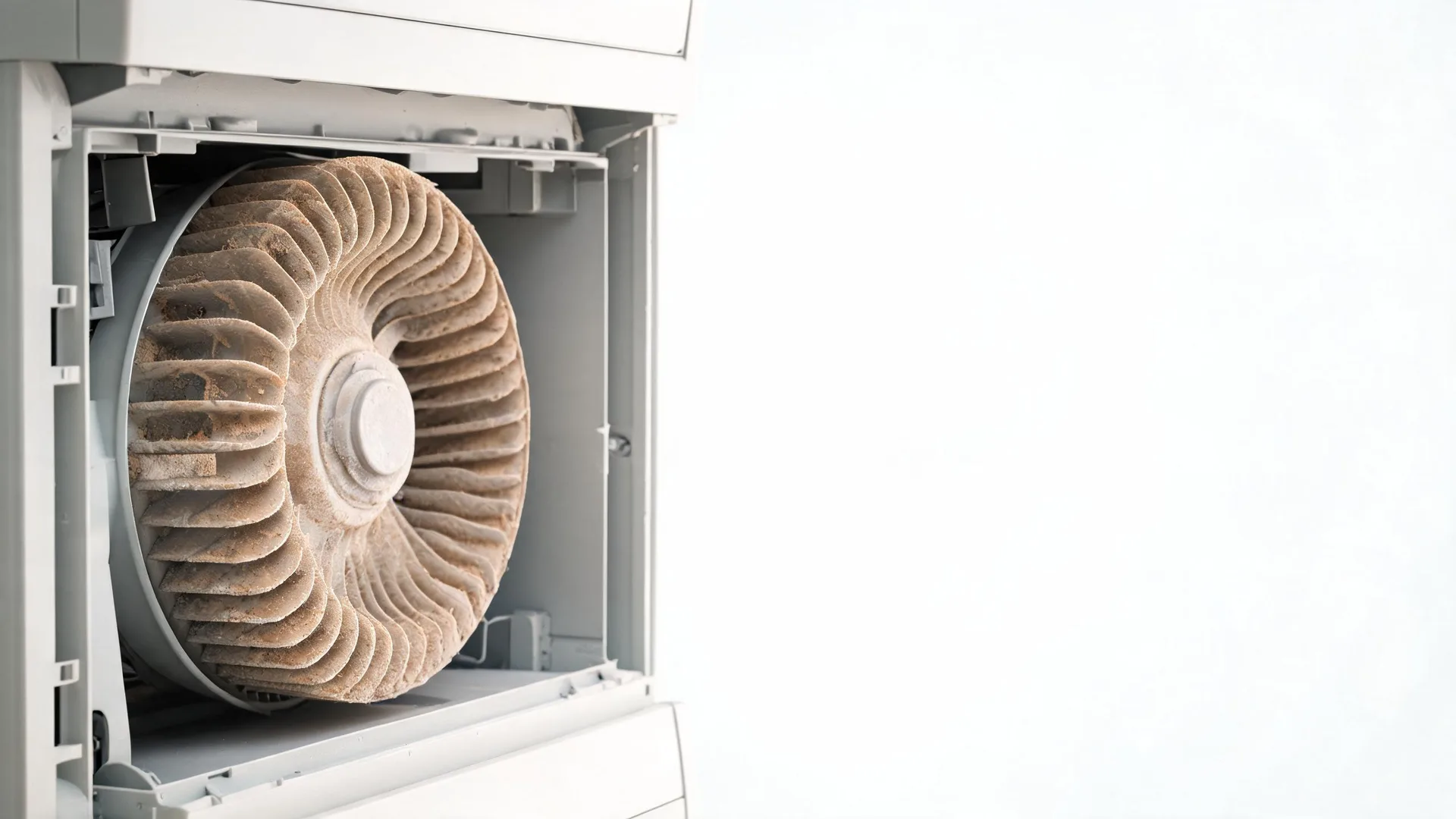
The capacitor holds the charge that kicks the compressor and fan motor into motion, and it weakens with every start. Once it's too weak, the compressor hums and tries to start but can't, or the fan spins slow. That's wear, not a defect, and it shows up most on a unit that cycles on and off a lot.
Refrigerant doesn't get used up. If a system is low, it's leaking from somewhere, usually a coil or a fitting, and running it low makes the compressor work harder to move less heat. Topping off the charge without finding the leak just means doing it again later.
Estimates for a typical Solano County home, compared with an older unit built to the previous federal minimum, from EIA household energy data, California fuel prices and NOAA climate normals. Your home will differ.
Repair makes sense when a part like a capacitor or contactor has failed.
Replacement makes sense when the compressor has failed or the system uses R-22 refrigerant, which is no longer made.
A repair is worth doing when the fix is one part and the rest of the system is sound. A capacitor, a contactor, a fan motor, a leak at a fitting. Those are jobs on their own, and fixing one doesn't tell you anything bad about the rest of the unit. What changes the math is the compressor. It's the most expensive part to replace and the one failure that pushes people toward a new system instead, since putting a new compressor in an old unit often costs close to what the whole system is worth. Short of that, most breakdowns are a single worn part on a system that's otherwise fine, and replacing that part is the right call.