
Heat pump leaking water in San Bernardino, CA

RepairHeat PumpSan Bernardino County, CA
Step 1 of 2

What ZIP code is the job in?

Why is my heat pump leaking water?

A heat pump that's dripping or pooling water usually gets noticed fast, whether it's puddling near the indoor unit or dripping outside near the outdoor unit. You're not sure if this is normal condensation or a sign something's wrong, and you want to know what's causing it before it damages your floor or the unit itself.

Most likely a clogged condensate drain line

A heat pump pulls moisture out of the air when it's cooling your home, and that water is supposed to run off through a condensate drain line to the outside. When that line gets clogged with dust, algae or debris, the water backs up and spills out near the indoor unit instead. A dirty air filter can cause the same problem, since restricted airflow lets the indoor coil frost over and then drip heavily as it thaws. With summers here running hot and dry for months at a stretch, your heat pump runs its cooling cycle often, and a clogged line or dirty filter shows up as a leak sooner rather than later.

A gray outdoor condenser unit on a concrete pad beside a house with horizontal lap siding, with a wall-mounted disconnect box, conduit and insulated refrigerant lines, a shrub at left and gravel at right.

Condensate draining the way it should

A clean drain line carries condensate away from the indoor coil and out past the foundation. Outside, the unit sits level on its pad, fins clear, with only a small damp patch where the line lets out during a hot San Bernardino afternoon.


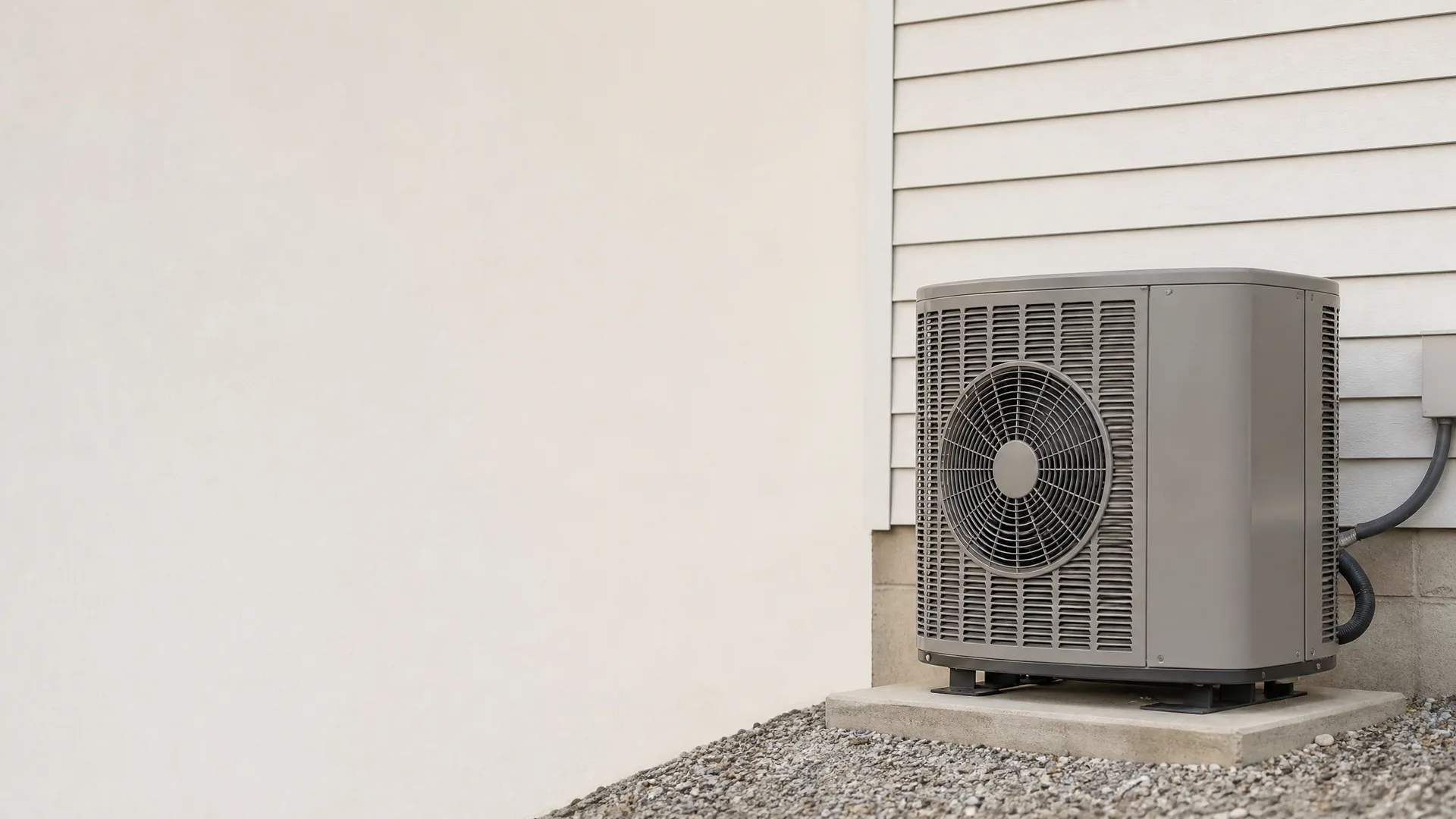
A gray outdoor air conditioning condenser unit on a concrete pad beside a house with light vinyl siding, with a gray electrical disconnect box and conduit on the wall to the right.

Signs the drain isn't keeping up

Dirt packed into the fins and a disconnect box that's seen weather can point to a unit that's been running hard without a look in a while. Water pooling at the base or staining the siding means the drain line or pan needs a contractor's attention.

A smiling woman with long brown hair in a dark sweater sits at a light stone kitchen counter with a glass of red wine, with a dimly lit living room in the background.
A smiling woman with dark hair pinned up, wearing a beige sweater, sits looking off to the side in a kitchen with a glass of red wine in front of her, a stainless steel refrigerator, marble counter and a potted plant behind her.
A smiling woman with dark shoulder-length hair in a navy sweater sits at a kitchen counter with a glass of red wine, with a lit living room and pendant lights behind her.
A woman in a dark gray sweater laughs while seated at a white marble counter with a glass of red wine, with a blurred living and dining room behind her.

How much does a San Bernardino County winter ask of a heat pump that's already leaking?

  • Winter nights average 39°F

    Nights near 39°F mean the heat pump is running its defrost cycle often, and that cycle is a common source of water where a drain is already struggling.

  • Heat runs November through March

    Five months of heating means a bad drain or a frozen coil has five months to keep dripping before the system gets a break.

  • Cooling runs May through October

    Six months of cooling means the condensate line carries a heavy load most of the year, so a clog or crack shows up again as soon as the heat kicks back in.

NOAA nClimDiv 1991-2020

Where the water actually comes from

  • Indoor water usually traces back to the condensate drain line or the drain pan under the coil, not the refrigerant side.
  • A clogged drain line backs up until water overflows the pan and shows up on the floor or ceiling below the air handler.
  • A cracked or rusted drain pan lets water escape even when the line itself is clear and draining fine.
  • Outside, water near the outdoor unit during defrost is normal, but ice buildup that melts into a steady puddle points to a defrost board or sensor problem.
  • A drain line installed without enough slope lets water sit and grow algae, which is what clogs it in the first place.
  • A dirty filter or blower issue can freeze the coil, and the meltwater shows up later as a leak that looks unrelated to either part.

Most leaks trace back to the indoor side, where the coil pulls moisture out of the air and sends it down a drain line to the outside. When that line clogs, usually with algae that builds up over time, water has nowhere to go but back up into the pan under the coil, and from there onto your floor or through the ceiling if the air handler sits in an attic. The pan itself can also be the problem. Years of sitting wet will rust a metal pan or crack a plastic one, and once that happens, water gets out even if the line underneath is draining fine. If the line was put in without enough pitch to let gravity do its job, water sits in it instead of moving, and that standing water is exactly what grows the algae that clogs the line later on. Outside, some water during defrost is expected and not a problem by itself. What's worth watching is ice that builds up on the coil and then melts off as a steady puddle, which usually points to the defrost board or a sensor not switching the cycle off when it should. One more thing worth knowing: a dirty filter or a failing blower can starve the coil of airflow and freeze it solid. When that ice finally melts, the water shows up as a leak that has nothing to do with the drain line at all.

An outdoor air conditioner condenser unit on a concrete pad beside a house with beige horizontal siding, with conduit running from an electrical box on the wall.
Before you get your heat pump repair
A gray outdoor condenser unit sits on a concrete pad against a house wall with horizontal siding above a stone veneer base, with an electrical disconnect box and conduit on the wall and a leafy shrub in mulch to the left.
After you get your heat pump repair

Get the right pro for your heat pump

Explain the heat pump problem once instead of to every shop in San Bernardino County.

Asking costs nothing, and the choice to hire stays yours.

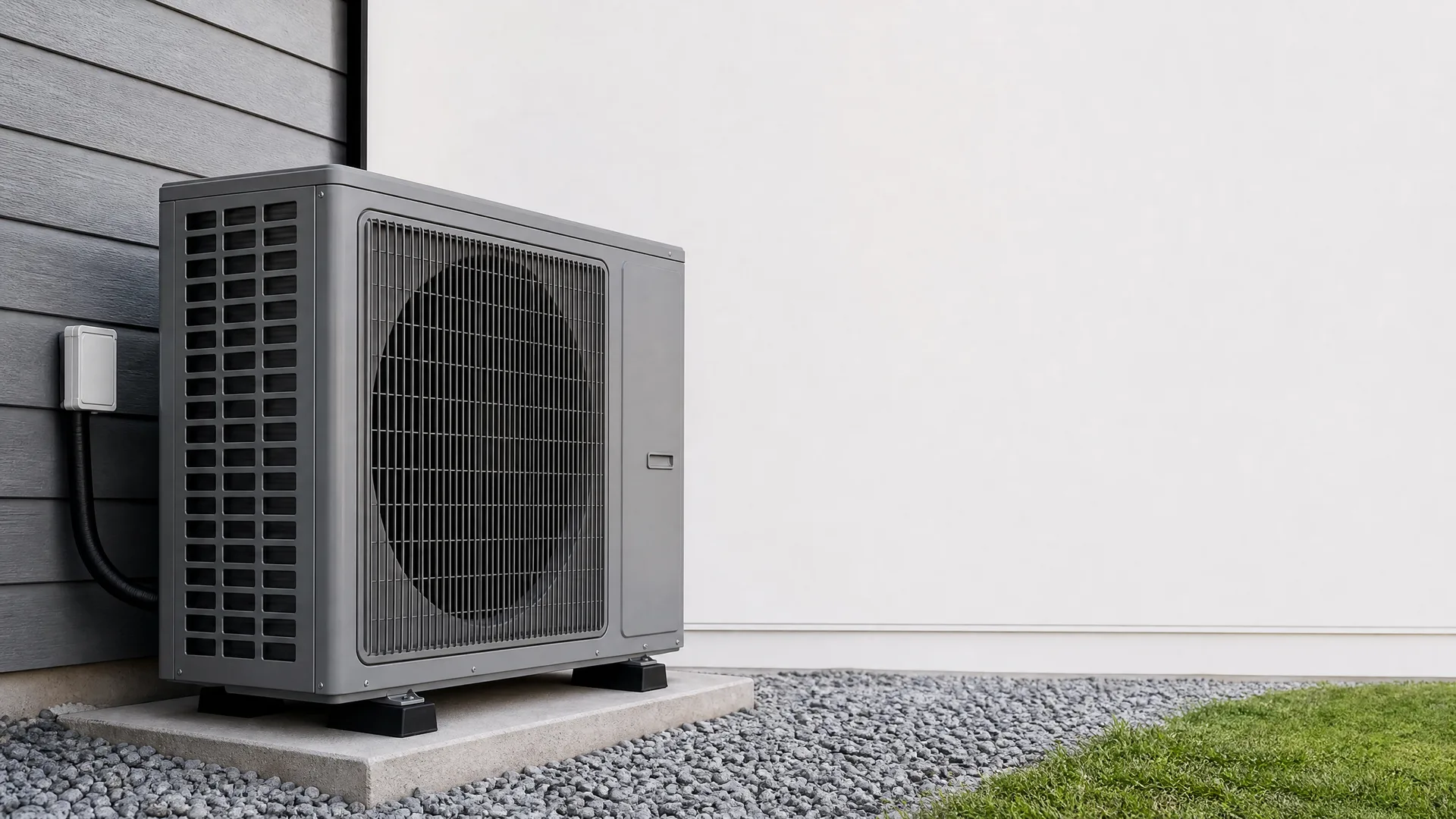
A gray outdoor heat pump unit on a concrete pad beside a house with dark horizontal siding and a plain white wall, surrounded by gray gravel next to a strip of grass.

Why the pan overflows first

The drain pan under the indoor coil is built to catch condensate and send it down the line, not to hold it. Once that line is even partly blocked, water backs up in the pan faster than most people expect. It doesn't take much, a bit of algae or dust buildup, before the pan fills past its edge and starts showing up on the floor or the ceiling below the air handler.

A gray outdoor heat pump unit on a concrete pad over gravel, beside a house with horizontal siding and an adjoining light stucco wall.

What the outdoor unit tells you

A heat pump's outdoor unit works differently in winter, pulling heat from the outside air even on a cool San Bernardino County night. That process builds frost on the coil, and the unit runs a defrost cycle to clear it. Water from that cycle is supposed to drain off the pad. If the unit isn't level or the base pan drain is blocked, that water collects instead of running off.

Power here costs 31.80 cents per kilowatt-hour

At 31.80 cents per kilowatt-hour, your heat pump already costs more to run here than in most of the country. A unit working harder because a clogged drain or iced coil is dragging on it pushes that cost higher still, on top of whatever the leak is already doing to your floors or ceiling.

EIA-861 2025

Water finding its way into drywall

If the indoor unit sits in a closet or attic, an overflowing drain pan doesn't stay contained for long. It soaks into the subfloor or drywall underneath before anyone notices a drip. By the time a stain shows up on the ceiling below, the wood or drywall behind it has likely been wet for a while. Mold takes hold in that kind of damp, enclosed space faster than most people expect, and it doesn't always show itself where you can see it. A water stain is often the first sign of damage that's already spread further than the stain itself suggests.

What a safety switch tells you

Some air handlers have a float switch in the drain pan that shuts the system off when water rises too high. If your heat pump stopped running and you've also noticed water nearby, that switch may have done its job. It's protecting your ceiling, not failing on you. Resetting it without clearing the clog just means it trips again, maybe next time without you noticing first. If your system doesn't have that switch, or it's not working, nothing stops the pan from overflowing the next time the drain backs up, which in San Bernardino's dry heat can happen the very next time the unit runs.

A man in a dark gray sweater sits smiling at a dining table with a glass of red wine, plates of salad, a candle in a holder, and a glass of water, with a window, lamp and houseplant behind him.
A woman with dark hair in a bun reclines on a light gray armchair with eyes closed and a slight smile, wrapped in a knitted beige blanket, with a lit table lamp, plant and dark green book nearby.

A heat pump leaking water is almost always the drain line, the drain pan, or ice on the coil backing up and finding somewhere else to go. That's true whether you caught it as a puddle by the air handler or a drip outside near the outdoor unit. It isn't something to watch for a few days and see what happens, since water sitting in a pan or soaking into a subfloor doesn't resolve on its own, and a San Bernardino County winter night near 39°F will keep running the defrost cycle that's likely feeding it. Instead of spending your evening searching for a contractor near San Bernardino, calling a few to see who can come out, and walking each one through the same description of where the water's showing up, you can skip that part. Answer a few questions about what you're seeing and where, and a licensed contractor who handles this in your area will reach out to you directly. You still get the diagnosis and the repair from someone qualified. You just don't have to spend tonight finding them.

Interior corner with a lit stone fireplace, built-in wood shelving holding a bowl, books and a pale ceramic vase, a potted olive branch and woven basket on a round table, and an upholstered chair with a fringed throw and cushions.
A large pale planter with a leafy green shrub sits on a stone front step of a gray clapboard house, beside a column, dark-framed windows, a wooden porch chair with a cushion, and clipped hedges in low sunlight.
A wooden front door with divided-light glass panes and sidelights on a cream clapboard house, approached by wide wooden steps and a stone path flanked by trimmed boxwood shrubs, potted plants, and overhanging tree branches.
Sunlit corner of a room with linen curtains at a white-framed window showing green tree leaves, an upholstered armchair with a cushion at right, and a round wooden table holding a ceramic bowl in the lower left.
A beige upholstered armchair with a matching cushion and a knitted fringed throw sits in a corner by two tall windows, beside a round wooden side table holding a bowl and a ceramic vase of leafy branches, on a wood floor with a woven rug.

A pro who works on heat pumps

Describe what your heat pump is doing once, in one form.

Skip the calls

No fee to send it, and nothing to sign.