





A row of single-story stucco houses with red clay tile roofs behind a tall beige stucco wall, shaded by large leafy trees, with low shrubs in the foreground.

Heat Pump Repair in Bakersfield, CA

Tell us about the job

Takes about a minute. No obligation.

RepairHeat PumpKern County, CA
Step 1 of 2

What ZIP code is the job in?

Kern County saw 777 severe weather events between 2015 and 2024. Most of that was damaging wind, 711 times in the same stretch, along with hail and a handful of tornadoes. Wind and hail both reach the outdoor unit sitting outside your house, and a bent fin or a cracked fan blade doesn't always stop the system from running that day. It just means something is working harder than it should, or wearing faster than it should. Power cuts are part of this too. Statewide, 17% of households went at least a day without power in 2024, and a heat pump that loses power can come back on with a problem it didn't have before the outage.

6 months
November through April, your system heats
5 months
May through September, it cools
37°F
the average winter night it heats against
93°F
the average summer afternoon it cools against
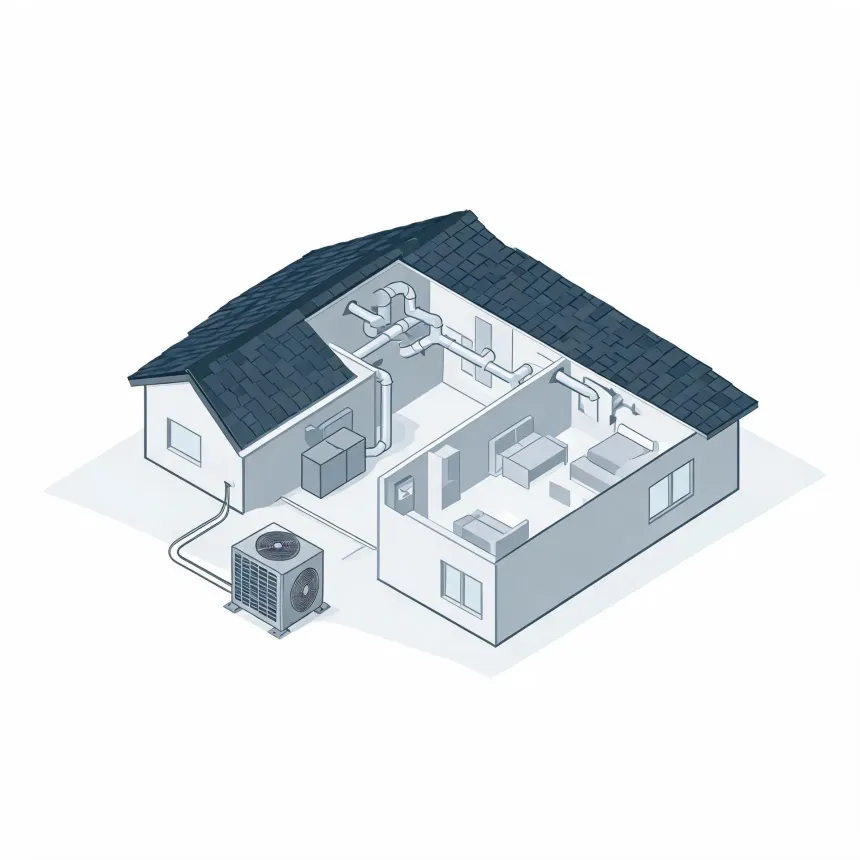
Isometric cutaway illustration of a single-story house showing interior rooms, ceiling ductwork, an indoor air handler, and an outdoor condenser unit connected by lines on the ground.
Your system heats November through April and cools May through September.

NOAA nClimDiv, 1991–2020 normals

Electricity in Kern County runs 36.82 cents per kilowatt-hour, among the highest rates in the country.

A heat pump working harder than it should burns through that expensive power every hour it runs, not just in a bad month.

Half the homes here were built in 1984 or later, so the equipment inside is often younger too

Half the homes here were built by 1984
711 damaging wind events from 2015 to 2024
53 winter storms from 2015 to 2024
A heat pump that's struggling costs you every day you waitPower here is expensive. A repair put off just means paying more for less heat or cooling.

April is when heat pumps here switch over to cooling after sitting idle most of the winter. That first hot stretch in May is when a weak capacitor or a part that was already failing finally gives out, because the system is suddenly asked to run for hours at a time instead of cycling on and off. The same thing happens in reverse come November, when the heat pump shifts back to heating and has to keep the house comfortable through nights that average 37°F in December and January. A system that seemed fine in October can struggle the first cold week it has to actually work. Getting a heat pump looked at before these switchovers, rather than after something fails during the first heat wave or cold snap, catches the weak part before it has to carry the full load.

After the storm, get the outdoor unit checked

If your outdoor unit took wind or hail in the last few years, have it checked even if it's still running. A bent fin or a cracked blade doesn't always stop the system that day, but it keeps wearing after the storm's gone. The same goes if it lost power and came back on acting different. Worth a look before it's asked to run full out again.

Find a contractor
A white mini-split heat pump outdoor unit mounted on a concrete pad beside a gray-sided house, surrounded by gravel and green shrubs.

A newer system is still a system worth fixing

If your heat pump came with a newer house, it's worth fixing rather than replacing when something goes wrong. A capacitor, a reversing valve, a bad sensor, these are normal repairs on a system that still has years of working life ahead of it. Replacing the whole unit over one failed part only makes sense once a system is actually old. For most homes here, that's not where things stand yet.

What you can check yourself

Look at the thermostat first. Make sure it's set to the mode you want and the batteries aren't dead. Check your breaker panel for a tripped breaker on either the indoor air handler or the outdoor unit, they're usually on separate circuits. Look at the outdoor unit itself. Clear away leaves, dirt or anything blocking the fins or the fan from the top and sides. Check your air filter and swap it if it's dirty, a clogged filter chokes airflow and can shut the whole system down as a safety measure. If the outdoor unit is coated in ice outside of a normal defrost cycle, that's worth noting but not something to chip at yourself.
What to leave alone

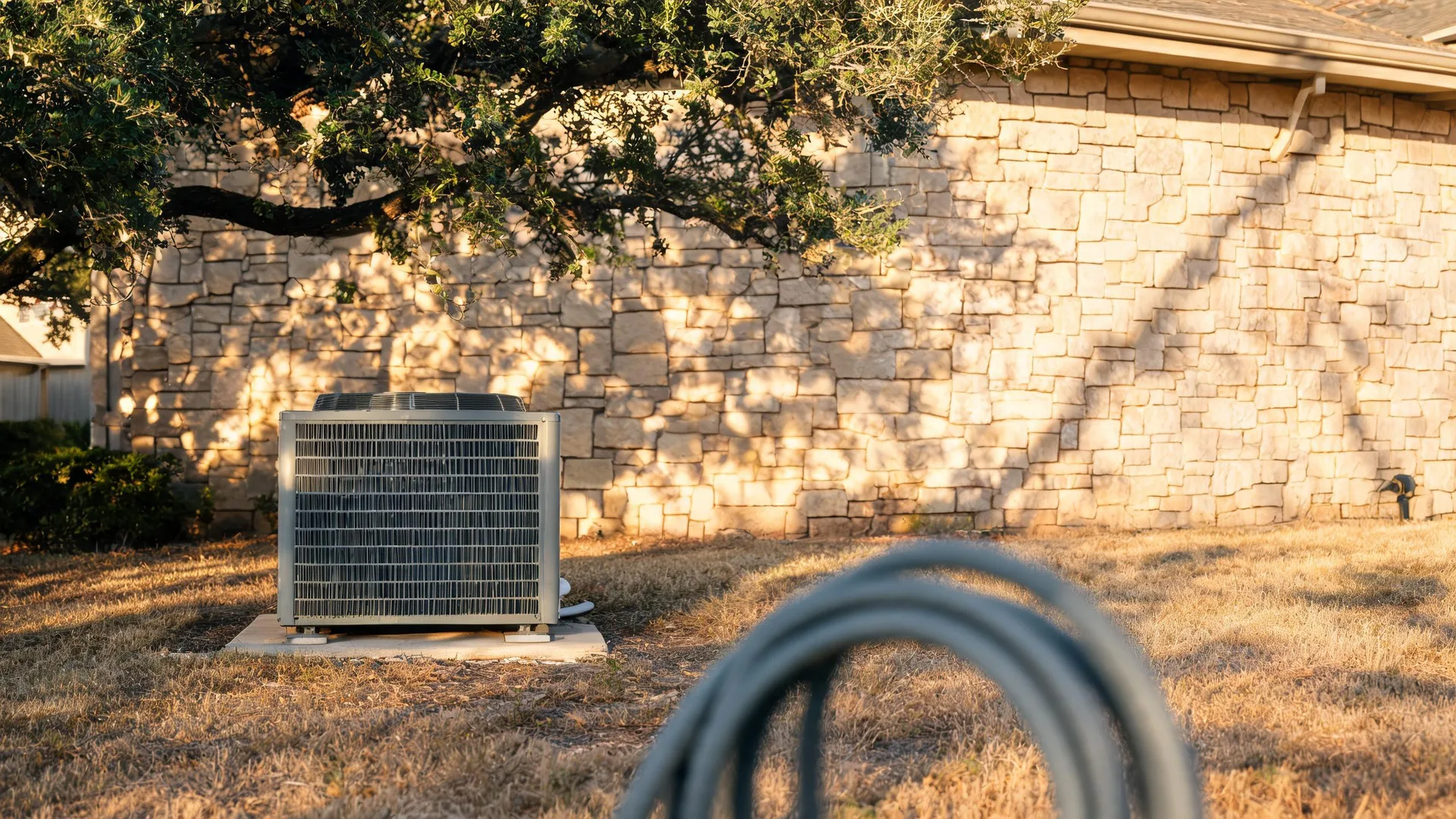
Don't open the outdoor unit's cabinet or touch anything inside it. The refrigerant lines, the compressor and the wiring in there aren't safe to handle without the right training and tools, and opening the cabinet can void a warranty even if you don't touch anything. If you smell burning, hear grinding or clicking that wasn't there before, or see the outdoor fan not spinning while the system is calling for heat or cooling, turn the system off at the thermostat and leave it off until someone can look at it. Running it in that state usually turns a small repair into a bigger one.

A heat pump that's struggling doesn't always announce it. A refrigerant leak lets the system keep running while it loses its ability to move heat, so the compressor works harder to do less. A failing capacitor can let the compressor start weak and strain every time it cycles on instead of failing clean. Ice building up on the outdoor coil outside of a normal defrost blocks airflow across it, and the system often keeps calling for more runtime trying to compensate rather than shutting itself down. In every one of these cases the part that's already weak is the part carrying the extra load, and it keeps carrying it until it can't. Shutting the system off when something sounds or smells wrong gives that part a chance to be replaced instead of destroyed.

Winter storms, heavy snow, ice and blizzards, have hit Kern County 53 times between 2015 and 2024. That's on top of the 711 damaging wind events in the same stretch, so the outdoor unit takes a real beating across the year, not just in summer. The air here is dry, too. The dew point averages 40°F through June, July and August, lower than most of the country, so a heat pump here isn't fighting heavy, humid air the way one in the South is. That should mean less strain on the system. When one here is still struggling, the climate alone usually isn't the reason. It's a specific part worn down by the runtime and the weather it's actually taken, and finding that part is what makes a repair hold.