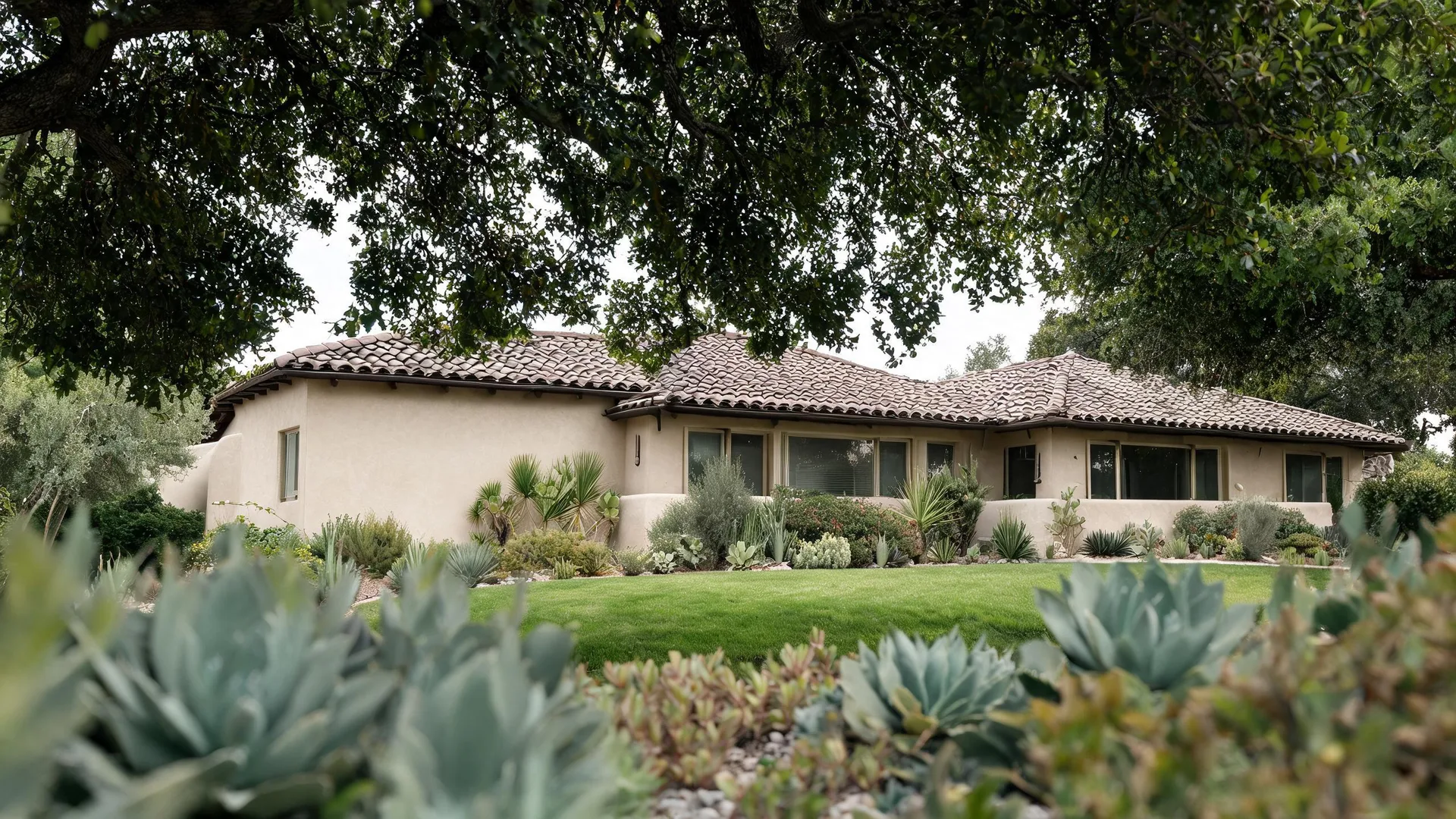
A single-story stucco house with a clay tile roof behind a lawn, framed by overhanging oak branches and foreground agave and succulent plantings.

Heat Pump Repair in Clearlake, CA

Tell us about the job

Takes about a minute. No obligation.

RepairHeat PumpLake County, CA
Step 1 of 2

What ZIP code is the job in?

A refrigerant leak gets worse, not better

A heat pump low on refrigerant makes the compressor work harder to move heat. Run it that way for days and the compressor can overheat, and the coil can ice over from the pressure drop. What starts as a leak you could patch turns into a compressor replacement.


A struggling system usually gives you a window first

Short cycling, weak airflow, a breaker that trips once. These are early signs, not emergencies yet. Shutting the system off and getting a tech out while it's still doing this is what keeps the repair small instead of turning it into a full replacement.

8 months
October through May, your system heats
4 months
June through September, it cools
36°F
the average winter night it heats against
86°F
the average summer afternoon it cools against
Isometric line illustration of a cutaway single-story house showing interior rooms with furniture and ceiling ductwork, connected to an outdoor condenser unit on the ground outside the left wall.
Your system heats October through May and cools June through September.

NOAA nClimDiv, 1991–2020 normals

Heat here starts in October, so the first cold snap in September or October is when a weak part gets tested.

A heat pump that struggled through last winter usually shows it again at the first real call for heat.

Clearlake doesn't stress a heat pump. When one acts up, it's a normal fix

Power costs 31.97 cents a kWh statewide
18 damaging wind events from 2015 to 2024
6 winter storms from 2015 to 2024

A tech starts by asking what the system is doing. Short cycling, no heat at all, ice on the outdoor coil, warm air that never gets hot. The answer points to a different set of checks. From there it's gauges on the refrigerant lines to check pressure, a meter on the compressor and fan motor to check amp draw, and a look at the reversing valve, since that's the part that lets a heat pump switch between heating and cooling and it's the part that sticks or fails more than people expect. A dirty outdoor coil or a weak capacitor shows up fast on the gauges. A bad reversing valve shows up as a system that heats fine but won't cool, or the other way around. Once the reading points to a part, that's the repair. There's no guessing involved, the gauges and the meter tell the story.

Get the cause found while it's still a repair

Get a tech out to find the actual cause before it turns into something bigger. A heat pump that hasn't had to fight hard freezes most of the year is usually still sound underneath, which is why finding and fixing the real problem now is worth it.

Find a contractor
A man in a cap, dark long-sleeve shirt and tan work pants walks up wooden porch steps toward an orange front door, carrying a canvas tool tote; an orange planter with ornamental grass stands to the right.
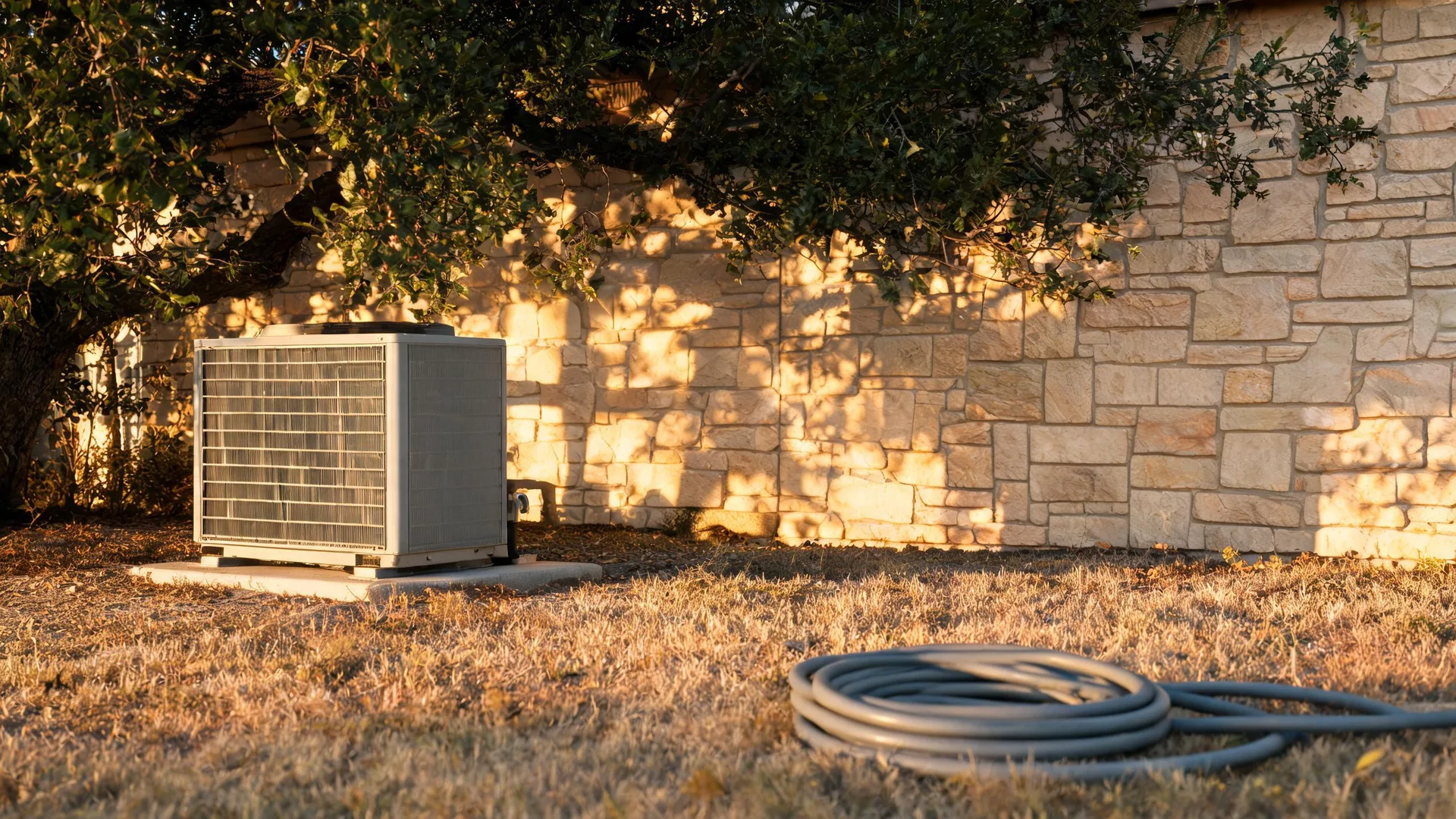
A gray outdoor HVAC unit mounted on a concrete pad beside a house with gray lap siding and a stone foundation.

What to check before the tech shows up

Before anyone comes out, check the thermostat batteries and make sure it's set to call for heat, not just set to a temperature. Go outside and look at the unit. If the outdoor coil has ice on it, turn the system off at the thermostat instead of letting it keep running, continuing to run it that way can push a bad situation into a compressor problem. Check the air filter. A filter clogged with dust chokes airflow across the indoor coil and can cause the same icing from the inside. Look at the outdoor unit itself for leaves, grass clippings or anything blocking the sides, airflow across that coil matters as much as the one inside. Last, check the breaker panel. A heat pump pulls from more than one breaker between the indoor air handler and the outdoor unit, and a single tripped breaker can look like a dead system when it's really just that.

Warm air that isn't warm enough

A heat pump in heating mode should put out air that feels warm at the vent, not just barely above room temperature. Lukewarm air that runs constantly without the house warming up points to a refrigerant charge problem, a failing compressor, or a reversing valve not fully shifting into heating mode.

The outdoor unit running nonstop or not at all

The outdoor unit should cycle on and off as the thermostat calls for it. One that runs without ever shutting off is usually losing the fight against a low charge or a dirty coil. One that won't start at all, while the indoor fan still blows, points to the compressor, the fan motor, or a tripped breaker on that side of the system.

Most heat pump failures trace back to a handful of parts doing hard, repetitive work. The compressor is the big one, and it rarely fails on its own, usually it's been running low on charge or against a dirty coil for a while before it finally gives out. The reversing valve fails a different way, it sticks from corrosion or a bad solenoid and the system gets stuck in one mode no matter what the thermostat asks for. Capacitors wear out from age and heat, and when one goes weak the compressor or fan motor struggles to start, which strains the motor windings even more over time. The defrost board and its sensor can fail too, and when they do the outdoor coil ices over because the system never gets the signal to clear it. None of these fail overnight. They wear down slowly, and the system usually shows some sign of struggling before the part actually quits.

A repair makes sense when the failure is one part acting up inside a system that otherwise runs fine. A weak capacitor, a dirty coil, a stuck reversing valve, these get fixed and the heat pump goes back to normal. Replacement starts to make more sense when the compressor itself is the failure, since that's the part that moves refrigerant through the whole system and it's also the most expensive to swap. Age matters too, not because a number on the calendar means anything on its own, but because a system old enough to need a second or third repair is usually showing you that more parts are wearing down at the same time, not just the one in front of you. A tech checking gauges and amp draw can usually tell the difference between a part that failed on its own and a system that's failing all over, and that's the real question behind repair versus replacement.