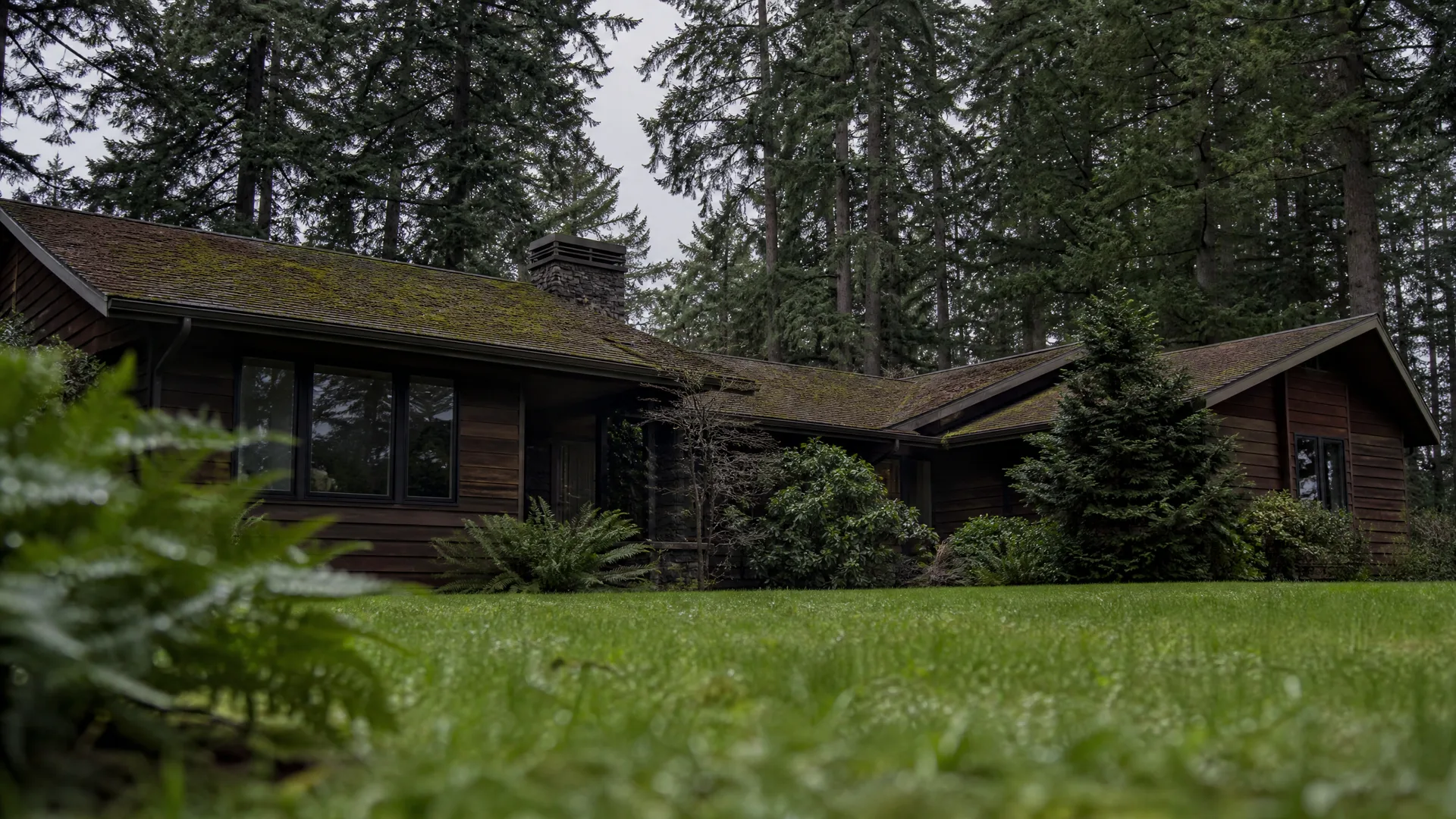





A single-story dark wood-sided house with a moss-covered roof and stone chimney, surrounded by shrubs and tall conifers, seen across a green lawn with ferns blurred in the foreground.

Heat Pump Repair in Eureka, CA

Tell us about the job

Takes about a minute. No obligation.

RepairHeat PumpHumboldt County, CA
Step 1 of 2

What ZIP code is the job in?

Humboldt County saw 282 severe weather events between 2015 and 2024. Most of that was wind and winter storms, with damaging wind hitting 145 times and winter storms affecting the county 115 times. There were 21 hail events too, and hail is hard on an outdoor heat pump unit sitting out in the open. A dented cabinet or bent fins can throw off airflow over the coil even when the unit still turns on and runs. If a storm has come through since your heat pump last ran fine, it's worth having someone look at the outdoor unit, whether or not you've noticed a problem yet.

8 months
October through May, your system heats
37°F
the average winter night it heats against
79°F
the average summer afternoon it cools against
Isometric line illustration of a cutaway house showing interior rooms with furniture, a furnace or air handler with overhead ductwork, and an outdoor condenser unit connected by lines outside the wall.

Half the homes in Humboldt County were built in 1973 or earlier.

A heat pump that came with a house that old may be on its last stretch, and that changes what a repair is worth doing.

Eight months of work ahead of it, starting in October

Heat runs October through May
145 damaging wind events from 2015 to 2024
21 hail events from 2015 to 2024

Electricity here runs 38.43 cents a kilowatt-hour, well above what most of the country pays. A heat pump that's low on charge or working with a dirty coil has to run longer to put out the same heat, and every one of those hours costs more here than almost anywhere else. You won't see it as one big number. You'll see it as a bill that creeps up while the house feels the same or worse. That's the part a broken heat pump costs you here that it wouldn't cost as much somewhere with cheaper power.

Had a storm come through since it last worked right?

If your outdoor unit has been through a storm since it last ran fine, that's reason enough to have it looked at, even if it seems to be working. Dents and bent fins don't always announce themselves right away.

Find a contractor
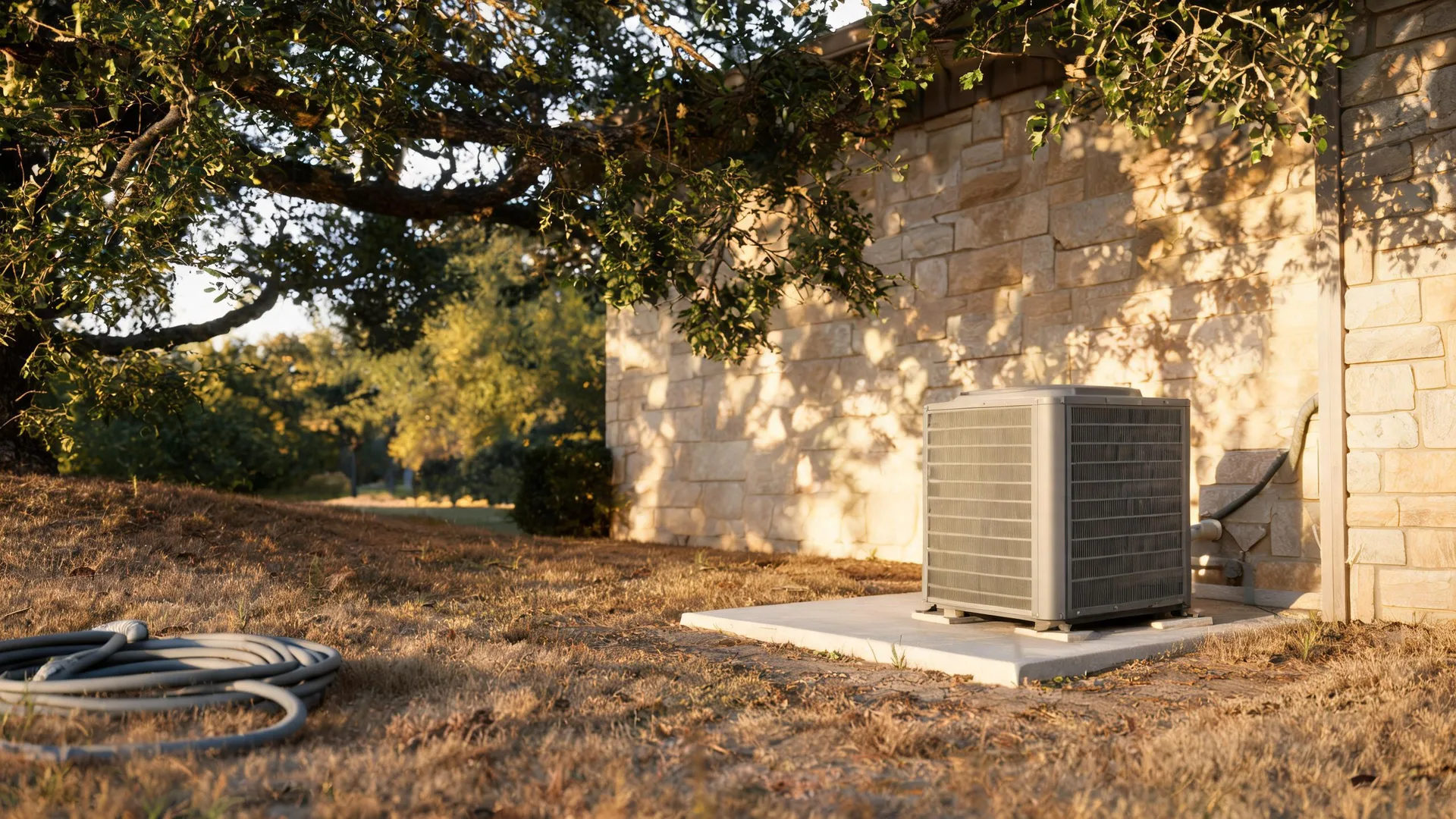
A gray heat pump outdoor unit mounted on a concrete pad next to the stone-accented exterior wall of a house.

How many years has it got left

If the heat pump came with the house and the house is from that era, ask whoever looks at it how much life is left in the unit before you put money into the repair. A compressor on its way out isn't worth chasing with part after part. That's a different question from whether it can be fixed today, and it's worth asking separately.

Running on a low charge wears the compressor

A heat pump short on refrigerant still moves heat, just not enough of it, so it runs longer to get there. That extra run time means the compressor works harder on every cycle, and a compressor that overheats or strains against a low charge for weeks can fail outright instead of just losing efficiency.
A frozen coil can't be pushed through

Restricted airflow or a refrigerant problem can let frost build up on the outdoor coil. Once that happens, the unit can't pull heat from the air no matter how long it runs, and continuing to run it can carry liquid refrigerant back into the compressor, which isn't built to handle liquid. That turns a coil problem into a compressor problem.

A heat pump fails for a handful of reasons, and most of them show up slowly before they show up all at once. The reversing valve is the part unique to a heat pump, and when it sticks, the system keeps blowing cold air in heating mode or won't switch back in warm weather. Contactors and capacitors wear out from the plain fact of starting and stopping the compressor thousands of times, and a weak capacitor shows up as a unit that hums but doesn't start, or a fan that spins slow. Refrigerant doesn't get used up, so if the charge is low, it's leaking out somewhere, usually at a fitting or a coil, and that loss doesn't fix itself. Outdoor units also take the brunt of whatever the weather sends their way, since the coil and fan sit exposed with nothing protecting them. A failing defrost control can leave the outdoor coil icing over without ever clearing it, which chokes off the unit's ability to pull heat from the air at all.

A heat pump that's low on charge or fighting a dirty coil doesn't stop working, it just works longer to do the same job, and every one of those extra hours shows up on a power bill in a place where power already costs more than almost anywhere else. Waiting doesn't save you that cost, it just spreads it out over months instead of putting it in front of you as one repair. If the unit is still keeping the house warm, that's not the same as it running the way it should. The sooner someone looks at it, the more likely it's still a repair and not a replacement.