White stucco Spanish Colonial Revival buildings with terracotta roofs glow at dusk on a hillside dotted with oak trees.

Heat Pump Repair in Hollister, CA

Tell us about the job

Takes about a minute. No obligation.

RepairHeat PumpSan Benito County, CA
Step 1 of 2

What ZIP code is the job in?

Dry air is easier on the system

Summer dew points in San Benito County average 46 degrees across June, July and August, lower than most of the country feels. A heat pump moving dry air does not fight the moisture load that wears on coils and compressors elsewhere. Less humidity to pull out of the air means less work on every cycle.

Less strain shows up as a better repair outlook

A heat pump that has not been run hard for years tends to have more life left in its parts when something does go wrong. A failed capacitor or a bad control board on a machine that has had it easy is still usually a straightforward fix, not a sign the whole unit is done.

7 months
November through May, your system heats
4 months
June through September, it cools
37°F
the average winter night it heats against
87°F
the average summer afternoon it cools against
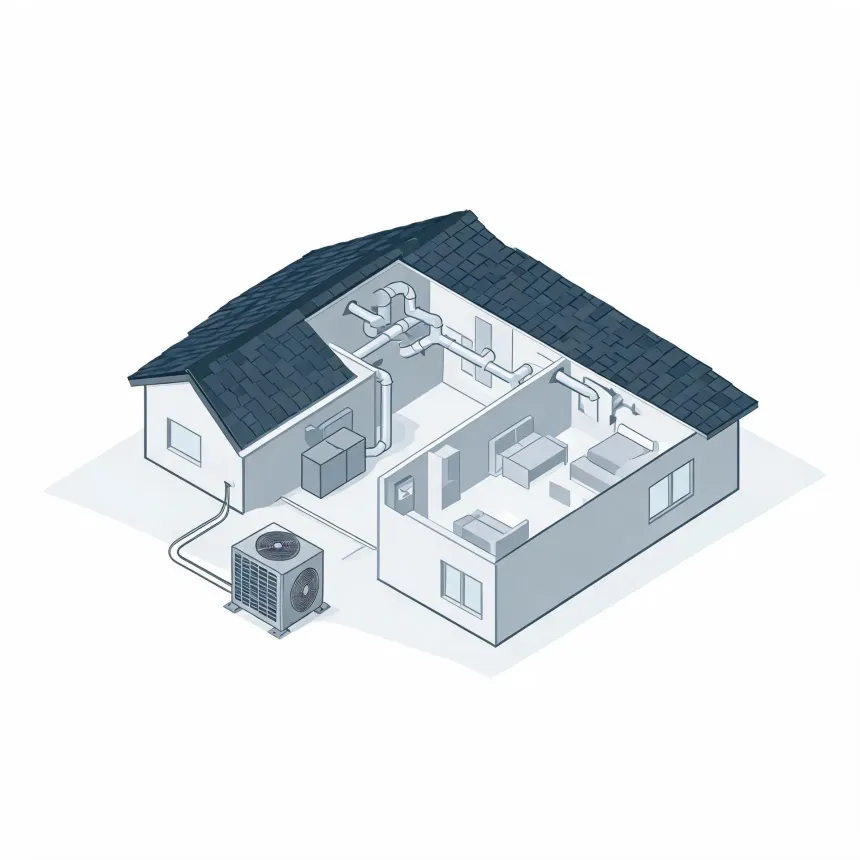
Isometric cutaway illustration of a single-story house showing interior rooms, ceiling ductwork, an indoor air handler, and an outdoor condenser unit connected by lines on the ground.
Your system heats November through May and cools June through September.

NOAA nClimDiv, 1991–2020 normals

Half the homes in San Benito County were built in 1989 or later.

A heat pump that came with a newer house still has years of parts life to work with, and that's usually a reason to repair it.

October and May are when a weak part gets found

Cooling runs June through September
Heat runs November through May
Climate zone 3C
Your system's age likely matches your houseIf your heat pump came with the house, check the year it was built before you write it off.

Wind is the bigger risk to the outdoor unit here, not weather wearing it down from the inside. Damaging wind has hit the county 43 times over the past decade, enough to rattle a cabinet, bend a fan guard, or kick debris into the coil. Hail is rare here by comparison. So when a heat pump is acting up, it's worth asking the contractor to check the cabinet and fins for storm damage along with whatever electrical fault is showing up. A unit that's had an easy run otherwise may just have taken a hit from one storm, and that's a repair, not a reason to replace it.

It's usually worth repairing

It has an easier job here than in most places, so your heat pump is often in decent shape. Repair is usually worth it.

Find a contractor
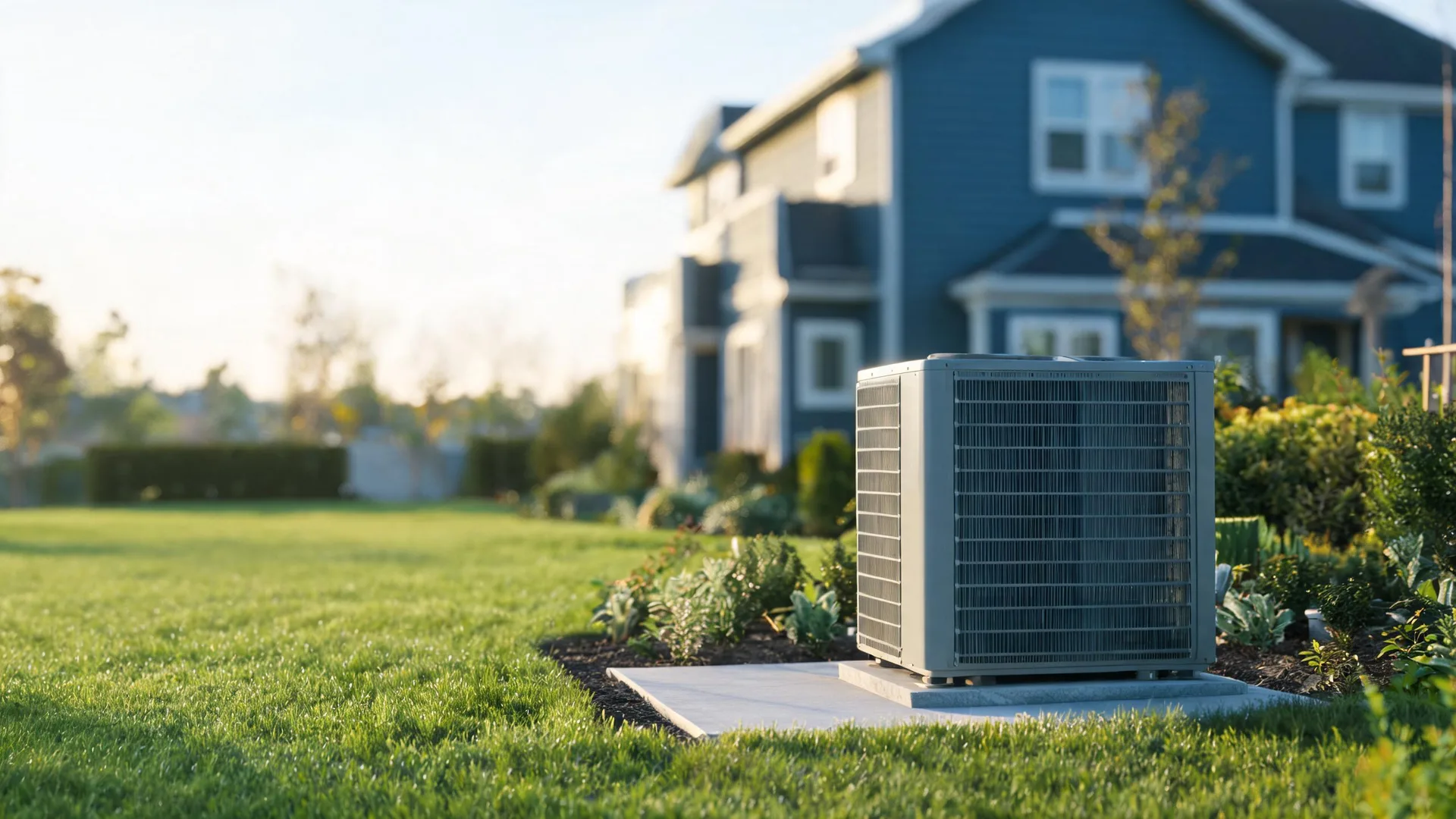
A gray heat pump outdoor unit mounted on a concrete pad next to the stone-accented exterior wall of a house.

The signs show up before the system quits

A heat pump that is failing does not usually quit outright. It tells you first. It runs longer than it used to, cycling on and on without the room reaching the temperature on the thermostat. It blows air that is warm but not hot, or cool but not cold, because the reversing valve is not switching all the way or the compressor is struggling to keep up. It starts making a noise it did not make before. A click that repeats when it should fire and run. A hum with no start. A rattle from the outdoor fan. Frost builds on the outdoor coil during a cycle and does not clear when the unit defrosts. The outdoor unit runs constantly, or it shuts off and restarts again and again without settling into a normal cycle. Any of these means a part is already on its way out, not a reason to wait and see.

What the tech checks first

A diagnostic starts outside, with the refrigerant charge and the compressor's electrical readings. Then the reversing valve gets tested, to see if it's switching clean between heat and cool. Inside, the tech checks the air handler, the blower motor, and the thermostat signal reaching the board. Most failures trace back to one of a few parts. A capacitor. A contactor. A run of low refrigerant. A control board that's stopped reading the thermostat right.

Why the fix is usually one part

Most heat pump calls end with one part replaced, not a system pulled out. A capacitor or contactor is a quick swap. A refrigerant leak takes longer, since the leak has to be found before it can be sealed. The compressor is the part a tech rules out early, with a pressure test and a check of its amp draw, because trouble there changes the whole call.

Before a tech shows up, a few things are worth checking yourself. Look at the thermostat first. Make sure it is set to heat or cool as needed and the temperature is actually set past the room temperature, since a bumped setting can look exactly like a broken system. Check the breaker box for the outdoor unit and the air handler. A tripped breaker will stop the whole system cold, and resetting it is free. Walk outside and look at the unit itself. Leaves, dirt or a cover pressed against the coil blocks airflow and can make a heat pump run weak or not at all. Check the air filter. A filter clogged with dust chokes the air handler and can shut the system down on its own as a safety measure. If the outdoor unit is caked in frost or ice outside of a normal defrost cycle, do not chip at it. That is worth mentioning to the tech, not fixing yourself.

A heat pump does not wear out all at once. Most of what fails in one is small on its own. The compressor is the part that matters most, because it is the one part that cannot be swapped out cheap, and a tech checks it early for exactly that reason. If the compressor is still drawing current the way it should and holding pressure, everything else on the machine is a normal repair. A bad capacitor, a stuck reversing valve, a refrigerant leak, a control board that stopped talking to the thermostat. Each of those gets fixed on a unit regardless of how old it is, because the part failing has nothing to do with the compressor's condition. Replacement makes sense when the compressor itself is going, or when the same system keeps coming back with a new failure every season. Short of that, one failed part is just one failed part.