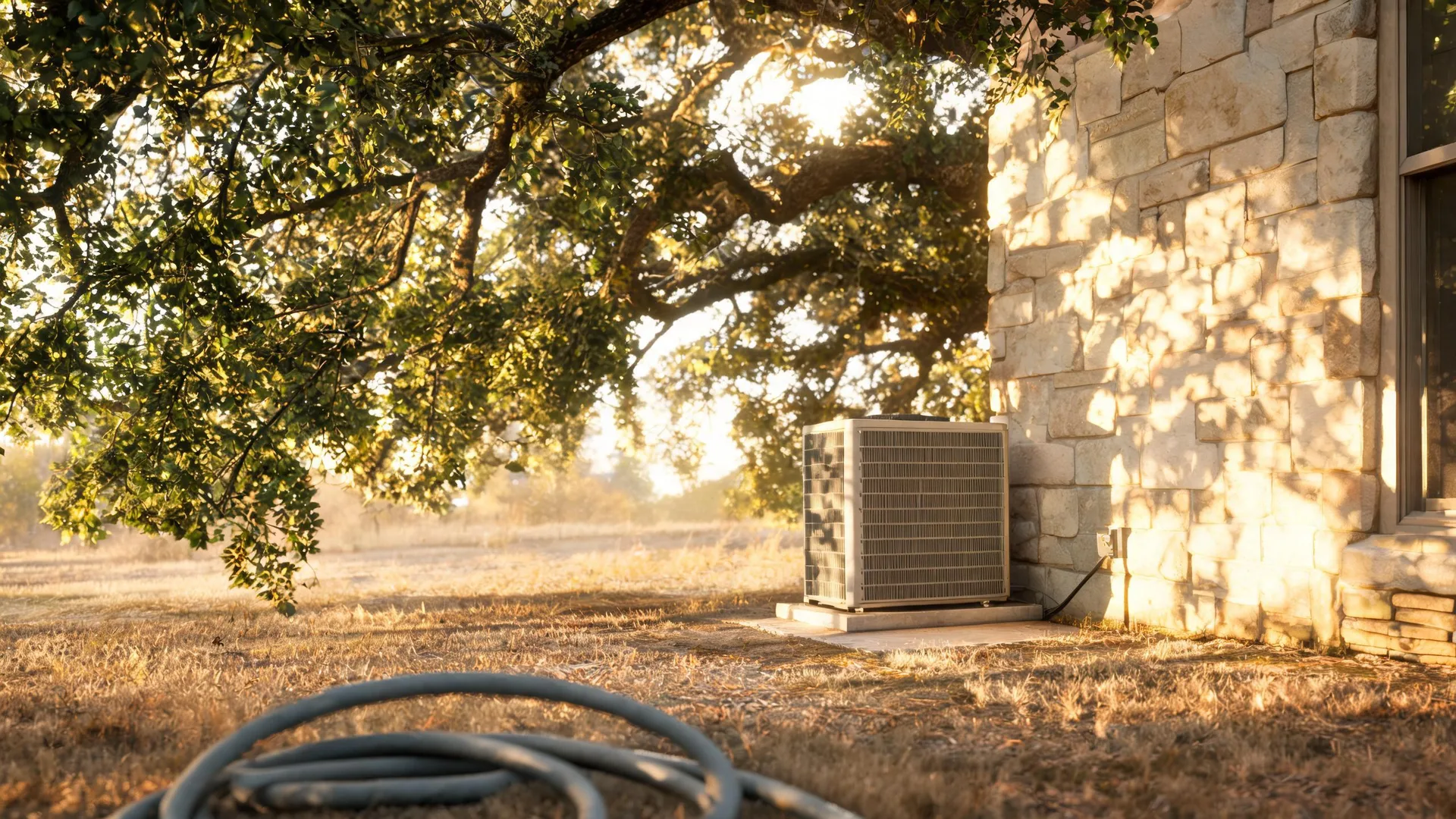
An outdoor heat pump unit mounted on a concrete pad in front of a two-story suburban house.

Heat Pump Repair in Los Angeles, CA

Tell us about the job

Takes about a minute. No obligation.

RepairHeat PumpLos Angeles County, CA
Step 1 of 2

What ZIP code is the job in?

November is when weak parts fail

Heat here runs November through April. When a heat pump switches over after sitting idle since spring, whatever was already marginal, a weak capacitor, a low charge, a worn contactor, tends to give out in those first cold weeks.

What that means for the repair

A heat pump acting up in November is most likely failing under its first real load of the season, not breaking down from anything new. Finding which part gave out is the job, not guessing at the whole system.

6 months
November through April, your system heats
4 months
June through September, it cools
41°F
the average winter night it heats against
87°F
the average summer afternoon it cools against
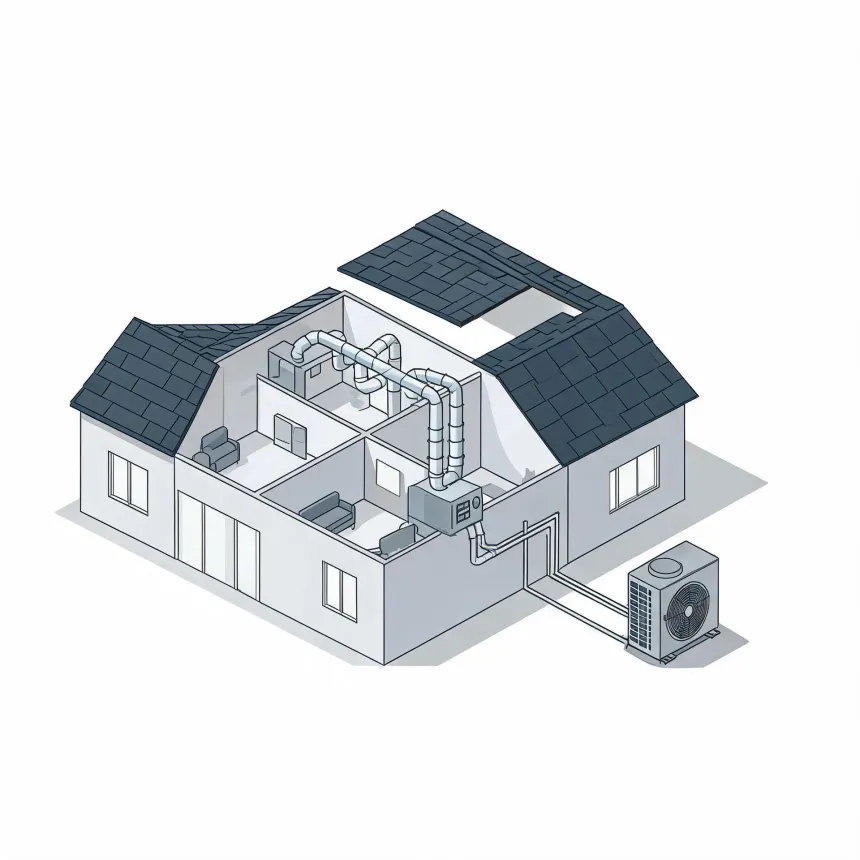
Isometric line illustration of a cutaway single-story house showing interior rooms, ceiling ductwork connected to an indoor air handler, and refrigerant lines running to an outdoor condenser unit on a pad.
Your system heats November through April and cools June through September.

NOAA nClimDiv, 1991–2020 normals

Winter here is mild. Overnight lows average 41°F through December, January and February.

A heat pump in Los Angeles isn't fighting hard freezes year after year, so a breakdown is more likely one worn part than a system in decline.

Los Angeles doesn't stress a heat pump. A failed part does.

136 severe weather events from 2015 to 2024
17% of homes statewide lost power a day or more in 2024
112 damaging wind events from 2015 to 2024

Half the homes in Los Angeles County were built in 1965 or earlier. If your house is one of them and the heat pump came with it, age is worth asking about before any big repair gets approved. A bad capacitor or contactor is worth fixing no matter how old the unit is. A failing compressor on a much older system is a different question. Ask the repair tech straight out how much life is left in it before you pay for the larger repair.

One worn part, found and fixed

Your heat pump most likely needs one part fixed, not a new system. That's worth confirming before you pay for anything big. A repair tech can find the actual part and tell you straight what it costs to fix versus replace, and with California electricity running 31.97 cents per kilowatt-hour, a unit that's running wrong is worth sorting out.

Find a contractor
A gray air-source heat pump mounted on a concrete pad next to a house with gray vinyl siding, surrounded by gravel and flanked by green shrubs and white hydrangea flowers.

Years on, not worn down

A heat pump here isn't cycling through hard freezes every winter. That's less strain on the compressor and the reversing valve over the years than a machine in a colder state would see. So a repair tech opening the unit up is usually looking at one worn part, not a system that's been run hard for years. Ask which part failed and whether the rest of the unit looks like it's holding up. Most of the time here, it is.

What the thermostat is telling you

Air blowing but not warm, or warm but not enough, usually means the heat pump is stuck in defrost or can't switch out of it, or the reversing valve isn't shifting all the way. Short cycling, where it kicks on and off every few minutes instead of running a full stretch, points to a failing capacitor or a thermostat sensor reading wrong. Either way the unit is running, just not doing the job, which is different from not running at all.

What you hear and see outside

A heat pump that hums but the outdoor fan doesn't spin is usually a bad capacitor or a seized motor. Ice building up on the outdoor coil that doesn't clear during the defrost cycle points to a failed defrost control or a low refrigerant charge. A grinding or screeching noise from the outdoor unit is a motor bearing going out, and it won't fix itself by waiting.

Before calling anyone, check the thermostat first. Make sure it's set to heat, not cool, and that the batteries aren't dead. Look at the outdoor unit and clear away anything piled against it, leaves, a cover, plant growth, so air can move through the coil. Check the air filter, since one that's clogged can choke airflow enough to trip the system into acting up. Walk the vents inside and make sure none are closed or blocked by furniture. If there's a reset button on the indoor or outdoor unit, one press is worth trying, but don't hold it down or press it over and over. If none of that changes anything, the problem is inside the unit, and that's where a repair tech takes over.

A heat pump is worth repairing more often than people expect, because most failures come down to one part, not the whole system. A capacitor, a contactor, a defrost control, a blower motor. Any of these can be swapped without touching the compressor or the coils, and the unit runs like new once it's done. The compressor is the exception. It's the most expensive part in the system, and when it's failing, the labor to replace it often costs close to a new unit anyway. A tech who's any good will tell you straight which kind of repair you're looking at before doing the work. If they're talking about the compressor, ask how old the rest of the system is and whether it's still under warranty. If they're talking about anything else, fixing it is usually the right call.