A single-story stucco house with a clay tile roof behind a lawn, framed by oak branches above and agave and shrubs in the blurred foreground.

Heat Pump Repair in Madera, CA

Tell us about the job

Takes about a minute. No obligation.

RepairHeat PumpMadera County, CA
Step 1 of 2

What ZIP code is the job in?

A small fault can take out a bigger part

A heat pump that keeps running with a low refrigerant charge pulls the compressor down with it. The compressor is the heart of the system, and it wears out fast once it runs low on charge for too long. A struggling fan motor or a failing capacitor does the same thing, forcing the compressor to work against a problem it can't fix on its own.

The signs don't go away on their own

Ice on the outdoor coil, short cycling, or a unit that runs constantly without keeping the house at temperature are all signs of a problem that gets worse with time, not better. Shutting the system off and getting a diagnosis before it runs again is what keeps the damage contained to the part that's already failing.

8 months
October through May, your system heats
4 months
June through September, it cools
33°F
the average winter night it heats against
87°F
the average summer afternoon it cools against
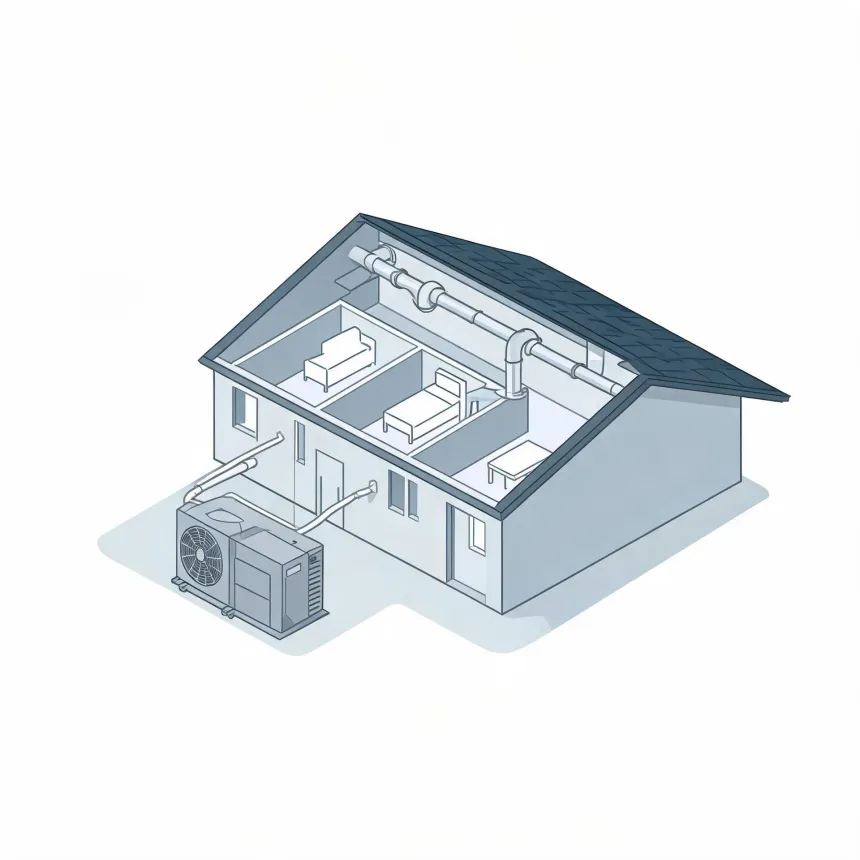
Isometric line illustration of a cutaway single-story house showing interior rooms with furniture and attic ductwork connected to an outdoor condenser unit beside the building.
Your system heats October through May and cools June through September.

NOAA nClimDiv, 1991–2020 normals

Madera County doesn't get the hail or wind that tears up outdoor units elsewhere, and winters stay mild enough that a heat pump here isn't fighting hard freezes most nights.

A heat pump running in milder conditions wears slower, so when one in Madera breaks down, repair usually makes more sense than replacement.

At 31.97 cents a kWh, a heat pump running wrong is a bill you'll notice

Power costs 31.97 cents a kWh statewide
88 damaging wind events from 2015 to 2024
6 hail events from 2015 to 2024
Built new enough to be worth fixingHalf of Madera County's homes were built in 1988 or later, and this one's heat pump likely has years left in it.

Madera County has logged 282 severe weather events between 2015 and 2024, including damaging wind, hail, and a few tornadoes. That's a lot of weather for an outdoor unit sitting out in the yard taking it. Hail dents a cabinet and bends fins without stopping the unit from running, so it can keep working for months before the coil damage catches up with it. Wind-driven debris does the same, lodging against the coil or fan where you won't see it from a glance out the window. If your heat pump has been through a storm, it's worth having someone look at the coil and fan even if the system still seems fine. A unit that loses power during a storm should come back on its own, but if yours doesn't, that's worth a check too, not just a reset.

A heat pump that's had it easy here is usually worth fixing

Most of what wears a heat pump down fast is hard freezes and storm damage, and this one hasn't had much of either. If yours is broken, the odds are good it's a single part, not a system on its way out. Worth having someone diagnose it before you assume the worst.

Find a contractor
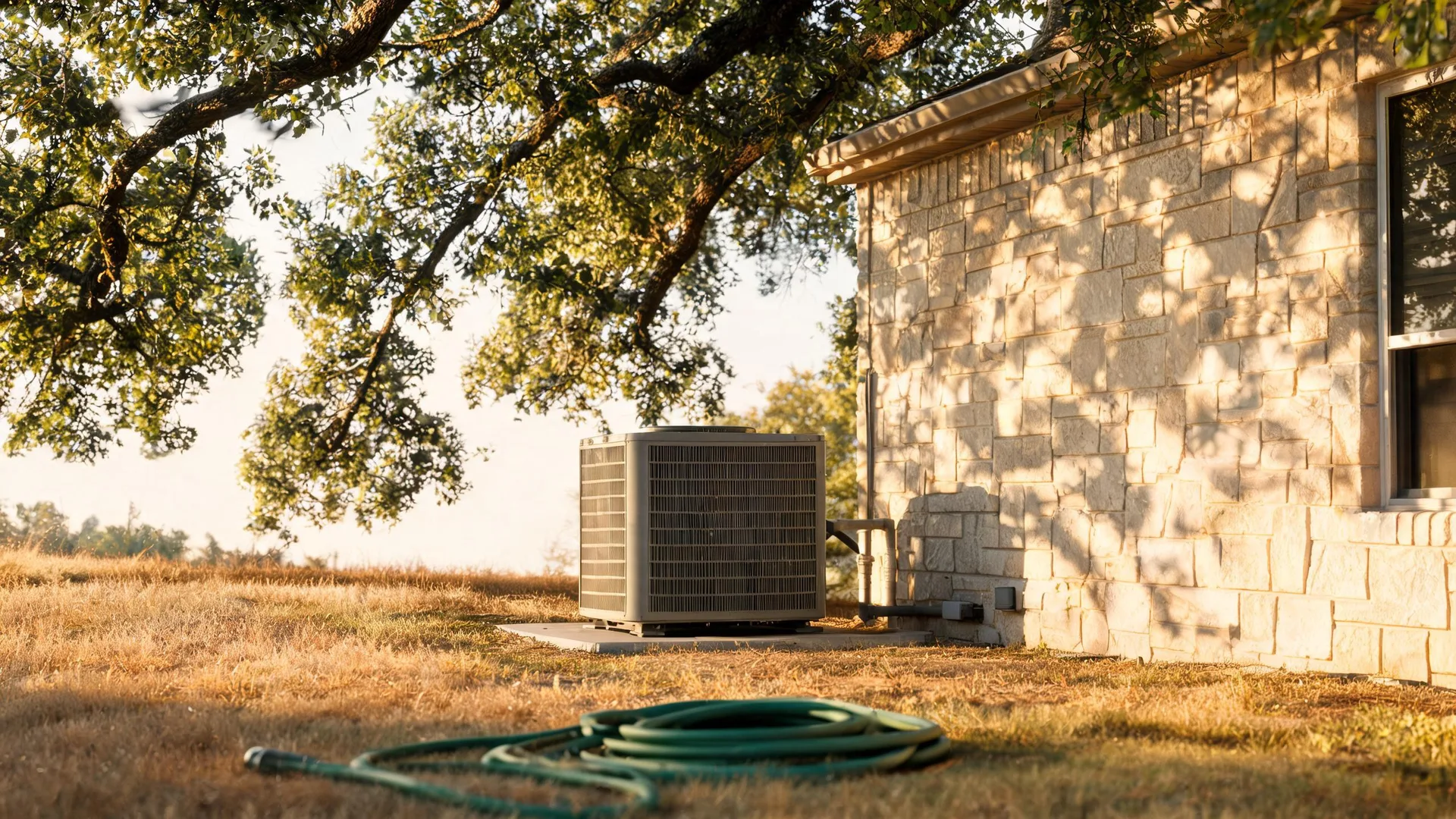
A gray heat pump outdoor unit mounted on a concrete pad next to a residential house with lap siding and stone accents.

A newer house usually means years of life still in the system

Half the homes in Madera County were built in 1988 or later. If yours is one of them, the heat pump may be original equipment or a replacement installed somewhere along the way, either way worth checking the install date against the unit's age before deciding anything. A system that's had an easy run here, mild winters and no hard freezes to speak of, tends to hold up well over the years it's built for. That favors fixing what's broken over tearing it out.

Heat and cool, so something's always running

A heat pump doesn't get an off season. It runs the compressor and reversing valve year round, which means a stuck reversing valve or a failing compressor shows up as a problem in both directions, no heat in one season and no cool air in the other.

The signs are usually in the air, not the sound

Air that comes out lukewarm instead of hot or cold, rooms that don't match each other, a system that runs long and still doesn't get there. These point to a refrigerant or airflow problem before the unit ever makes a noise that tells you something's wrong.

A capacitor weakens over months, not days, so the fan or compressor gets a little slower to start each time until one morning it doesn't. Contactor points pit from years of making and breaking the circuit, and eventually the connection isn't reliable. Both are wear parts, not defects, and both are quick to test and replace once someone's looking at the unit. A fouled outdoor coil is another common one. Dirt and yard debris build up on the fins over time and make the system work harder to move the same heat, which shows up as longer run times before anything actually breaks. Catching any of these early is usually a small fix, which lines up with a unit that hasn't been run hard.

A diagnostic starts outside at the unit, not with a guess. A tech checks the refrigerant charge, because too little pulls the compressor down and too much is just as hard on it. They'll test the capacitor and contactor, since those are what start the fan and compressor and wear out quietly over years. Airflow gets checked too, both the outdoor coil and the indoor side, because a coil fouled with debris or a filter clogged with dust makes the system work harder without any strange noise to warn you. Only once those are ruled out does the reversing valve come into question, since testing it means watching whether the system actually switches between heat and cool on command. The point of walking through it in order is to find the one part that's actually failed, not to replace parts until something works.