






A single-story stucco house with a tile roof, framed by oak branches, with a lawn and agave and succulent plantings in gravel beds in the foreground.

Heat Pump Repair in Modesto, CA

Tell us about the job

Takes about a minute. No obligation.

RepairHeat PumpStanislaus County, CA
Step 1 of 2

What ZIP code is the job in?

A heat pump works harder when the air is heavy with moisture, and here the air just isn't. The dew point in Modesto averages 45°F across June, July and August, lower than most places in the country. Dry air pulls less work out of the system, so the compressor isn't straining the way it would in a muggy climate. The county has also seen damaging wind 18 times between 2015 and 2024, but wind doesn't wear down the parts inside the unit itself. Put it together and a heat pump here is usually not fighting the climate for its condition. Whatever's wrong with yours probably came from age or a part wearing out, not from years of hard use.

6 months
November through April, your system heats
5 months
May through September, it cools
39°F
the average winter night it heats against
91°F
the average summer afternoon it cools against
Isometric line illustration of a cutaway house showing interior rooms with furniture, a furnace or air handler with overhead ductwork, and an outdoor condenser unit connected by lines outside the wall.
Your system heats November through April and cools May through September.

NOAA nClimDiv, 1991–2020 normals

Half the homes in Stanislaus County were built in 1981 or later.

A heat pump that came with a newer house still has years in it, so fixing the one you have usually makes more sense than replacing it.

When it's running wrong, every hour of that shows up on the bill

Power here costs 24.06 cents per kilowatt-hour
18 damaging wind events from 2015 to 2024
Winter nights average 39°F

October is worth paying attention to. Heat kicks on in November here, and that first real cold snap is when a heat pump finds whatever was already wobbly. A weak run capacitor or a low refrigerant charge can coast through the mild months without giving you trouble, then quit the first time the system has to work steady for a few hours straight. Overnight lows average 39°F through December, January and February, so once the season starts this unit is running most nights, not just on the occasional cold morning. If yours is acting up now, before November, that's the system telling you early. Getting it looked at before the full six months of heat season is easier than losing it on a cold night in January.

Fix it. The house, and the unit, probably have the years left to make it worth it.

If your heat pump came with a newer house, repair is the call that fits. Get it looked at and fixed rather than planning around a replacement.

Find a contractor
A man in a dark shirt and tan pants carries a waxed canvas tool bag up porch steps toward an orange front door, with a potted olive tree beside the entry.
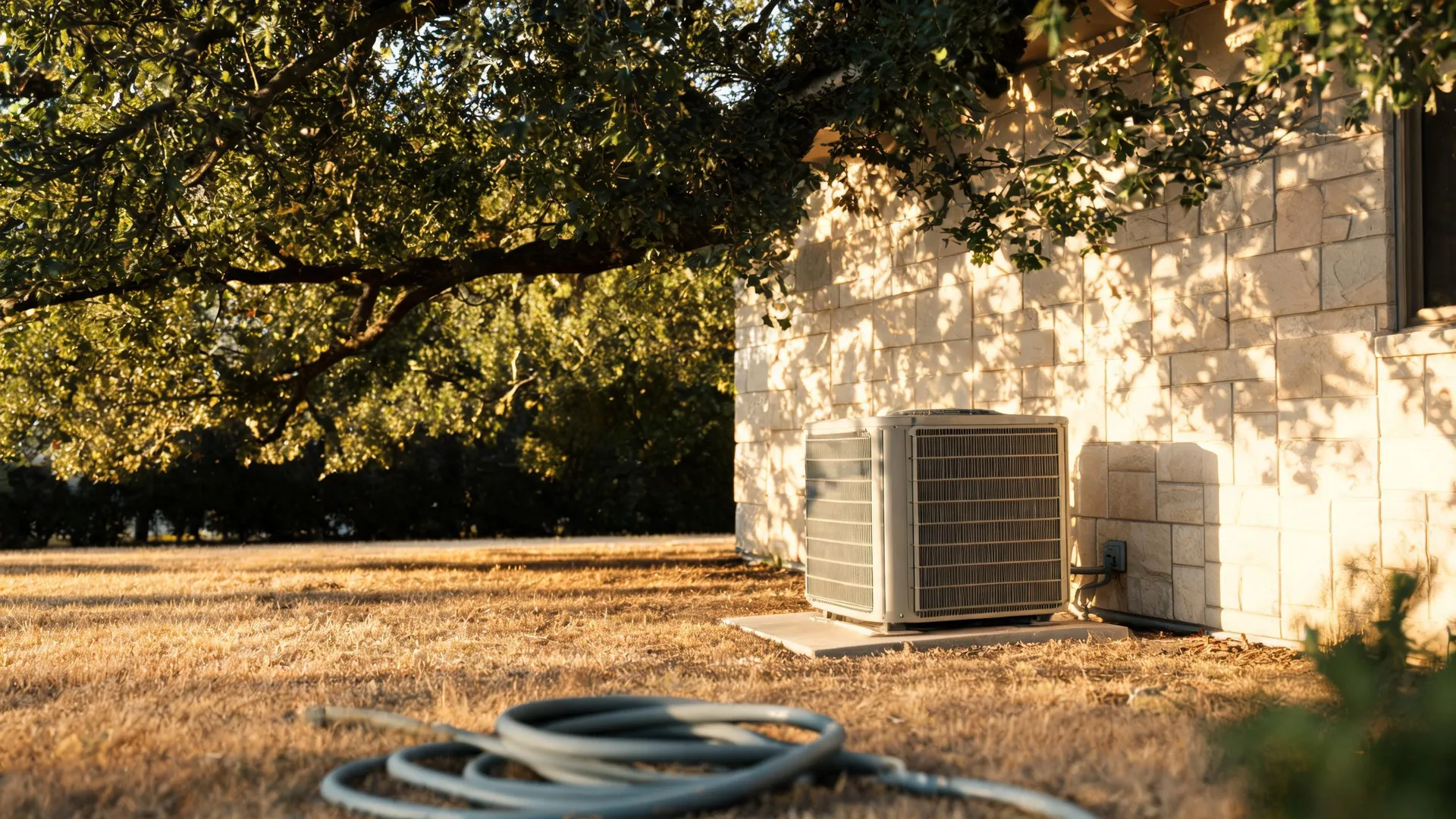
A gray heat pump condenser unit mounted on a concrete pad against the gray lap-siding exterior wall of a house.

This unit hasn't had much to fight

Wind is the only real weather event this unit has had to sit through, and wind doesn't get inside the cabinet or wear on the compressor. So a heat pump here spends most of its life just running normal cycles in mild air, not fighting storms or straining against heat and humidity. That means when something breaks, it's almost always one part giving out, not the whole system worn down. A technician can usually replace that one part and send you on your way, instead of finding damage spread across the unit. Worth knowing before you assume the worst about an old noise or a tripped breaker.

Most failures are one worn part, not the whole system

A capacitor loses its charge and can't give the compressor or fan motor the kick to start. A contactor pits from years of arcing until it stops passing power reliably. A reversing valve sticks and the unit gets stuck in one mode. Refrigerant leaks slowly from a rubbed line or a bad fitting, and the system loses capacity long before it quits outright. None of these mean the unit is failing wholesale. They mean one component reached the end of its life while the rest of the unit kept going.
What that means for the fix

A technician's job is to find which part gave out and confirm the rest of the unit is sound around it. A failed capacitor or contactor gets swapped and the unit runs like it did before. A slow leak gets found and sealed before it empties the system again. The outdoor coil and compressor usually outlast the smaller parts around them, so a repair call is normally about replacing what broke, not rebuilding the whole unit.

A heat pump that's struggling will often keep running anyway, and that's where the damage starts. Low refrigerant charge is the clearest case. The compressor is built to pump refrigerant through the system, not to run dry, and once the charge drops low enough it starts pulling in hot gas instead of the mix it needs for lubrication. Run it like that for days and you're not looking at a simple top-off anymore, you're looking at a compressor replacement. A failing run capacitor works the same way. The motor can still limp along on a weak start, drawing more current than it should every time it cycles, until the windings take the damage instead of the capacitor. Even something as basic as a dirty coil or a weak airflow problem turns into a bigger repair the longer it runs, because the compressor ends up working against a system that can't move heat the way it's supposed to. The parts in a heat pump are built to work within a range. Push them past it for a few extra days because the unit still technically turns on, and you've traded a small repair for a big one.

Power here costs more than in most of the country, so a heat pump that isn't running right costs more too. A low charge or a weak capacitor doesn't shut the system off. It keeps running, pulling power every cycle, just doing less with it. That's a worse trade here than almost anywhere else, since the electricity behind it isn't cheap to begin with. Getting the part replaced stops that waste the day it happens, instead of letting it sit on next month's bill.