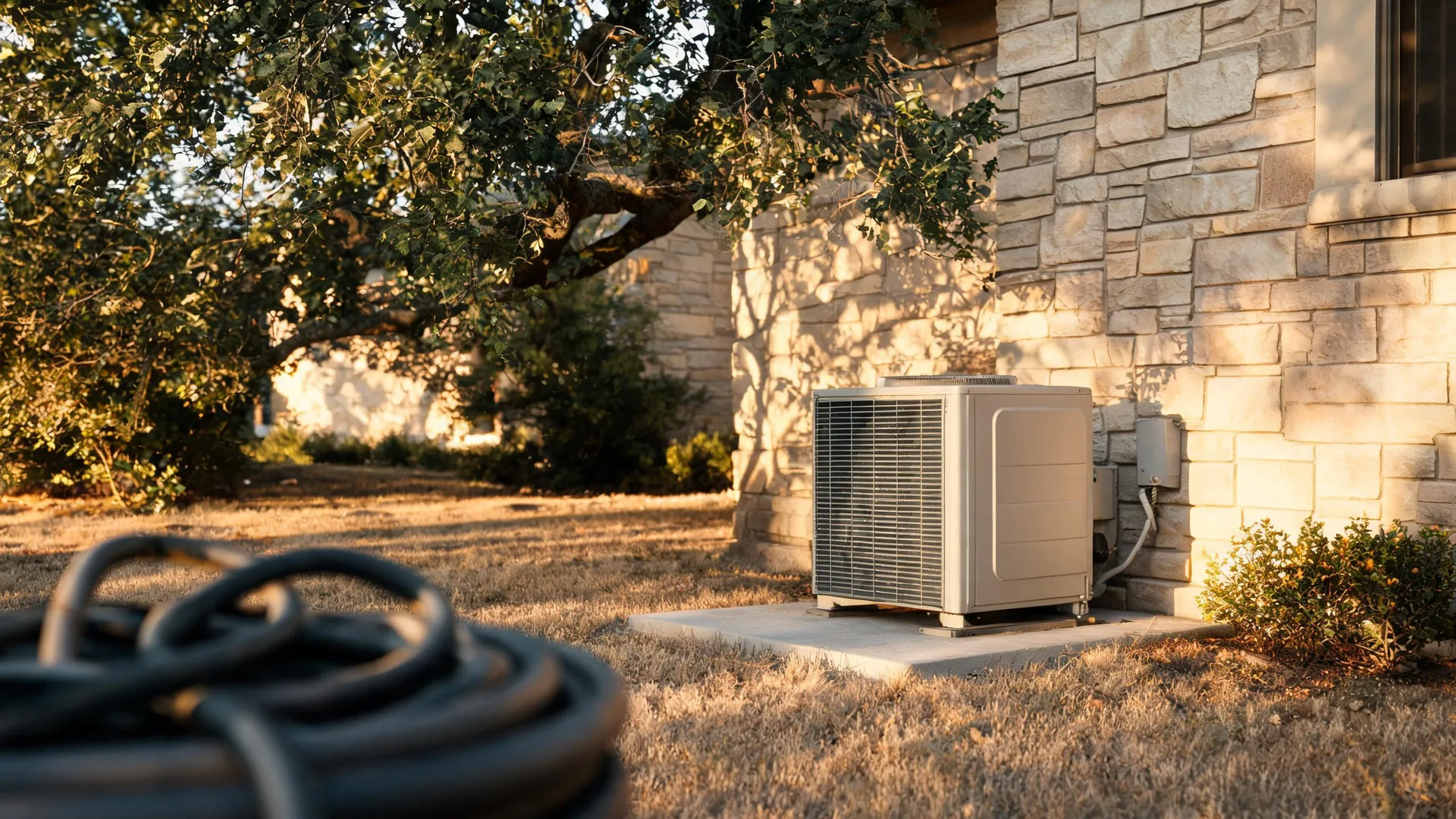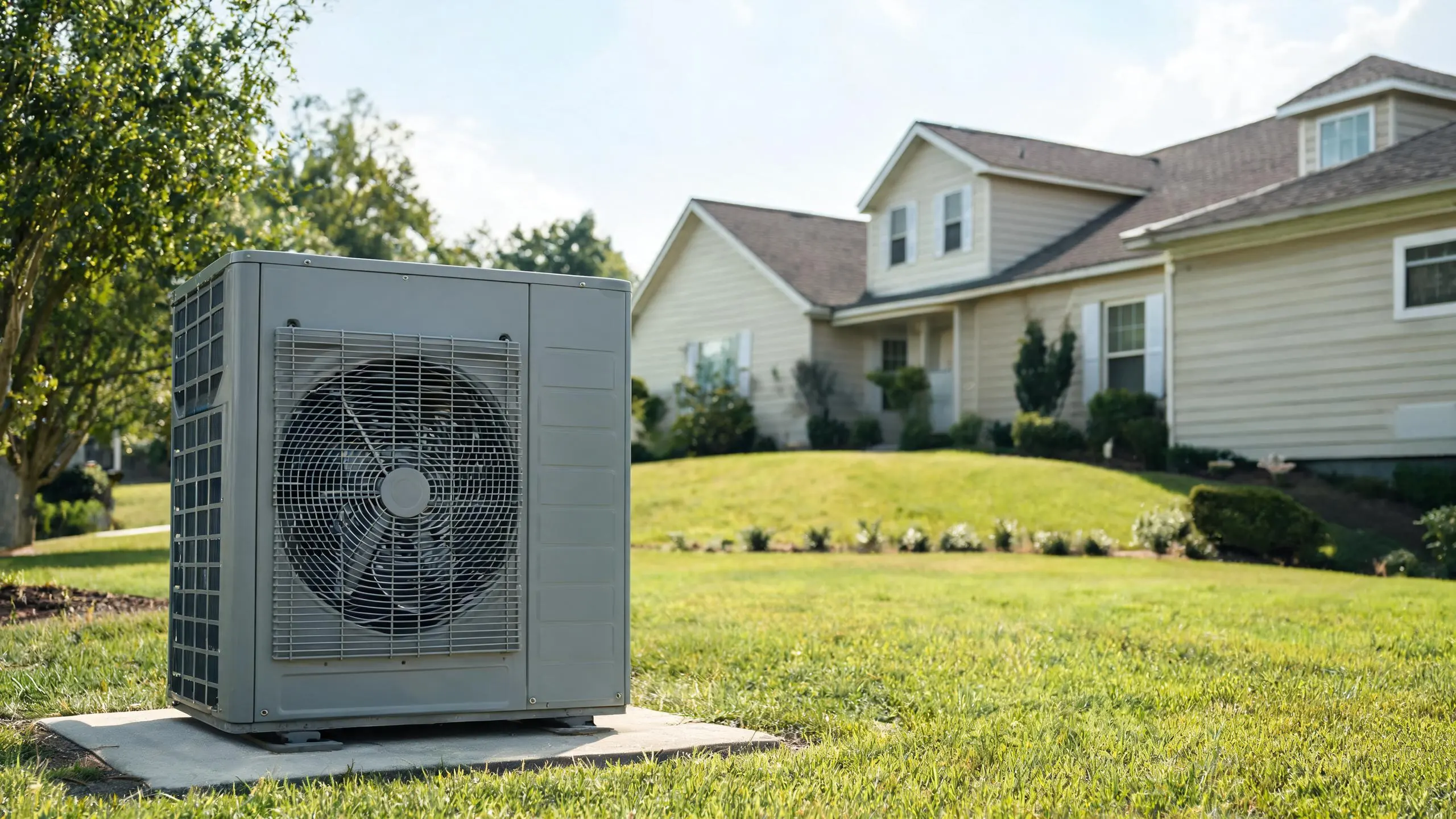
A gray outdoor HVAC condenser unit mounted on a concrete pad in the front yard of a two-story suburban house.

Heat Pump Repair in Napa, CA

Tell us about the job

Takes about a minute. No obligation.

RepairHeat PumpNapa County, CA
Step 1 of 2

What ZIP code is the job in?

Napa winters don't push a heat pump hard

Overnight lows average 39°F through December, January and February. A heat pump here isn't fighting single digits or working overtime to keep a house warm, so it doesn't wear out the way it would somewhere colder.


A breakdown is more likely a part than the climate catching up with it

Mild winters and little hail mean the strain on your system has been light for years. If something's gone wrong, it's usually a specific part failing, not the whole unit giving out from being overworked.

6 months
November through April, your system heats
4 months
June through September, it cools
39°F
the average winter night it heats against
87°F
the average summer afternoon it cools against
Isometric cutaway illustration of a single-story house showing interior ductwork, an indoor air handler, and an outdoor condenser unit connected by lines along the exterior wall.
Your system heats November through April and cools June through September.

NOAA nClimDiv, 1991–2020 normals

Heat pumps in Napa start working for heat in November.

A part that's been marginal all year is most likely to fail in the first cold snap.

Napa doesn't stress a heat pump. Something in it failed.

Power costs 31.97 cents a kWh statewide
72 damaging wind events from 2015 to 2024
1 hail event from 2015 to 2024

Half the homes in Napa County were built in 1976 or earlier, half in 1976 or later. That split doesn't point to what's wrong with your heat pump, and it isn't meant to. A unit fails the same way whether the house around it is old or new. What matters more is whether the system came with the house or was put in later, since that tells a contractor roughly what age of equipment they're looking at. Either way, the work starts with finding the part that failed, not guessing at the house around it.

Your heat pump hasn't been worked hard. Get it fixed.

A system that's had an easy few years is usually worth fixing rather than replacing. Get the part that failed diagnosed and repaired.

Find a contractor
A man in a dark long-sleeved shirt and brown work pants, seen from behind, carries a waxed canvas tool bag up porch steps toward an orange front door, with a potted shrub in a terracotta pot beside him.
A dark gray heat pump unit mounted on a concrete pad next to a house with gray siding and a stone veneer wall.

What to check before you call

Before calling anyone, go outside and look at the outdoor unit. If the fan isn't spinning at all, or it's spinning but no air is coming off the coil, that's worth noting. Check the coil itself for ice. A light frost is normal on a cold morning and clears on its own, but a solid block of ice over the coil means something's wrong and running it longer won't fix it. Inside, check your thermostat is set to heat and the temperature is actually set above room temperature, since a setting bumped by accident gets mistaken for a breakdown more often than you'd think. Check your breaker panel for a tripped breaker on the heat pump circuit. If the system runs but blows air that feels cool rather than warm, let it run a few minutes before judging, since heat pump air is naturally cooler than a furnace's. Replace the air filter if you haven't in a while. A clogged filter can starve the system of airflow and cause problems that look like bigger failures than they are. What you shouldn't do is open the outdoor unit's panels or poke at the refrigerant lines. Those checks are for a contractor with gauges and training, not a homeowner with a flashlight.

Ice on the coil spreads if the system keeps cycling

A frosted coil can't pull heat from the air the way it should, so the system runs longer to make up for it, which pulls the coil colder and adds more ice. Left running, a heat pump in this state can end up icing solid rather than clearing on its own.

A failing part rarely fails alone

A weak capacitor makes the compressor draw harder to start, and a compressor that strains on every start wears out faster than one starting clean. A refrigerant leak left alone lets the compressor run low on lubrication, and a compressor damaged that way doesn't get fixed, it gets replaced. Shutting the system off when something seems off protects the parts that haven't failed yet.

Most heat pump failures trace back to a handful of parts, not the whole system wearing out. The reversing valve is a common one. It's what switches the system between heating and cooling, and when it sticks, the unit keeps running but stops doing what the thermostat asked for. Capacitors fail too, usually without warning, and when one goes the compressor or fan motor struggles to start or doesn't start at all. A low refrigerant charge almost always means a leak somewhere in the line set or coil, not the refrigerant simply running low with age, since these are sealed systems. Defrost board failures are another one, since that board tells the system when to melt frost off the outdoor coil, and when it fails the coil ices over and stays that way. None of these have much to do with how hard the system has been run. They fail on their own schedule.

A diagnostic visit starts outside at the unit itself, not with a clipboard of questions. A contractor checks the reversing valve, the capacitor, the defrost board and the refrigerant charge, since those are the parts that fail most. Gauges go on the line set to check pressures, because that's the only way to tell a low charge from a bad component. The electrical side gets tested too, since a capacitor can read fine sitting still and fail the moment it's asked to start a motor. Most of this is done with the system running, watching how it behaves under an actual call for heat rather than guessing from a unit sitting idle. Once the failed part is found, the fix is usually just that part, not the whole system.