White Mediterranean-style houses with lit windows photographed at dusk beneath golden hills.

Heat Pump Repair in Red Bluff, CA

Tell us about the job

Takes about a minute. No obligation.

RepairHeat PumpTehama County, CA
Step 1 of 2

What ZIP code is the job in?

The air here doesn't work it hard

Summer dew points around Red Bluff average 41°F through June, July and August, well below most of the country. Dry air is easier on a heat pump than humid air, since the system isn't fighting to pull moisture out along with heat. Less strain year over year means less wear on the compressor and coils.


So a repair is usually the right call

A heat pump that hasn't been run hard tends to have more life left in it when something goes wrong. If yours is acting up, the cause is more likely a part that failed on its own than a machine worn out from overwork. That's worth knowing before anyone talks about replacing it.

8 months
October through May, your system heats
4 months
June through September, it cools
36°F
the average winter night it heats against
89°F
the average summer afternoon it cools against
Isometric line illustration of a cutaway single-story house showing interior rooms with furniture and attic ductwork connected to an outdoor condenser unit beside the building.
Your system heats October through May and cools June through September.

NOAA nClimDiv, 1991–2020 normals

May is the last easy month before this heat pump has to carry a full cooling load.

If a part was already marginal, June is when the added load finds it.

Age varies more here than the climate does

Half the homes here were built by 1981
Climate zone 3B
Power here costs 38.55 cents per kilowatt-hour

Weather here can still knock out power, and that matters for a heat pump since it has no backup heat strip the way some setups do. Tehama County saw 110 winter storm events and 46 damaging wind events between 2015 and 2024, and statewide, 17% of households lost power for 24 hours or more in 2024. A heat pump that won't start after an outage often just needs its control board reset, not a repair. If it still won't run once power is back, the outage likely isn't the cause. Something else failed around the same time, and that's the part worth tracking down.

A heat pump running badly costs more here, every month it runs that way

Electricity here runs 38.55 cents per kilowatt-hour, among the highest rates in the country. A heat pump that isn't running right doesn't wait for a season to cost you. It costs you on the next bill.

Find a contractor
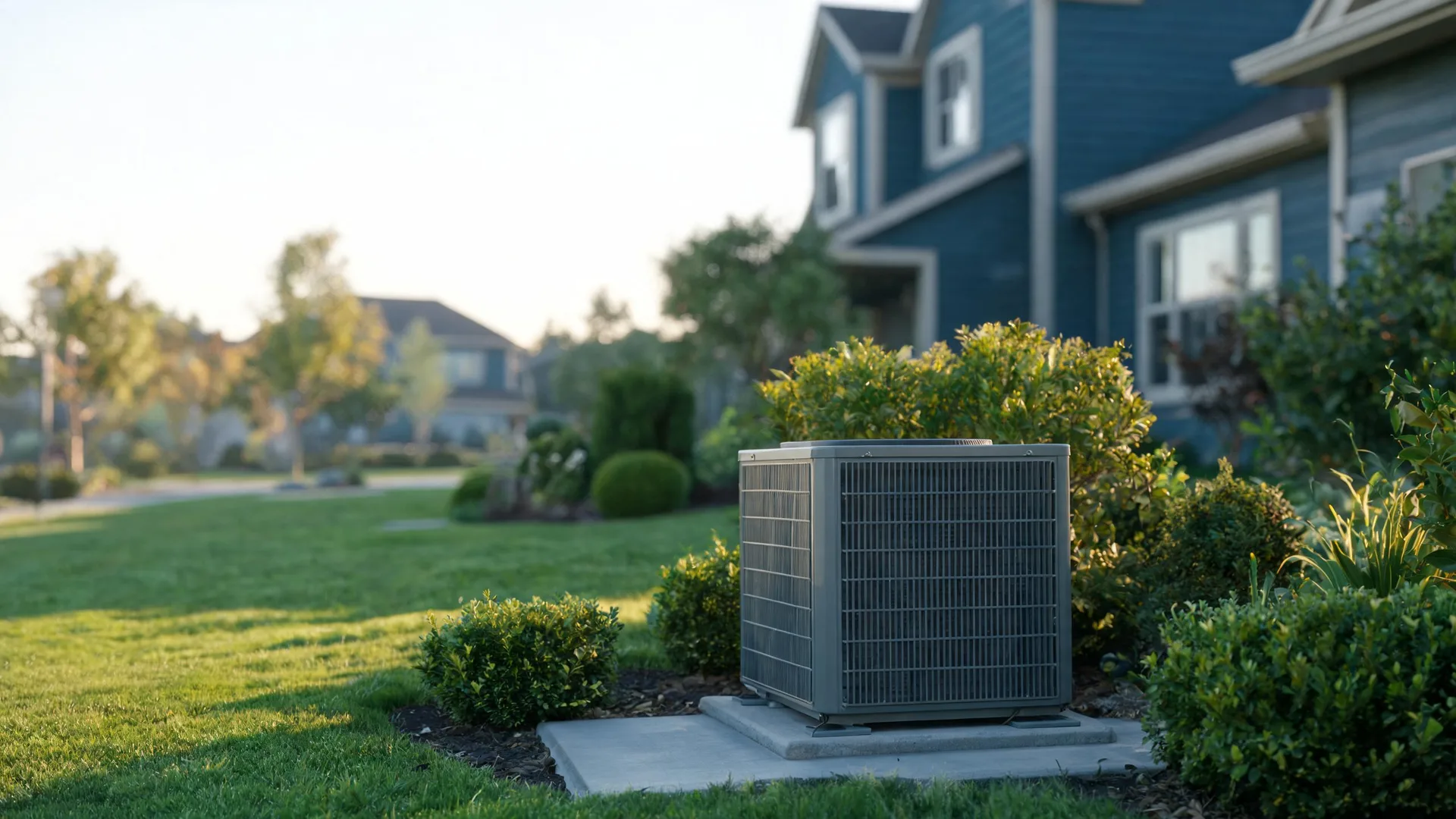
A dark gray heat pump unit mounted on a concrete pad next to a house with gray siding and a stone veneer wall.

It's had an easy few years. Something still broke.

A heat pump that isn't working hard every year tends to fail at a single weak point rather than wearing out all over. That points to a part that's failed outright: a capacitor, a sensor, a connection gone bad. Those are straightforward to find and fix once someone's looking at the right thing. Waiting to see if it gets worse usually just means the same repair later, after a harder breakdown.

What shows up first

The outdoor unit runs but the air coming out feels wrong for the setting, barely warm on heat mode or not quite cold enough on cooling. Sometimes the system short cycles, kicking on and off every few minutes instead of running a full cycle. Sometimes it ices over on the outdoor coil and stays that way. A heat pump that's starting to struggle usually tells you before it quits outright, if you know what to listen for.

What those signs mean for the job

Short cycling often traces back to a bad capacitor or a thermostat sending the wrong signal. Weak airflow can mean a clogged filter, a failing blower motor, or a stuck reversing valve that won't let the system switch modes properly. Ice on the coil that doesn't clear on its own points to a defrost control problem or a refrigerant charge that's off. None of these get better left alone, and most are quick to find once someone checks the right part first.

A heat pump that's struggling doesn't fail faster just because you ignore it, but the strain spreads. A reversing valve stuck half-open makes the compressor work against itself, and that's the expensive part to replace. A dirty coil iced over makes the system run longer to do the same job, and that extra runtime wears on everything else in the cabinet. A failing capacitor puts load on the compressor every time it tries to start, and a hard-starting compressor doesn't stay healthy long. The part that's actually broken is usually a quick fix. What it drags down if it's left alone usually isn't.

Once the cause is found, there's no reason to sit on the repair. A bad capacitor or a stuck reversing valve doesn't get cheaper to run while you wait. Power here costs more than in most of the country, so a system working harder than it should shows up on the bill right away, not months from now. Getting someone out to diagnose it now means the fix happens before the part it's straining goes too. Find what failed, replace that part, and stop paying for a heat pump that's working against itself.