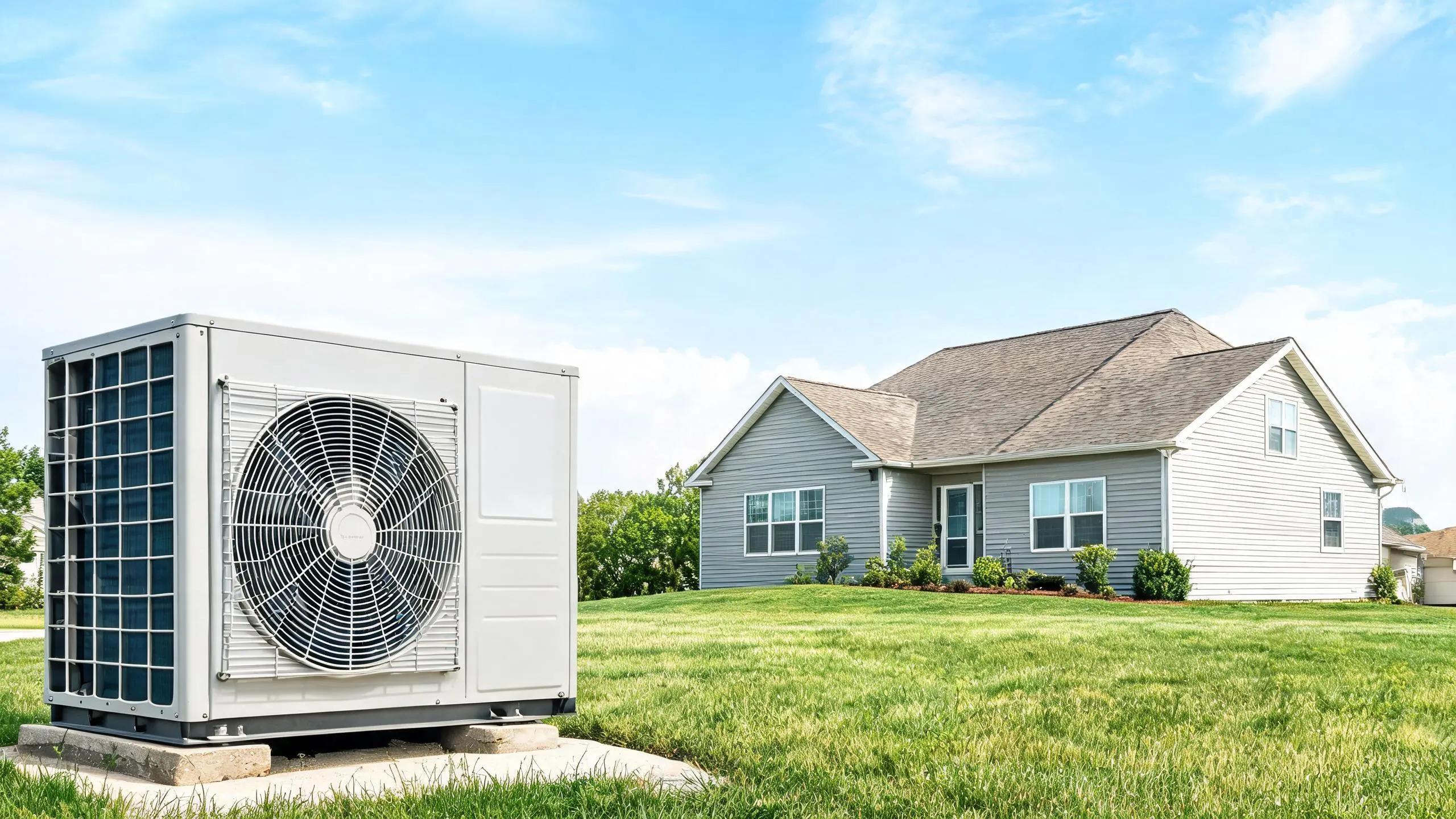





An outdoor HVAC condenser unit on a concrete pad in front of a single-story house with gray siding and a shingle roof.

Heat Pump Repair in Riverside, CA

Tell us about the job

Takes about a minute. No obligation.

RepairHeat PumpRiverside County, CA
Step 1 of 2

What ZIP code is the job in?

Riverside County saw 477 severe weather events between 2015 and 2024, and 409 of those were damaging wind. That outdoor unit sits outside, exposed, and wind-driven debris can bend the fins or crack the fan blade without stopping the system from running. Seven hail events in that same stretch is not many, but it only takes one pass to dent a coil. Statewide, 17% of households went at least a day without power in 2024, and a heat pump that loses power can come back on with a fault it didn't have before. If the unit took a hit from a storm, or the power dropped out for a while, it's worth having someone look even if it's still blowing air.

5 months
November through March, your system heats
7 months
April through October, it cools
42°F
the average winter night it heats against
99°F
the average summer afternoon it cools against
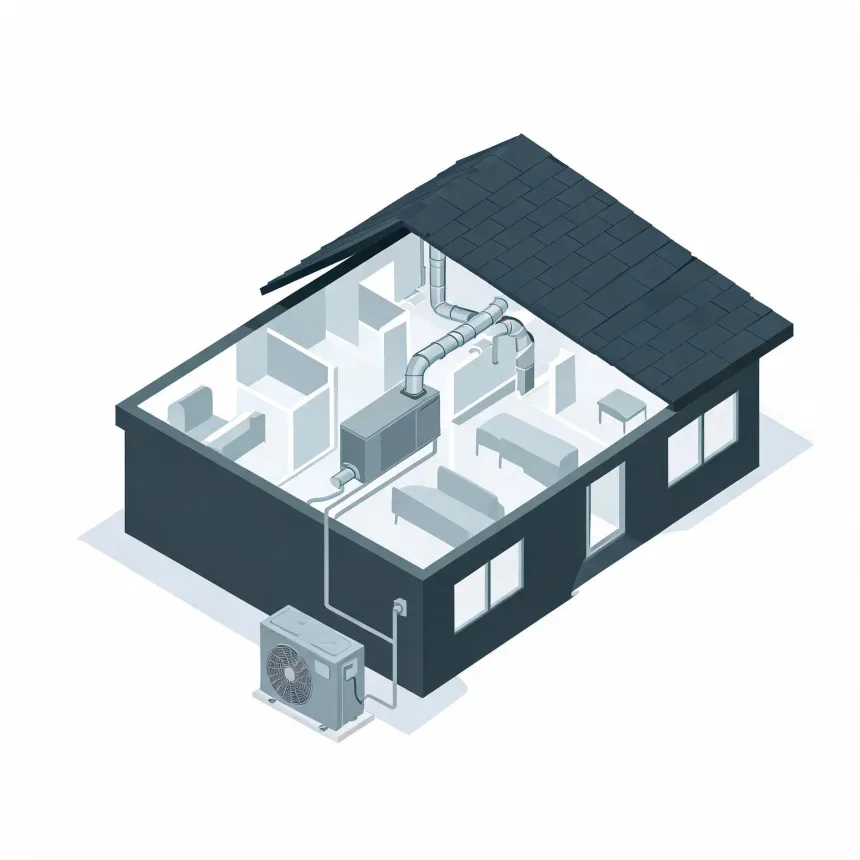
Isometric cutaway illustration of a single-story house showing interior rooms, ceiling ductwork connected to an air handler, and an outdoor condenser unit linked by a line set.
Your system heats November through March and cools April through October.

NOAA nClimDiv, 1991–2020 normals

A heat pump that short cycles, turning on and off every few minutes, is working harder than it should.

That strain on the compressor is exactly what shows up after a storm or a power drop, so it's worth having checked, not waited out.

Every hour it runs rough costs more here than it does almost anywhere else

Power here costs 30.11 cents per kilowatt-hour
Climate zone 3B
Cooling runs April through October
This county's homes are young enough to be worth fixingHalf the homes in Riverside County were built in 1990 or later.

November is when heat comes on here, and that first cold run is when a weak part usually gives out. A heat pump that sat idle since March still has to start up cold and carry the load right away, and a contactor or capacitor that was already marginal often doesn't make it through that first hard call. Nights average 42°F through December, January and March, so a unit that can't keep up isn't a small problem, it's the only heat the house has. The same thing happens in reverse right before April, when cooling starts back up after months of sitting unused. Having it looked at before the season turns catches a weak part on a mild day instead of the first cold night or the first hot one.

Had a storm come through since the unit last got checked?

If the outdoor unit took a hit this past storm season, or the power dropped out and it came back on acting different, get it looked at now. A repair call before the next outage catches the fault before it strands the house without heat or air.

Find a contractor
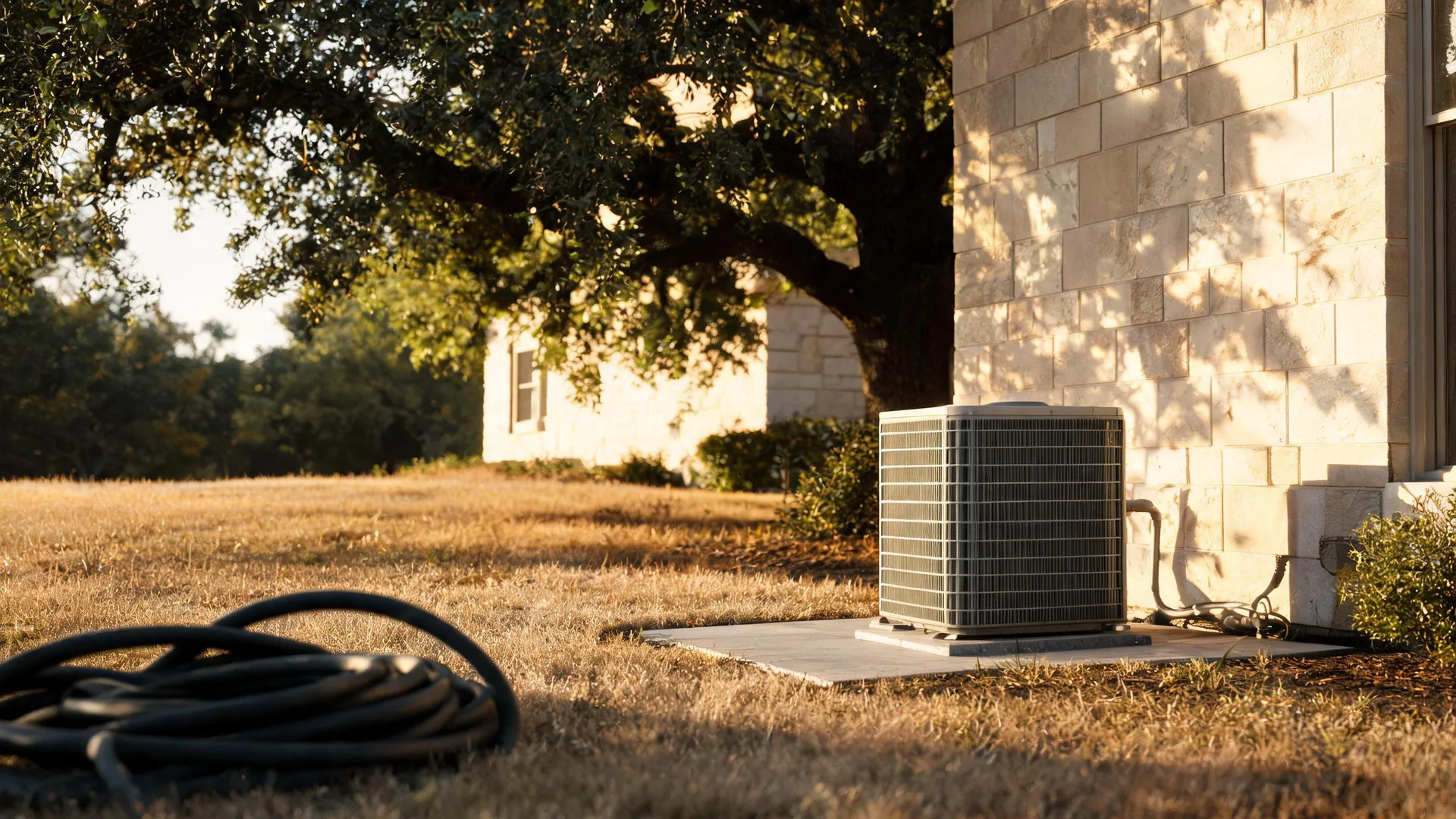
A gray heat pump outdoor unit mounted on a concrete pad next to a residential house with lap siding and stone accents.

This unit doesn't get much of a break

This heat pump runs most of the year here, and summer asks the most of it. The dew point averages 42°F across June, July and August, lower than most of the country, so the air outside is hot but not heavy. That matters because a heat pump moves heat, it doesn't wring moisture out of the air, so a weak charge or a failing fan motor still has to work against the heat itself. Long runtime wears a compressor and a fan motor down the same way anywhere. Here there are more months of it, and less room for a part that's already weak to keep getting by. A unit that's been running flat out all summer has less left in it when wind or debris adds a new problem on top of the old one.

What actually wears out first

The contactor is usually the first thing to go. It's a set of contacts that closes every time the compressor or fan kicks on, and all that arcing pits the metal until it sticks or stops making contact. The capacitor isn't far behind it. It stores the charge that gets the compressor and fan motors spinning, and when it weakens, the motor hums and strains instead of starting clean. Both parts fail from the same thing: cycling on and off, over and over, for years.
Why reversing valve failures get missed

The reversing valve is what switches the system between heating and cooling, and when it sticks, the heat pump can get stuck running the wrong mode or blowing air that isn't the temperature it should be. People sometimes mistake this for a low charge or a bad thermostat because the symptom looks the same from the vents. A stuck valve needs a hand on it, not a reset, and the longer it sits stuck, the harder the compressor works to fight it.

A few things are worth checking before anyone comes out. Look at the thermostat first. If it has batteries, swap them, and make sure it's set to the mode you actually want, since a system left in the wrong mode will blow air that feels wrong but isn't broken. Check the air filter. A filter clogged with dust chokes airflow across the indoor coil, and that alone can make a heat pump seem weak or cause it to ice up. Walk outside and look at the outdoor unit. Clear away leaves, grass clippings or anything piled against it, since it needs open space around it to move air. If the outdoor coil is caked with dirt, a gentle rinse with a hose can help, but skip anything stronger. Last, check the breaker panel for a tripped switch before assuming the worst. None of this fixes a bad capacitor or a stuck reversing valve, but it rules out the simple stuff first.

Power here already costs more than almost anywhere else in the country, and a heat pump that's cycling wrong or running rough just adds to that every single day it's left alone. A bad capacitor doesn't fix itself, and a compressor straining against a stuck reversing valve pulls more power while heating or cooling the house worse than it should. Waiting a few weeks to see if it gets better just means a few more weeks of that. If the unit has been acting off since a storm came through or the power cut out, that's reason enough to get it looked at now rather than waiting for it to fail outright.