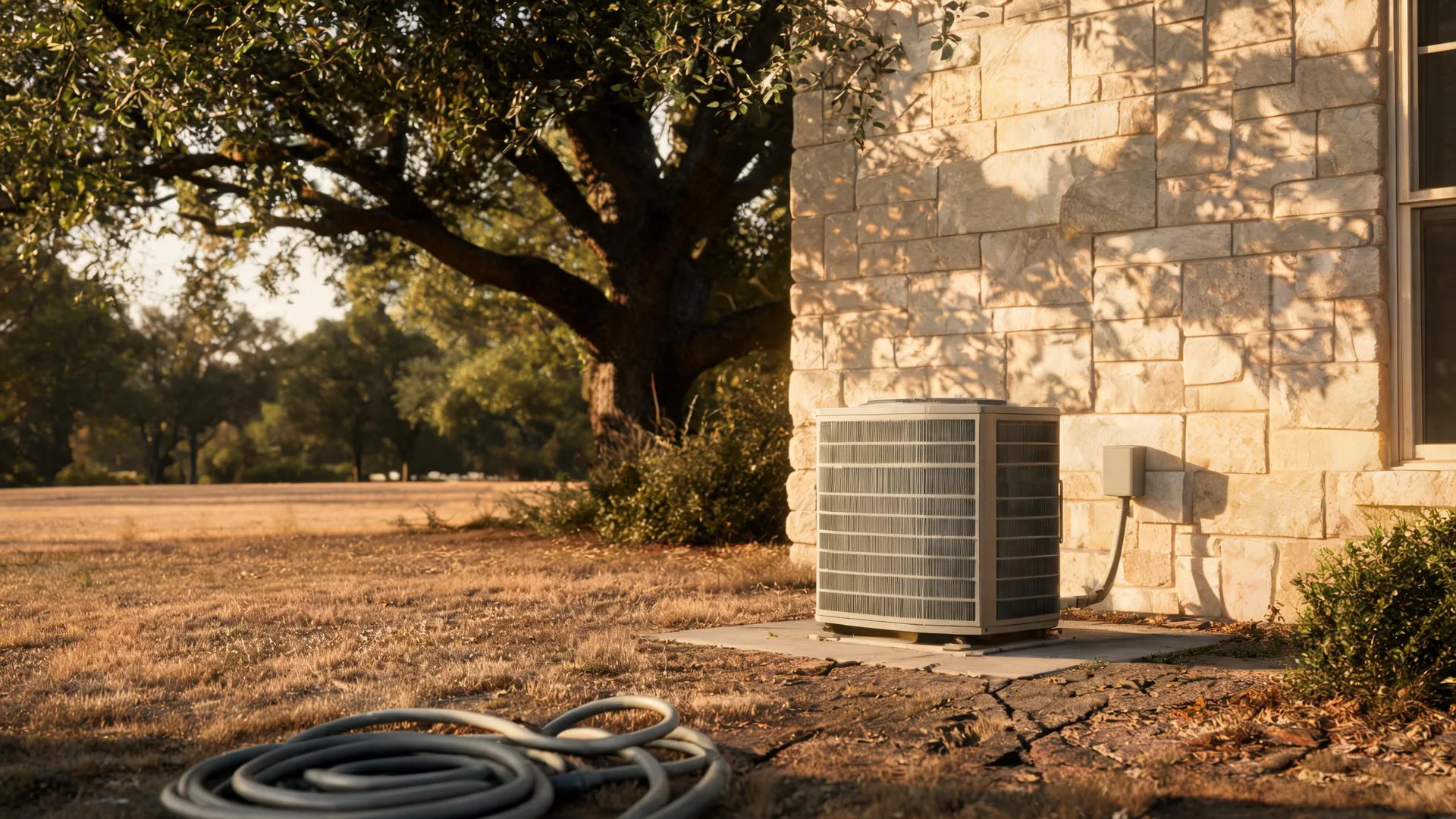
A grey residential air-conditioning condenser unit mounted on a concrete pad beside a house, photographed at sunset.

Heat Pump Repair in Sacramento, CA

Tell us about the job

Takes about a minute. No obligation.

RepairHeat PumpSacramento County, CA
Step 1 of 2

What ZIP code is the job in?

Dry air is easier on a heat pump

Summer air in Sacramento County sits at a 47°F dew point on average, lower than most of the country. A heat pump does not have to fight heavy, humid air to move heat out of your house. That lighter load adds up over years of summers.

Less strain means repair makes sense

A heat pump that has not been worked hard tends to hold up well mechanically. When one here breaks down, age or a skipped tune-up is usually the reason, not years of heavy strain. That is a good sign for fixing yours instead of replacing it.

6 months
November through April, your system heats
5 months
May through September, it cools
40°F
the average winter night it heats against
92°F
the average summer afternoon it cools against
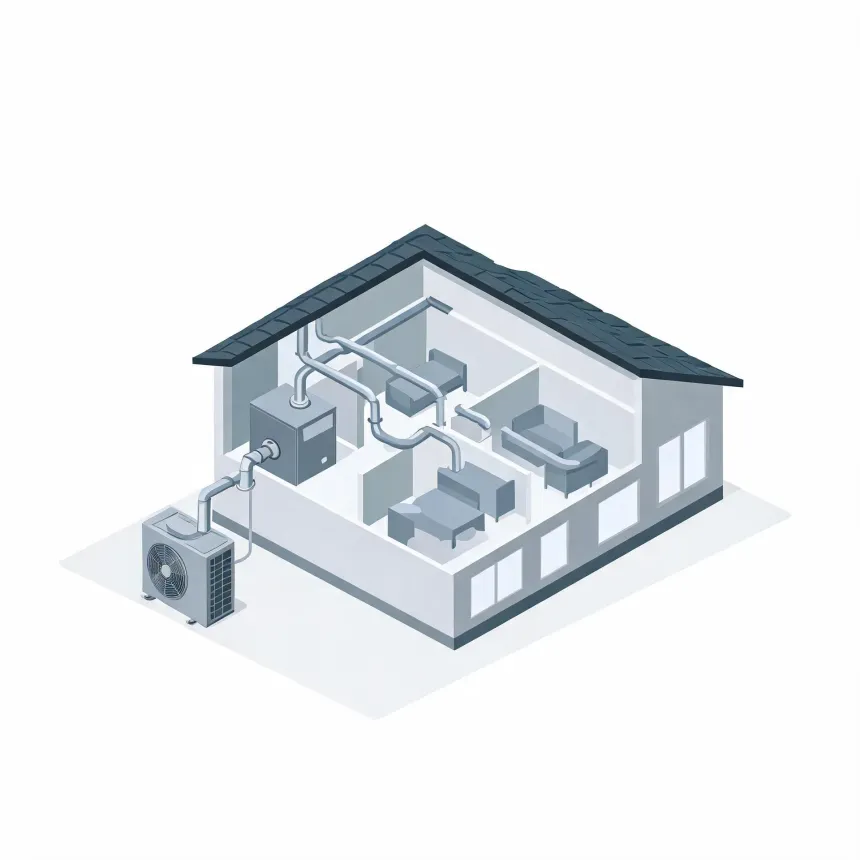
Isometric cutaway illustration of a single-story house showing an indoor air handler, branching ductwork through rooms with furniture, and an outdoor condenser unit connected by a line outside the wall.
Your system heats November through April and cools May through September.

NOAA nClimDiv, 1991–2020 normals

Half the homes in Sacramento County were built in 1981 or later.

A heat pump that came with a newer house still has years in it, and that favors repair over replacement.

Every hour it runs badly, you're paying some of the highest power rates around

Power here costs 20.61 cents per kilowatt-hour
Climate zone 3B
Cooling runs May through September

April is worth paying attention to. That is when your heat pump switches over from months of sitting idle to carrying the cooling load, and a part that was already marginal tends to give out right at that switch. Same with October, the last mild month before heat runs November through April. If something was going to fail, the first hot week or the first cold snap is when it shows itself. Overnight lows here only average 40°F in December and January, mild compared to a lot of the country, so the heat pump is not being asked to do much even on its hardest winter nights. A breakdown right at the start of a season usually means one part gave out under a load it could have handled fine a year ago, which is a repair, not a reason to replace the whole system.

An easier life here usually means a repair, not a replacement

A machine that has not been under constant strain is usually a machine worth repairing rather than replacing. That holds even with wind in the picture. Sacramento County has seen damaging wind 54 times between 2015 and 2024, and a heat pump sits outside through all of it. A unit that has taken some weather but never worked hard in heavy humidity is still a reasonable repair candidate. Worth having someone look at what's actually wrong before deciding anything else.

Find a contractor
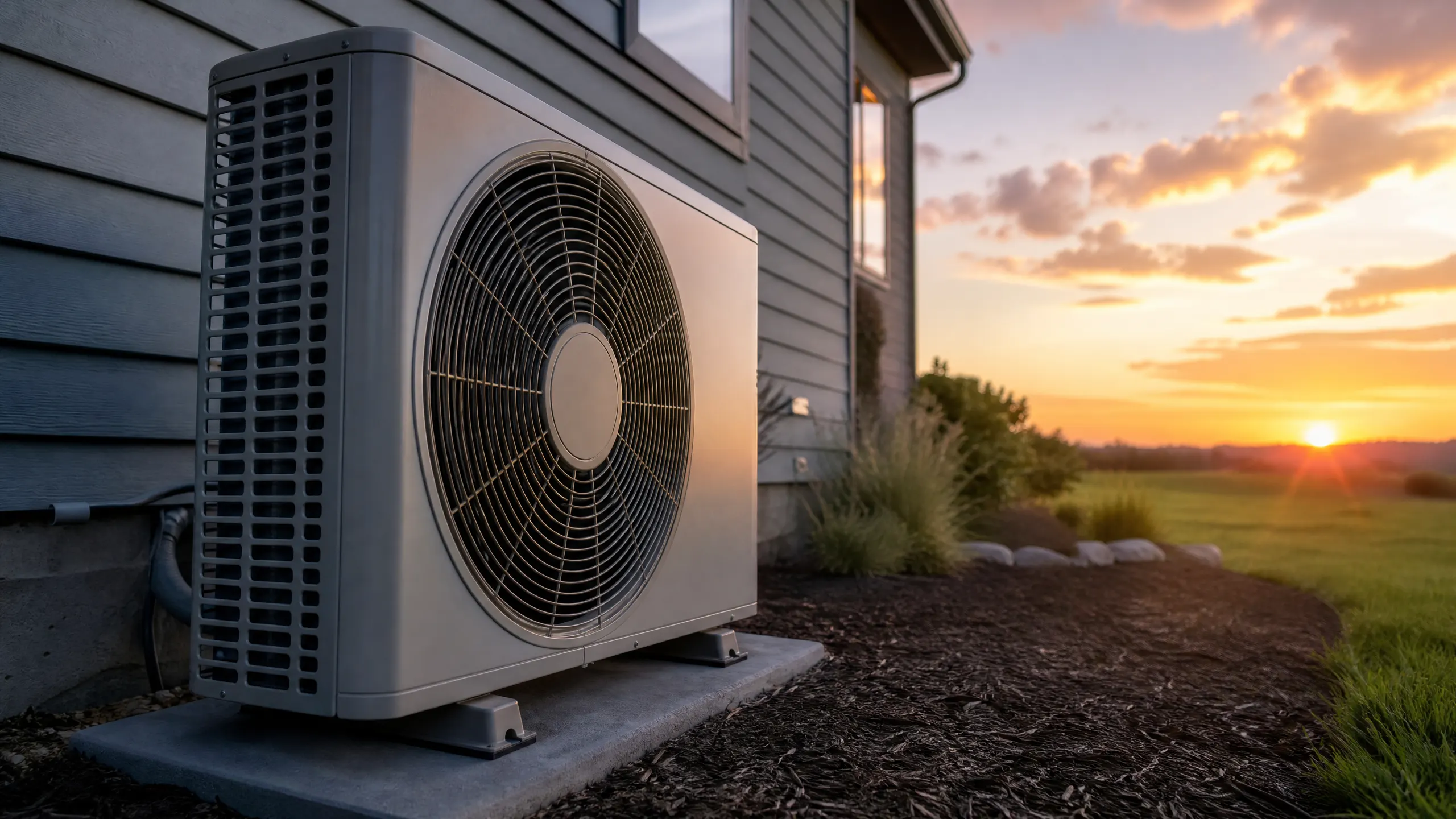
A gray heat pump outdoor unit mounted on a concrete pad next to a residential house with lap siding and stone accents.

Check the unit's age before you decide anything

If your house came with this heat pump, check the paperwork or ask whoever comes out for the age of the unit. A system that is still within its working life is worth repairing first. Get the actual part that failed named before anyone talks about replacing the whole thing. One bad component in a newer system is still just one bad component.

What a failing heat pump sounds and feels like

Warm air coming out of the vents when the system is set to cool is the complaint most people notice first. Sometimes the outdoor unit runs but the indoor fan never kicks on, or the reverse, and you get a lot of airflow that is not the right temperature. A unit that short cycles, meaning it turns on and off every few minutes instead of running a full cycle, is usually working against a bad sensor or a refrigerant problem. Ice on the outdoor coil in the middle of a mild day, not at night, is also worth a call. None of these mean the whole system is done. They point to one part that stopped doing its job.

What to check before the repair call

Start with the air filter, since a clogged one starves the system of airflow and can cause problems that look a lot worse than they are. Look at the outdoor unit itself and clear away anything piled against it, leaves, a cover, plant growth, so air can move through the coil. Check the thermostat has power and is actually set to call for heat or cool, not just sitting on auto with nothing happening. If the breaker has tripped, that is worth noting for whoever comes out rather than just resetting it and hoping. None of this fixes a bad capacitor or a failed reversing valve, but it rules out the simple stuff first.

A heat pump fails the same way in any house, from parts that wear with use. The capacitor that kicks the compressor and fans on weakens over years of starts and stops, and when it goes, the unit hums but won't start, or it starts and trips off. The reversing valve, which switches the system between heating and cooling, can stick in one position so you get heat when you asked for cool. Refrigerant runs in a sealed loop and shouldn't run low on its own. If a system is low, there's a leak somewhere in the line, and adding refrigerant without finding the leak just means doing it again later. Outdoors, the coil needs open air around it to shed or pull heat, and anything pressed against it makes the whole system work harder than it should. A thermostat or a sensor that's drifted off can also make a perfectly good system look like it's failing when it's just being told the wrong thing to do.

Repair or replace comes down to the part that failed, not a feeling about the system's age. A compressor that's cracked or seized is a different conversation than a capacitor, because the compressor is most of what the unit costs and a failure there often means the system is done. A capacitor, a contactor, a fan motor, a reversing valve, those get swapped out on their own all the time without touching anything else. Ask what actually broke before you ask what it costs to fix. If the rest of the system has been running fine and one part gave out, that's normal wear, not a system falling apart. The only time replacement makes more sense than another repair is when the same unit keeps failing in different ways, one thing after another, because that pattern means the system as a whole is wearing out, not just the part in front of you.