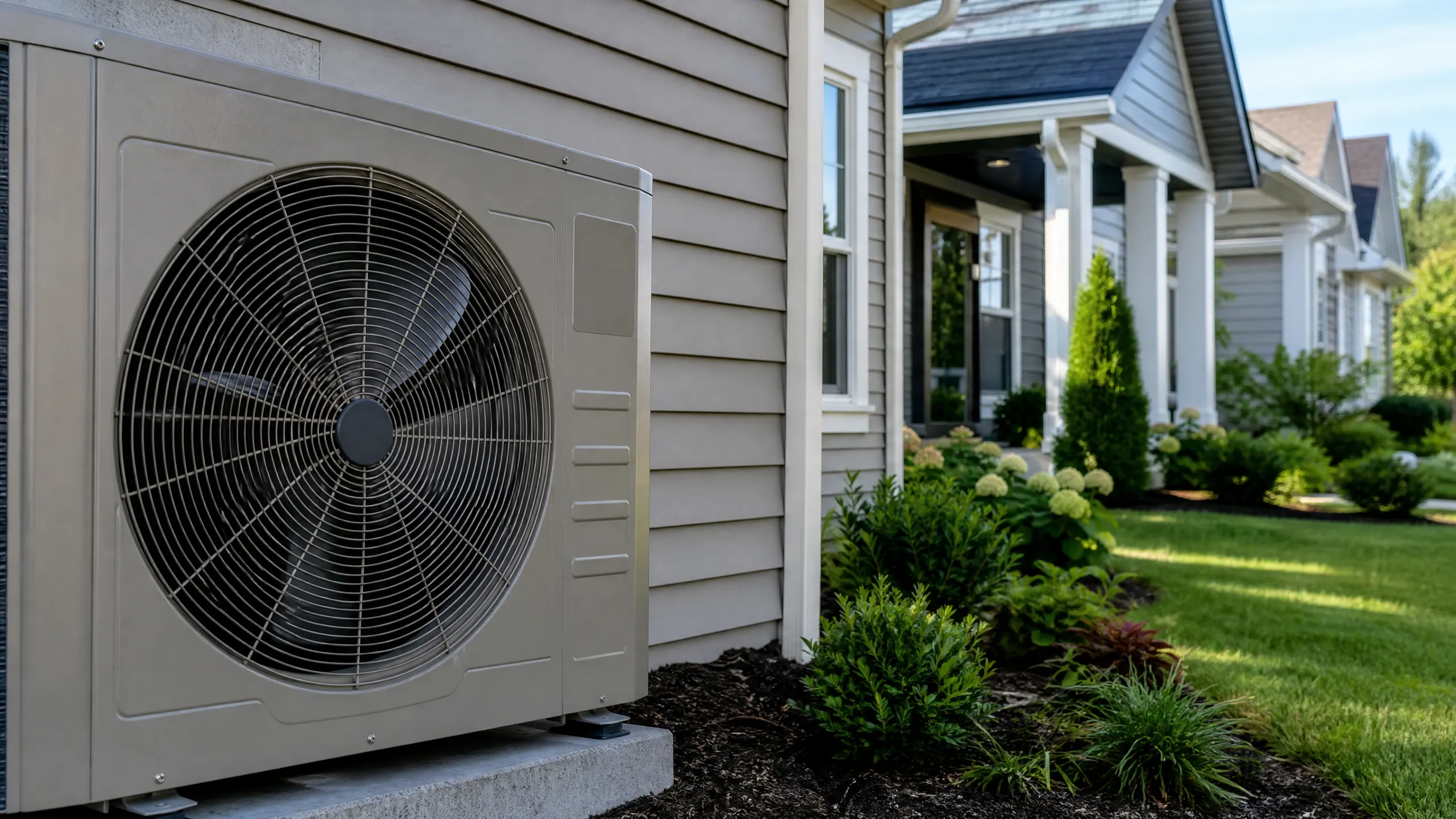






A large outdoor air-conditioning unit mounted beside a vinyl-sided house, surrounded by mulched garden beds and green shrubs.

Heat Pump Repair in Salinas, CA

Tell us about the job

Takes about a minute. No obligation.

RepairHeat PumpMonterey County, CA
Step 1 of 2

What ZIP code is the job in?

Heat pumps in Salinas switch over to heat in November, and that is when a weak part finally gets found out. A system can sit on the edge all through October and still turn on when asked, then stop keeping up once it has to run every morning instead of once in a while. That first stretch of cold mornings is when a lot of repair calls come in. If it's going to have trouble, this is usually when it shows.

7 months
November through May, your system heats
3 months
July through September, it cools
38°F
the average winter night it heats against
85°F
the average summer afternoon it cools against
Isometric cutaway illustration of a small house showing ducted air distribution, an indoor air handler, and an outdoor condenser unit connected by lines, with a sofa and bed in the rooms.
Your system heats November through May and cools July through September.

NOAA nClimDiv, 1991–2020 normals

Salinas winters stay mild, with overnight lows near 38°F even in January.

A heat pump here isn't working against hard freezes, so when one breaks down, age or a worn part is usually why.

Monterey County gets its share of wind and weather. None of it singles out a heat pump.

178 severe weather events from 2015 to 2024
17% of homes statewide lost power a day or more in 2024
156 damaging wind events from 2015 to 2024
The age of your house isn't why your heat pump quitHalf the homes in Monterey County were built in 1976 or earlier, half later, and neither age points to a heat pump breakdown.

When a heat pump stops keeping a Salinas home warm, it's worth fixing before it's worth replacing. A worn capacitor, a low refrigerant charge, a failed defrost sensor, these are ordinary repairs on a machine that otherwise has an easy job here. Electricity in California ran 31.97 cents per kilowatt-hour in 2024, among the highest in the country, so a heat pump running inefficiently costs more here than it would somewhere cheaper. That's a reason to get the real problem diagnosed rather than let it run rough through the winter. A unit that's otherwise sound usually comes back to normal once the actual part is replaced.

A heat pump this easy on isn't one to give up on

Nothing about Salinas weather runs a heat pump hard, so a unit that's otherwise sound is worth getting looked at rather than replaced. Get the actual part identified and fixed.

Find a contractor
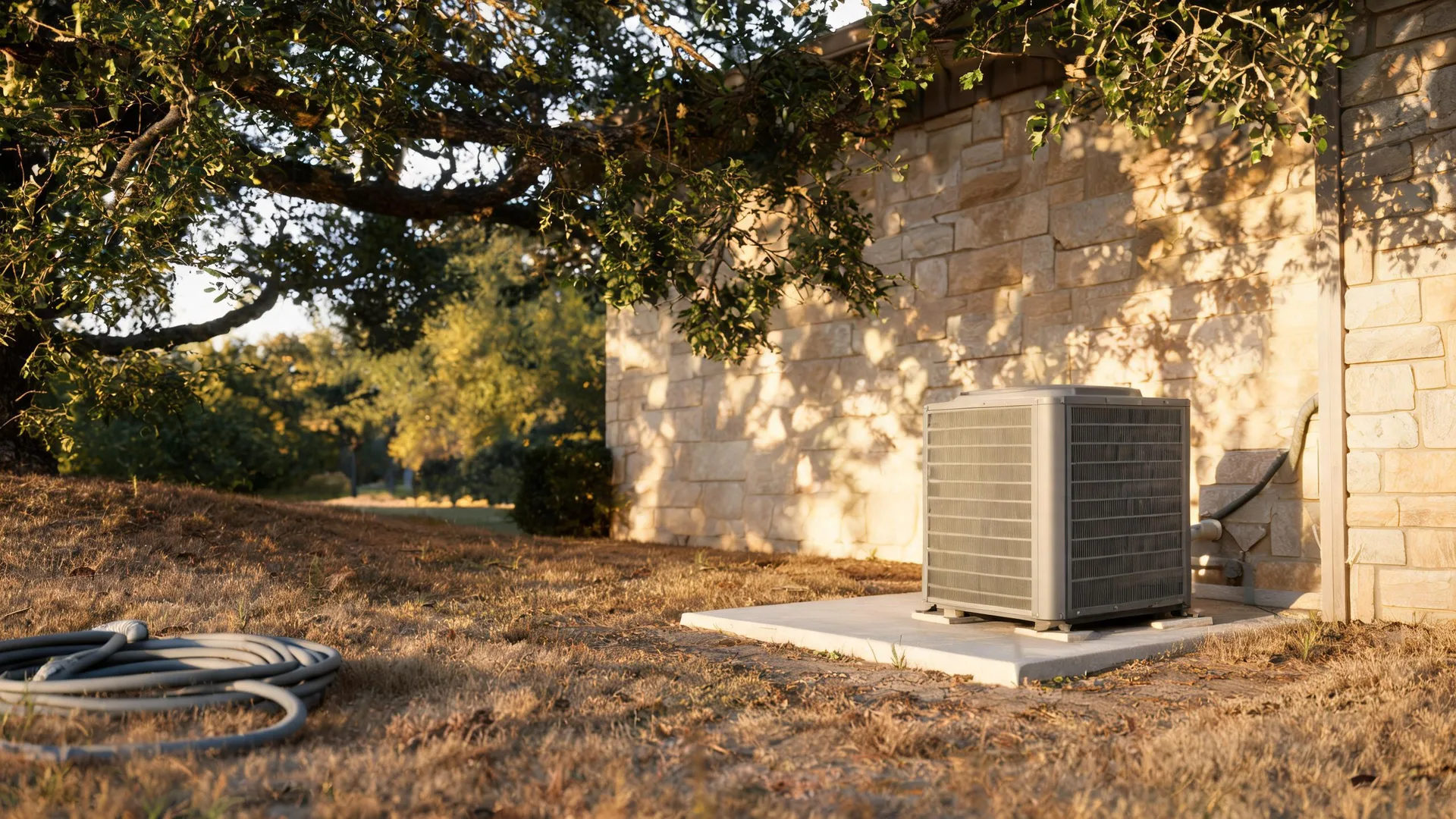
A gray heat pump outdoor unit mounted on a concrete pad next to the stone-accented exterior wall of a house.

What actually wears out in a heat pump

Most heat pump failures trace back to a handful of parts that wear out on a schedule. The capacitor that kicks the compressor and fan motors into motion loses its charge over years of cycling, until one day the outdoor unit hums but doesn't start. The reversing valve, the part that switches the system between heating and cooling, can stick in one position after enough cycles, so the system blows cold air when it should be blowing warm. Refrigerant doesn't get used up, so a low charge almost always means a slow leak at a fitting or coil, and it only gets worse left alone. The defrost sensor and control board that tell the unit when to melt frost off the outdoor coil can fail outright, and when they do the coil ices over and heating output drops. None of this is about one hard freeze or one brutal summer. It's about hours run and cycles completed, the same wear any machine with moving parts and electrical switches builds up over time.

What you can check safely

Check the thermostat is set to heat and the setpoint is actually above room temperature. Look at the outdoor unit and clear away leaves, ice or anything blocking the coil. Check the air filter and swap it if it is gray or clogged, since restricted airflow can make a heat pump seem like it is failing when it just cannot breathe. Check the breaker panel for a tripped switch before assuming the unit itself is bad.
What to leave alone

Do not open the outdoor unit's cabinet or touch the refrigerant lines. Do not pour water or chip at ice built up on the coil, since a short defrost cycle can clear it and forcing it can bend the fins. Do not keep flipping the breaker back on if it trips more than once, that points to an electrical fault that needs a meter to find. Leave the reversing valve and control board to someone who can test them, since both carry enough voltage to be a real risk.

A heat pump that's struggling doesn't fix itself by staying on. If the coil is icing because the defrost sensor failed, every extra hour buries it deeper, and the system starts defrosting constantly without ever catching up. A slow refrigerant leak behaves the same way. The charge drops a little more, the compressor works harder to move what's left, and that extra strain is what eventually takes the compressor out with it, which is a far bigger repair than the leak itself. A weak capacitor tends to fail in stages. First the outdoor fan or compressor hesitates on startup. Then it stops starting at all. Running the system through that hesitation wears the motor windings it's trying to turn. None of this gets better with time. The part that's already failing is the one driving the wear on everything around it.

A good rule. If the compressor still runs and the system still shifts between heating and cooling, it's almost always worth repairing. Compressors outlast nearly every other part when they're cared for, and replacing one is rare next to the cost of swapping a capacitor or a sensor. What changes the math is when the compressor itself has been damaged, usually from running too long on a low charge or starting against a failing capacitor over and over. A tech can tell the difference by testing the parts directly rather than guessing from symptoms. Age alone doesn't decide this. A heat pump that's been maintained can take a parts replacement and keep going another long stretch. One that's been ignored shows its wear in more places at once.