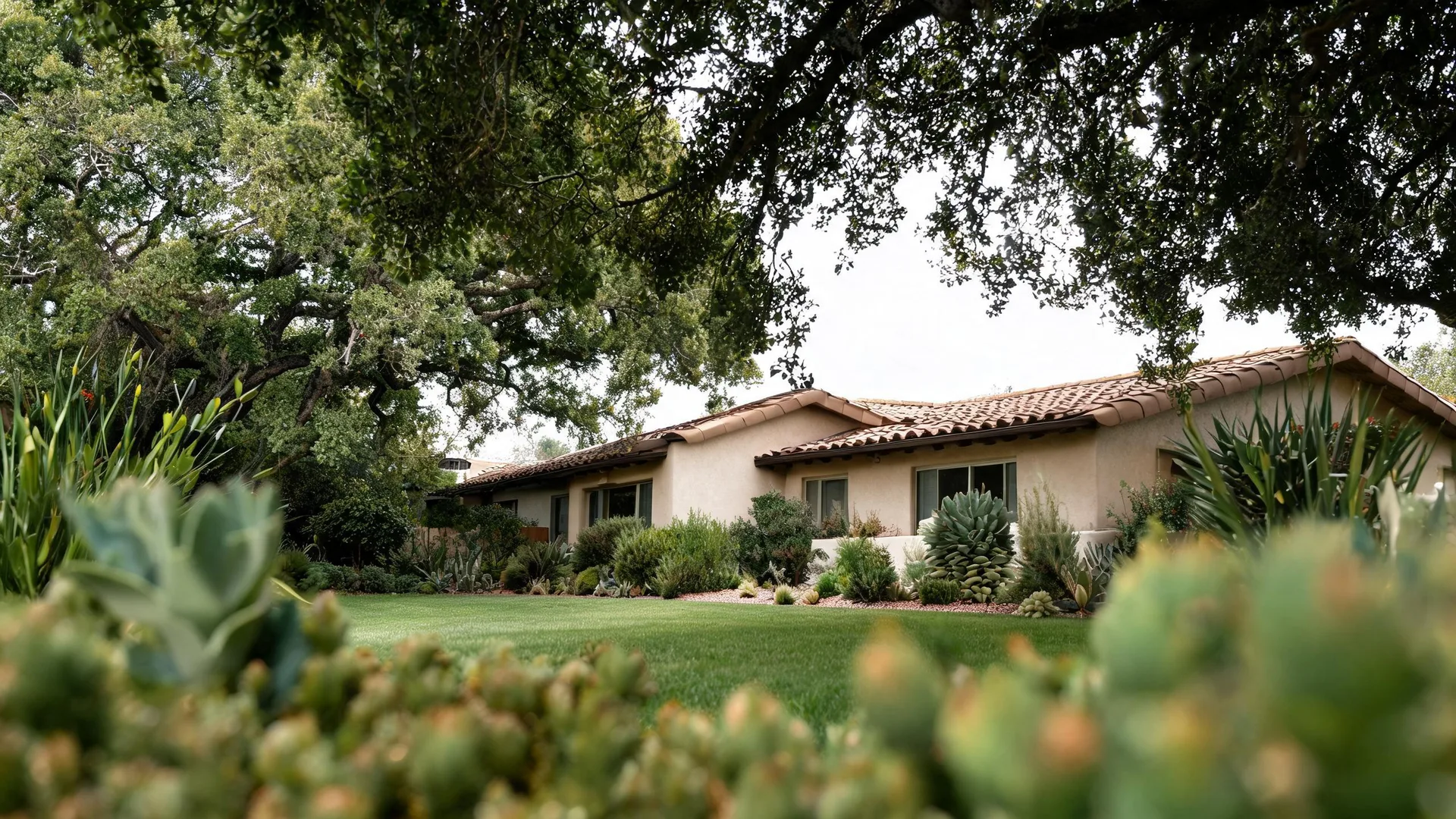
A single-story stucco house with a red tile roof behind a mown lawn, framed by large oak branches overhead and blurred succulent and agave plantings in the foreground.

Heat Pump Repair in San Diego, CA

Tell us about the job

Takes about a minute. No obligation.

RepairHeat PumpSan Diego County, CA
Step 1 of 2

What ZIP code is the job in?

Weather here takes a toll on outdoor units

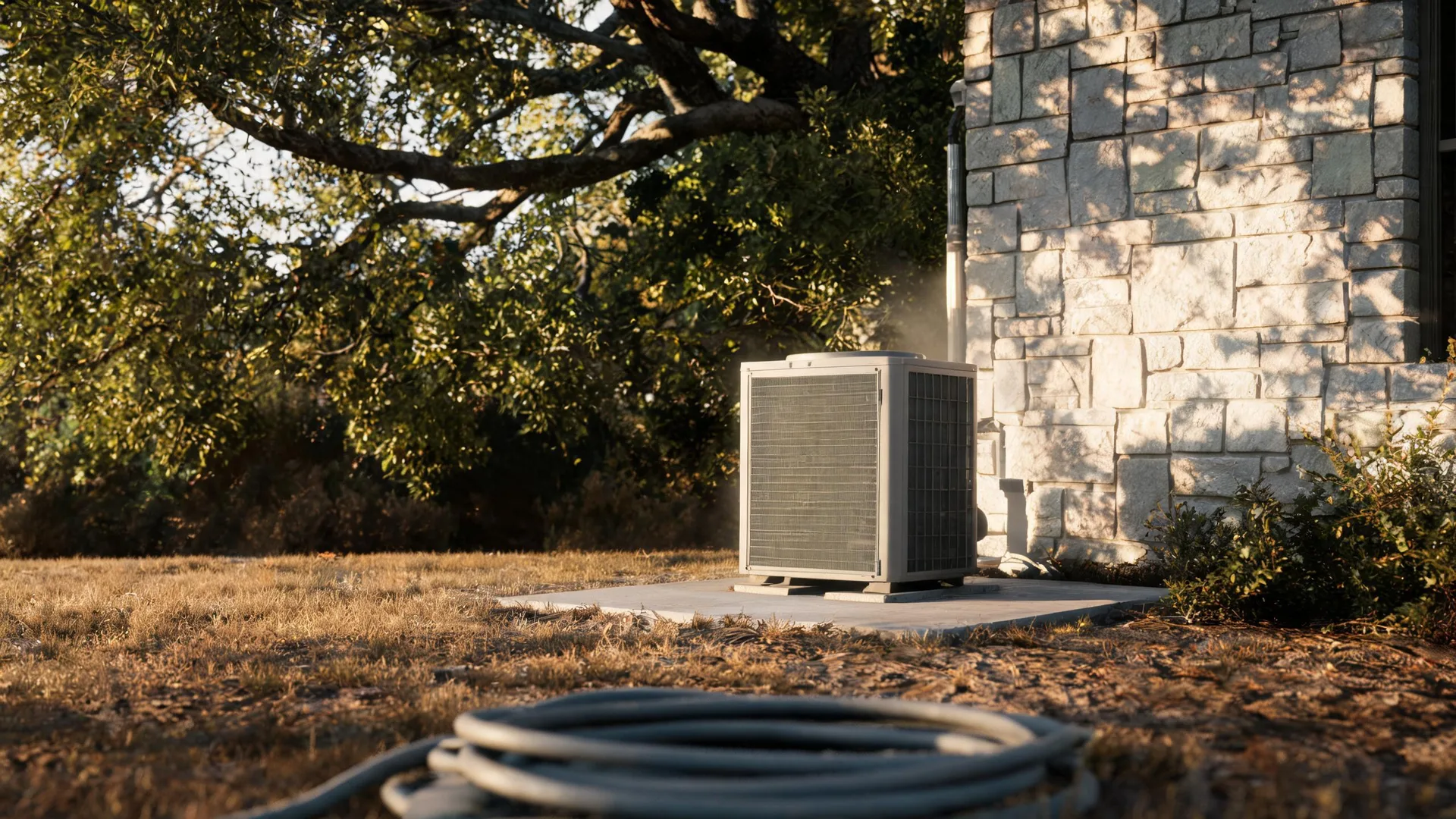
San Diego County saw 442 severe weather events between 2015 and 2024, and 370 of those were damaging wind. Hail has hit 11 times in that same stretch. A heat pump's outdoor unit sits outside through all of it, exposed to wind-blown debris and hail that a furnace never has to face.


Power loss hits the whole system

A heat pump needs electricity to heat or cool at all, unlike a gas furnace that can keep running through a power cut. Nearly 17% of California households lost power for 24 hours or more in 2024. When the power comes back, the unit should start on its own, but that only works if nothing was damaged while it sat off.

6 months
November through April, your system heats
4 months
June through September, it cools
41°F
the average winter night it heats against
89°F
the average summer afternoon it cools against
Isometric cutaway illustration of a house showing attic ductwork, an indoor air handler, furnished rooms, and an outdoor condenser unit connected by lines along the exterior wall.
Your system heats November through April and cools June through September.

NOAA nClimDiv, 1991–2020 normals

Half the homes in San Diego County were built in 1980 or later.

A heat pump that came with a newer house still has working life in it, and that life is worth protecting with a repair.

One heat pump, two seasons, and no break between them

Cooling runs June through September
Heat runs November through April
370 damaging wind events from 2015 to 2024
The hourly cost is what adds upAt 42.22 cents per kilowatt-hour, a heat pump running poorly here costs more every hour it does.

If the heat pump came with the house and the house went up in 1980 or later, there's no reason to assume the unit is near the end of its run. A breakdown in a system that age is usually one part failing, not the whole thing wearing out. Replacing a capacitor or a control board on a unit with years left ahead of it makes more sense than replacing the unit itself. Check the permit or install date if you have it. If the system is original to a newer build, repair is the call.

After a storm, get the outdoor unit checked

If the outdoor unit went through a storm this year, a check is worth it even if the system seems to run fine. Wind-blown debris and hail can bend fins or nick a line without stopping the unit right away. Get it looked at before a small problem turns into a breakdown on the next hot or cold day.

Find a contractor
A gray heat pump condenser unit mounted on a concrete pad against the gray lap-siding exterior wall of a house.

What the heat pump is telling you before it fails

A heat pump that needs attention rarely just stops. It tells you first. It runs longer than it used to, cycling on and on without hitting the temperature you set. The air coming out feels lukewarm instead of properly hot or cold. You hear it clicking on and off more than it should, short cycling instead of settling into a steady run. Frost builds up on the outdoor unit and doesn't clear during the defrost cycle, or ice shows up when there's no reason for it. The outdoor fan runs rough, or doesn't run at all while the compressor does. Some of these mean a simple fix, like a dirty coil or a failing capacitor. Others, like a compressor struggling to start, mean more. None of them get better by waiting.

Check the obvious before you call

Look at the thermostat first. Make sure it's set to the right mode and the temperature is actually past room temperature, not just close to it. Check the breaker for both the indoor air handler and the outdoor unit. A tripped breaker on just one side will stop the system cold even though the other half has power. If the system uses a condensate line, look for standing water in the pan underneath the indoor unit. A clogged line can trip a float switch and shut the whole thing down as a safety measure.

Know which checks to skip

Don't open the outdoor unit's cabinet or touch anything inside it. The capacitor in there can hold a charge even with the power off. Don't pour anything on frost or ice to melt it faster, and don't chip at it either. If the coil is frozen, switching the system to fan-only can help it clear on its own, but forcing it risks bending the fins underneath. If the outdoor fan isn't spinning while the compressor runs, turn the system off at the thermostat and leave it off until someone looks at it.

A heat pump that short cycles or runs constantly is pulling power the whole time it does it, and power here is not cheap. Waiting a few weeks to get it looked at means a few more weeks of paying for a system that isn't heating or cooling the way it should. Once a part fails outright, like a capacitor or a motor, the unit may stop altogether rather than just run poorly. Getting it checked now means one visit. Letting it run bad means paying for it every day between now and then.

A repair makes sense when one part failed and the rest of the system is sound. A capacitor, a contactor, a blower motor, a fan motor: these fail on their own without taking the compressor down with them, and swapping one out brings the whole unit back to normal. Replacement starts to make sense when the compressor itself is failing, or when the same unit keeps bringing a tech back for different problems every year. A compressor is the heart of the system, and when it's struggling to start or losing its charge repeatedly, you're not fixing a part anymore, you're patching a machine that's breaking down. Age matters too, but less than how the unit has actually been running. A system that's been reliable and just had one thing quit is a different case from one that's been nickel-and-diming its owner for years.