Mild winters, less wear
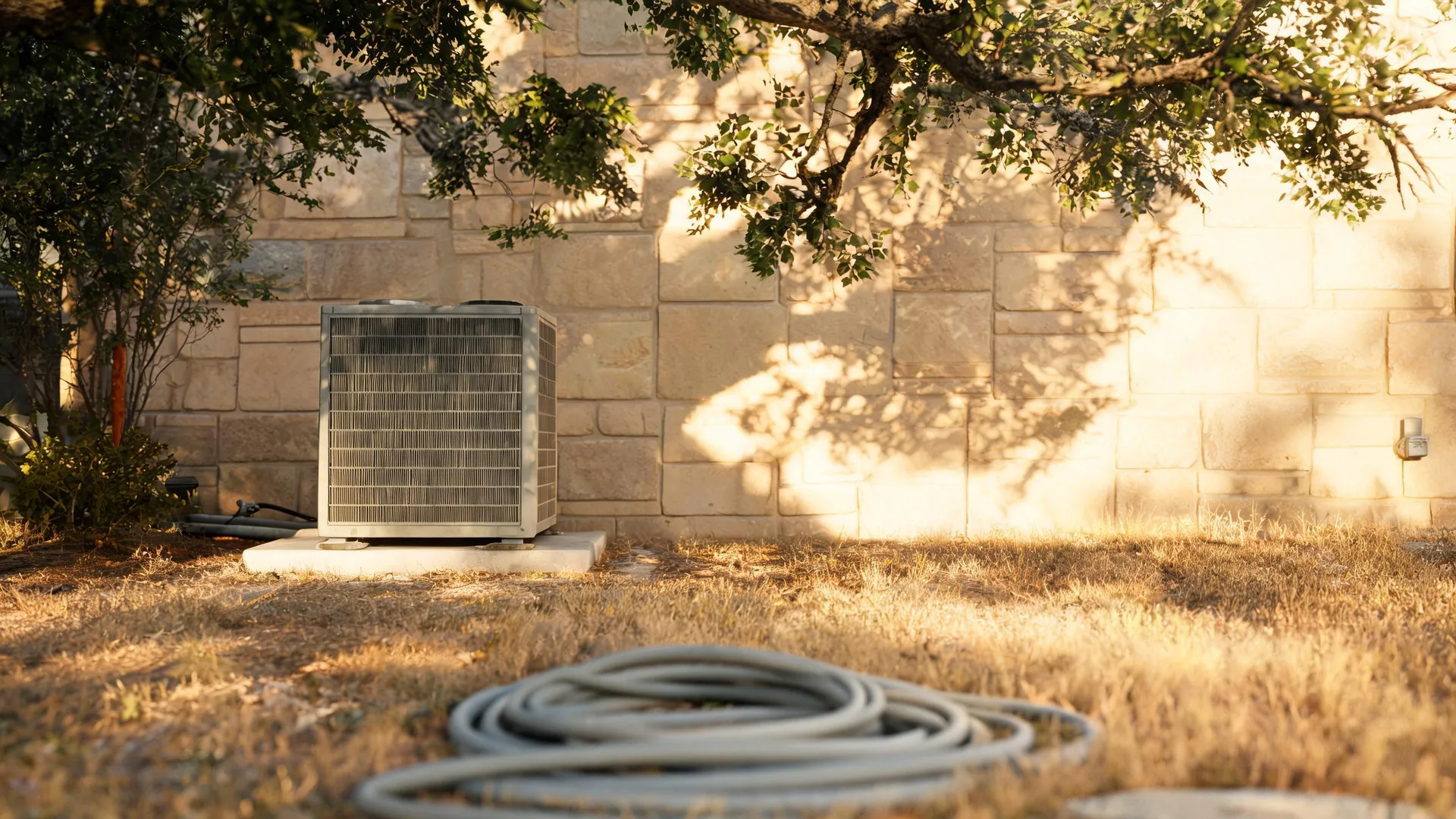
Overnight lows here average 45°F through December, January and February. A heat pump in San Francisco isn't working against real cold, so it isn't straining the way one does in a harsher climate.

Takes about a minute. No obligation.
Overnight lows here average 45°F through December, January and February. A heat pump in San Francisco isn't working against real cold, so it isn't straining the way one does in a harsher climate.
A unit that hasn't been fighting extreme temperatures for years is more likely to have plenty of life left. When something goes wrong here, it's usually a specific part acting up, not the whole system wearing out, which is exactly the kind of problem worth fixing.

Heat pumps here start running in November, after sitting idle since spring.
A part that was already weak tends to give out in November, when the heat pump first has to work.



When a heat pump in San Francisco needs repair, the cost usually isn't the electricity to run it, it's the part that failed. California's electric rates run high, 31.97 cents per kilowatthour as of 2024, but that number speaks to what a repaired system costs to operate afterward, not to why it broke. A failed capacitor or a stuck reversing valve costs the same to fix whether power is cheap or expensive. High rates are a reason to get a repair done right instead of patched over, since a unit running inefficiently afterward costs more every month it's ignored.
A heat pump that isn't fighting real cold most likely has a specific part acting up rather than a system giving out. That's a repair worth making. Get the actual problem found and fixed instead of guessing at a replacement.
Find a contractor
If the heat pump came with the house, ask the contractor straight out how much life it has left. A unit old enough to be near the end doesn't always need replacing today, but it's worth knowing before paying for a repair that only buys a few more months. Get the part fixed, and get a straight answer on the rest.
A heat pump stuck in one mode, blowing cold air when it should be heating or warm air when it should be cooling, usually points to a reversing valve that's stuck or a failed solenoid. The unit still runs, it just can't do its job.
Short cycling, a unit that won't shut off, warm air that should be hot, or ice building up on the outdoor coil during a run cycle all mean a part is struggling even though the system hasn't quit. Catching it now is a smaller job than waiting for it to fail outright.
A heat pump that's icing over or short cycling will keep trying to do its job, and that's the problem. Every cycle it runs in that state puts more strain on the compressor, the one part that can't be patched, only replaced. A reversing valve stuck halfway, a weak capacitor, a refrigerant leak, none of these fix themselves by running more. They get worse under load, and the compressor is what absorbs it. A unit that shuts itself off when something's wrong is protecting its own parts. One that keeps limping along is wearing down the part that matters most.
Age alone doesn't tell you whether to fix a heat pump or walk away. What matters is which part failed and what it would take to make it right. A blown capacitor or a bad contactor is a quick swap, worth doing no matter how old the unit is. A cracked heat exchanger or a compressor on its way out is a different conversation, since the compressor is the one part that can't be rebuilt. Ask the contractor to name the part before deciding anything. If they can point to exactly what failed and it's not the compressor, repair is usually the right call.