Santa Clara County sees real storm activity
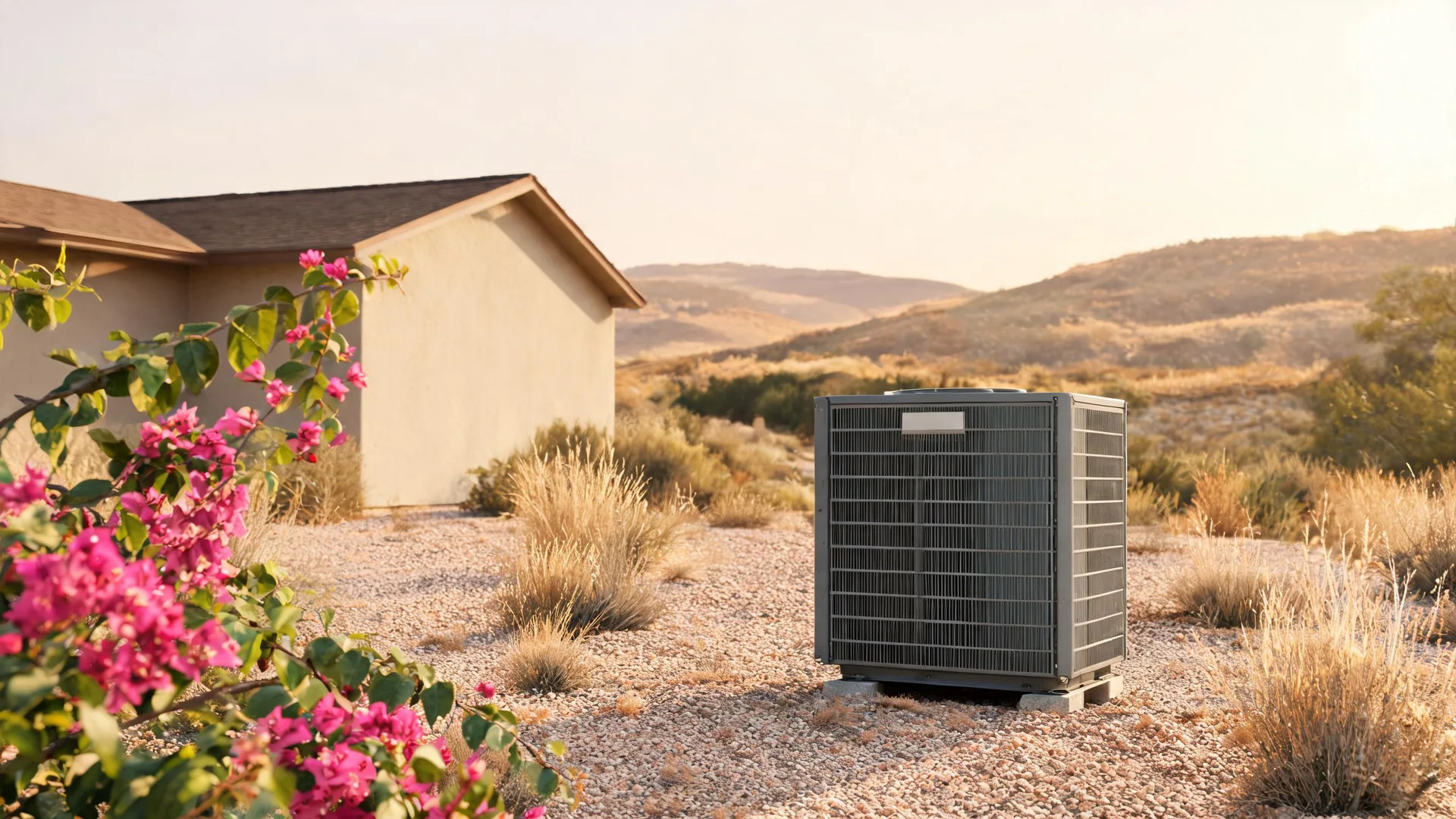
Santa Clara County logged 298 severe weather events between 2015 and 2024, including 257 cases of damaging wind and 33 hail events. That outdoor unit sits outside taking whatever comes through.
Takes about a minute. No obligation.
Santa Clara County logged 298 severe weather events between 2015 and 2024, including 257 cases of damaging wind and 33 hail events. That outdoor unit sits outside taking whatever comes through.
Wind-blown debris and hail can dent the cabinet or bend the fins on the outdoor unit without stopping it from running. A unit that took a hit this year is worth having looked at.

NOAA nClimDiv, 1991–2020 normals
San Jose doesn't put much strain on a heat pump. Humid air makes a compressor work harder, and the summer dew point here averages only 50 degrees.
A heat pump that's seen light duty for years often has a lot of life left in it. When one breaks down, the cause is more likely a worn part than a system that's used up.




A heat pump that's low on refrigerant or struggling to cycle still pulls power the whole time it runs. It just does less with it. On a system that's already costing more to run than it would most places, that waste shows up fast. If yours has been running long spells, short cycling, or blowing air that's not quite warm or cool enough, that's worth a call now rather than after another month of bills. A unit running inefficiently for a few weeks costs more here than the same problem would somewhere with cheaper power.
A heat pump can run after hail or wind-blown debris and still be worse for it. If the outdoor unit took a hit this year, have it looked at even though it still turns on.
Find a contractorThe time-lapse shows the same unit running day into night, and that's about all it does most of the year. A heat pump here isn't fighting heavy humidity or holding against a hard freeze, so a repair now is usually fixing a part, not patching a system near the end of its run. Worth asking whoever comes out how many years this one has on it. If nobody in the house remembers it being installed, that's the detail to track down, since it tells you more than how the system sounds or feels right now.
A heat pump in trouble usually tells you. It blows air that's not quite warm enough or not quite cool enough. It runs long spells without shutting off, or it shuts off and restarts over and over. The outdoor unit ices up when it shouldn't, or it makes a grinding or clicking noise that wasn't there before. Any one of these means something inside has already started to fail, even if the system still turns on.
A heat pump can keep cycling with a failing capacitor, a low refrigerant charge, or a reversing valve that's stuck partway. It won't necessarily stop. It'll just work harder to do less, drawing power the whole time without heating or cooling the house the way it used to. Catching it at the first odd sign, before it quits outright, is usually the cheaper repair and the easier one.
Before calling anyone, check the thermostat first. Make sure it's set to the mode you want and the temperature is actually past where the room is. A dead battery or a setting bumped by accident causes more no-heat calls than people expect. Next, go to the breaker panel and look for anything tripped. A heat pump has two systems, the indoor air handler and the outdoor unit, and each one usually has its own breaker. Then look at the air filter. A filter clogged with dust chokes airflow, and the system will ice up or blow weak air until it's changed. Walk outside and look at the unit itself. If the coil is covered in leaves, grass clippings or caked dirt, airflow across it is restricted, and clearing it off by hand can solve the problem on its own. Last, check the outdoor unit for ice. If it's iced over, switch the thermostat to fan only and let it thaw before anyone touches it further. None of this is risky, and none of it requires opening the unit up.
A diagnostic visit starts before any panel comes off. The tech will ask what the system was doing before it quit or started acting up, since that tells them where to look first. They'll check the thermostat call against what the equipment is actually doing, then go to the outdoor unit and check the readings there, pressures, temperatures, amp draw on the compressor. Indoors, they'll check airflow at the vents and look at the coil if it's accessible. A lot of this is narrowing things down rather than finding the problem outright. By the time they've gone through pressures, electrical readings and airflow, they usually know which part is failing and can show you why, not just tell you.