






An outdoor HVAC condenser unit on a concrete pad in front of a two-story suburban house.

Heat Pump Repair in San Mateo, CA

Tell us about the job

Takes about a minute. No obligation.

RepairHeat PumpSan Mateo County, CA
Step 1 of 2

What ZIP code is the job in?

San Mateo County saw 282 severe weather events between 2015 and 2024, and damaging wind caused most of them, 266 times in that span. A heat pump's outdoor unit sits outside through all of it, exposed to whatever blows through the yard. Wind-driven debris can bend the fins on the coil or crack a fan blade without stopping the unit from running. Hail hit the county 9 times in that same stretch, enough to dent a cabinet or knock a panel loose. If a storm came through recently and your system still turns on, that's not proof it came through clean. A unit that took a hit can run for weeks before the damage shows up as a real breakdown.

7 months
November through May, your system heats
43°F
the average winter night it heats against
73°F
the average summer afternoon it cools against
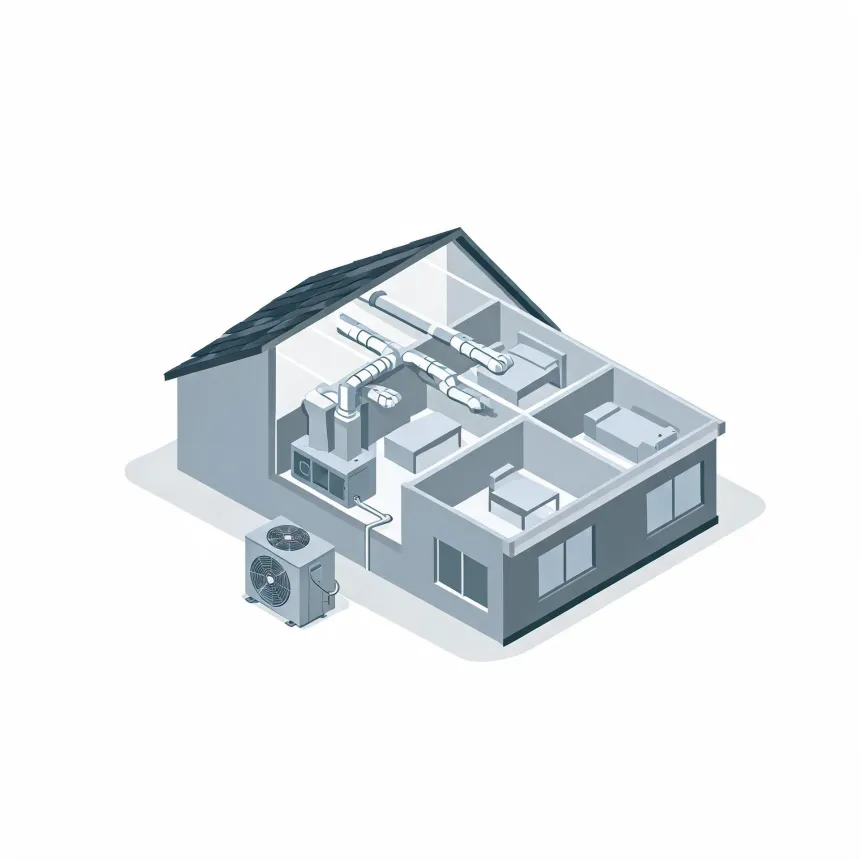
Isometric grayscale illustration of a cutaway house showing interior rooms, ceiling ductwork connected to an indoor air handler, and an outdoor condenser unit beside the exterior wall.

Half the homes in San Mateo County went up in 1966 or earlier.

A heat pump that came with a house that age is closer to the end of its life than the middle.

A heat pump here doesn't work as hard as it does elsewhere

266 damaging wind events from 2015 to 2024
9 hail events from 2015 to 2024
3 winter storms from 2015 to 2024
Seven months of heat, starting in NovemberHeat runs November through May, and problems tend to show up in the first cold weeks.

Electricity here runs 38.23 cents per kilowatt-hour, well above what most of the country pays. A heat pump that's low on refrigerant or struggling to start draws power without delivering the heat or cooling it should, and at that rate the waste shows up fast. It doesn't take a full breakdown to cost you. A unit that short cycles, or runs long to reach the temperature you set, is burning extra power every single hour it runs that way. The longer a problem like that sits, the more it adds up on the bill before the system finally quits.

If a storm hit your unit, have it checked before it fails

Get the outdoor unit looked at if a storm came through recently, even if the system still runs. A bent fin or a cracked fan blade won't always stop it from working right away.

Find a contractor
A man in a cap, gray long-sleeve shirt and brown pants carries a worn canvas tote bag up porch steps toward an orange front door beside a potted olive tree.
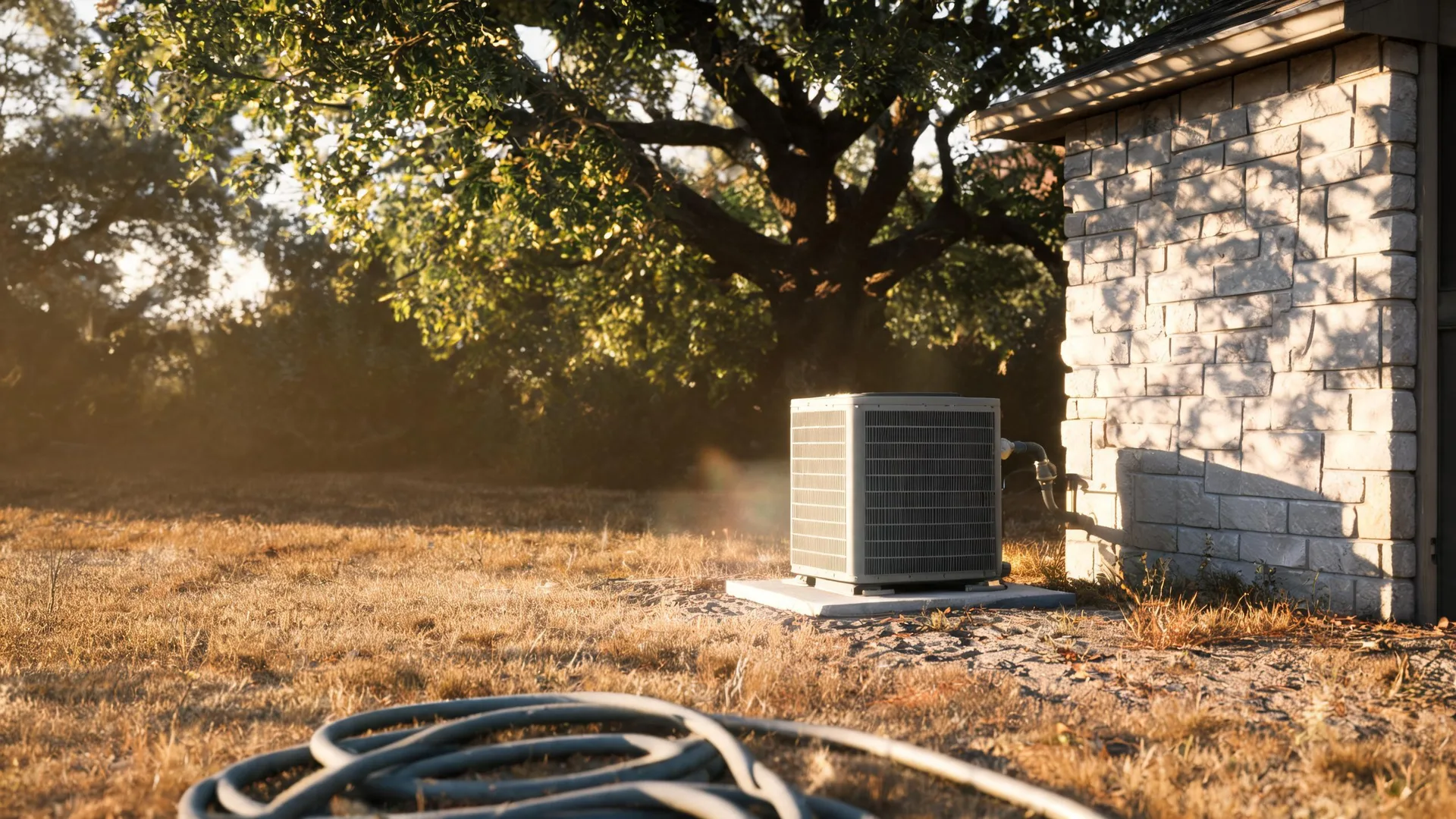
A gray heat pump condenser unit mounted on a concrete pad against the gray lap-siding exterior wall of a house.

An easier life, but not a free one

This machine isn't fighting hail or wind damage every day, just running. A unit that's gone this long without a storm complaint is probably sound mechanically, which means a repair now is more likely to be worth doing than not. If yours is acting up and no storm has come through recently, the cause is more likely a worn part or a system that's simply gotten old than anything the weather did to it. Either way, it's worth having someone look before you assume the whole unit is done.

What you can check yourself

Look at the thermostat first. Make sure it's set to the mode you want and the temperature is actually past where the room sits. Check the breaker box for a tripped switch on either the indoor or outdoor unit. Go outside and look at the unit itself. Leaves, branches or a fence board leaning against it can block airflow enough to make it struggle. Pull the air filter and hold it up to a light. If you can't see through it, swap it or clean it. None of this takes tools, and any of it can be the whole problem.
What to leave alone

Don't take the cabinet apart or reach into the outdoor unit. The fan can start on its own even when the system looks idle, and the wiring inside carries enough current to hurt you. Don't add refrigerant or touch the lines, that's sealed work and getting it wrong can damage the compressor. If the unit is tripping the breaker repeatedly, stop resetting it and leave it off. A breaker that trips more than once is telling you something electrical is wrong, and running it again can turn a repair into a replacement.

A heat pump that needs repair rarely goes quiet about it. The first sign is usually air coming from the vents that doesn't feel like enough, warm air in winter that's only a little warm, or cool air in summer that's only a little cool. Listen for the unit cycling on and off in short bursts instead of running a steady stretch, that's called short cycling and it wears the compressor down faster than normal use. A hissing sound near the lines or ice forming on the outdoor coil points to refrigerant running low, and that's not something to top off yourself. Grinding or rattling from the outdoor unit usually means a fan blade is hitting something or a motor bearing is going. If the system runs constantly and never seems to catch up to the thermostat setting, something inside is struggling, whether that's a dirty coil, a failing motor, or a part that's simply worn out. Any of these is worth a look before the unit stops working altogether.

A struggling heat pump is worth fixing fast here, not living with for a season. Get a contractor to diagnose what's actually wrong, whether that's a refrigerant leak, a failing motor, or a worn part, before you decide it's not worth the cost. Ask for the specific problem, not just confirmation that something's off. A unit drawing power without heating or cooling right is doing that every hour it sits unrepaired. Waiting to see if it gets worse just means more months of paying for air you're not getting.