





White stucco buildings with red-tiled roofs glow with warm interior lights across a tree-covered hillside at dusk.

Heat Pump Repair in Santa Cruz, CA

Tell us about the job

Takes about a minute. No obligation.

RepairHeat PumpSanta Cruz County, CA
Step 1 of 2

What ZIP code is the job in?

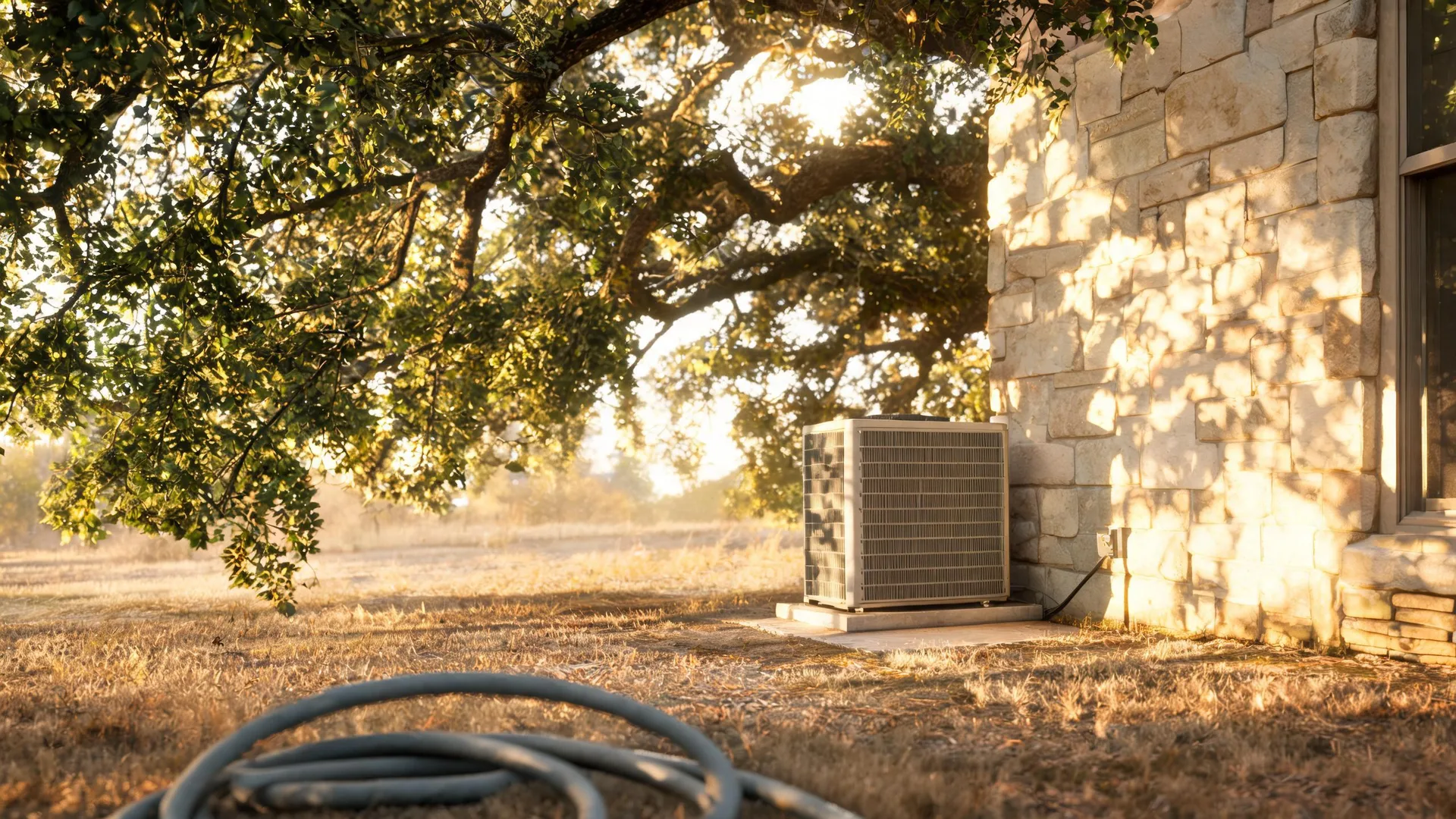
Santa Cruz County saw 207 damaging wind events between 2015 and 2024, along with 15 hail events and 3 tornadoes. That outdoor unit sits outside year round, taking whatever comes through. Wind drives debris into the coil and fan blades. Hail dents the cabinet and can bend the fins enough to choke airflow. A heat pump can keep running after that kind of hit and still be worse off than it was. If a storm has come through your yard, it's worth having someone look at the outdoor unit even if the system seems fine.

7 months
November through May, your system heats
41°F
the average winter night it heats against
76°F
the average summer afternoon it cools against
Isometric illustration of a cutaway single-family house showing interior ductwork and an air handler, with an outdoor condenser unit connected by lines along the exterior wall.

Santa Cruz summers run a dew point of 51 degrees, lower than most of the country.

Your heat pump isn't fighting heavy air most of the year, so a repair now is often money well spent.

At 38.48 cents a kilowatt-hour, a struggling heat pump runs up your bill fast

Power here costs 38.48 cents per kilowatt-hour
207 damaging wind events from 2015 to 2024
15 hail events from 2015 to 2024

October is worth paying attention to. Heat here doesn't turn on until November, but that's exactly why the first cold snap catches a weak part off guard. A heat pump that sat idle since spring can have a capacitor or a contactor that was already failing quietly, and the first real call for heat is what finishes it off. Overnight lows average 41 degrees through December, January and February, so once the system is carrying the house through the night, there's no slack left for a part that's half gone. Getting a heat pump looked at before or right at the start of that seven month run gives a weak part a chance to get caught before it fails on a cold night.

After a storm, have the outdoor unit looked at

If your yard has already taken wind or hail this year, get the outdoor unit checked before you find out the hard way. A dented cabinet or a coil packed with debris won't always stop a heat pump from running, it just stops it from running right.

Find a contractor
A gray air-source heat pump mounted on a concrete pad next to a house with gray vinyl siding, surrounded by gravel and flanked by green shrubs and white hydrangea flowers.

An easier run than most places get

A heat pump logs its hours year round here, heating through winter and cooling through summer, but neither side asks much of it. Mild winters mean shorter heating runs. Cooler, drier summers mean the compressor isn't working hard to wring moisture out of the air. The strain that shortens a system's life elsewhere, long stretches of hard running against extreme heat or cold, isn't the normal case here. So when something does go wrong, it's less often the machine worn thin and more often one part that failed or got missed. That's a repair worth making.

Running on a bad component wears down the ones around it

A heat pump pulls more current when a part is already struggling. A weak capacitor makes the compressor work harder to start. A dirty coil makes the compressor run longer to hit the same temperature. Either way the compressor takes the load, and the compressor is the one part that turns a repair into a replacement.
Some failures are quiet until they aren't

A refrigerant leak doesn't announce itself. The system keeps running low on charge, the compressor keeps trying to do its job without enough refrigerant moving through it, and heat can build up in a compressor that's starving for charge. By the time the system stops outright, the compressor has often been damaged by the months it spent compensating.

A few things are worth checking before you call anyone out. Look at the outdoor unit first. If the fan isn't spinning but the system is calling for heat or cooling, check the breaker before anything else, since a tripped breaker is something you can reset yourself. Check the air filter too. A filter packed with dust chokes airflow across the indoor coil, and that alone can make a heat pump run weak or freeze up. Walk around the outdoor unit and clear away any leaves, branches or anything else sitting against the cabinet or blocking the fins. If you've got a programmable thermostat, make sure it didn't get bumped into a mode you didn't mean to set. None of this fixes a bad capacitor or a refrigerant leak, but it rules out the simple stuff before someone has to drive out and find it for you.

A heat pump that's low on charge or struggling to start doesn't use less power, it uses more. The compressor runs longer to hit the same temperature, or draws harder just to get going, and with power priced the way it is here that extra draw shows up on the bill fast. Waiting doesn't save you anything either, since the part isn't going to fix itself in the meantime. A system running on a bad capacitor or a dirty coil costs you something every day it's left that way. Getting it looked at now stops that instead of just slowing it down later.