






Lit white stucco buildings with terracotta roofs nestled among oak trees on a dry hillside under a deep blue night sky.

Heat Pump Repair in Santa Rosa, CA

Tell us about the job

Takes about a minute. No obligation.

RepairHeat PumpSonoma County, CA
Step 1 of 2

What ZIP code is the job in?

Half the homes in Sonoma County were built in 1979 or later. If yours is one of them, the heat pump likely isn't that old either, especially if it's the original system. A breakdown on a newer unit is almost always worth fixing. The parts are easier to source, and the compressor and coil still have years of work left in them. Replacing the whole system makes sense when it's old and failing on multiple fronts, not when one part quits on a machine that's otherwise sound.

7 months
November through May, your system heats
40°F
the average winter night it heats against
79°F
the average summer afternoon it cools against
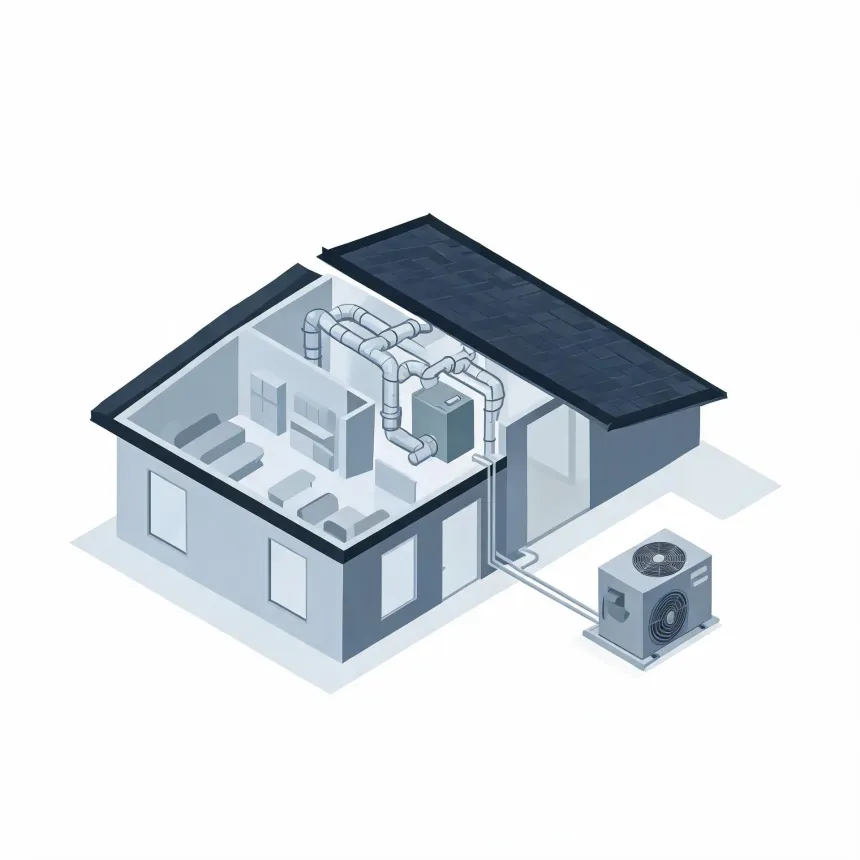
Isometric illustration of a cutaway single-story house showing interior ductwork and an air handler connected by lines to an outdoor condenser unit on a pad beside the building.

Santa Rosa air stays dry even in summer, with a dew point around 47 degrees.

A heat pump here isn't fighting heavy, humid air to cool your house, so the compressor runs under less strain than it would almost anywhere else.

Every hour it runs badly here costs more than it would almost anywhere else

Power here costs 38.06 cents per kilowatt-hour
Climate zone 3C
Heat runs November through May
October Is When to Catch a Weak PartHeat here starts in November and runs through May, seven months straight on the parts that handle cold.

A heat pump that's short cycling, running constantly, or blowing warm air is still pulling power the whole time it does it. With electricity priced the way it is here, that adds up fast on a system that isn't doing its job. Don't wait out a strange noise or a unit that won't shut off to see if it fixes itself. Get a contractor out to diagnose it while the problem is still one part, not three.

A Heat Pump That's Had It Easy Is Usually Worth Fixing

Less strain on the compressor over the years means there's usually a sound machine under whatever's gone wrong now. Get it looked at and fixed rather than replaced.

Find a contractor
A man in a dark shirt and tan work pants, seen from behind, carries a canvas tool bag up concrete steps toward an orange front door flanked by gray siding and a potted shrub.
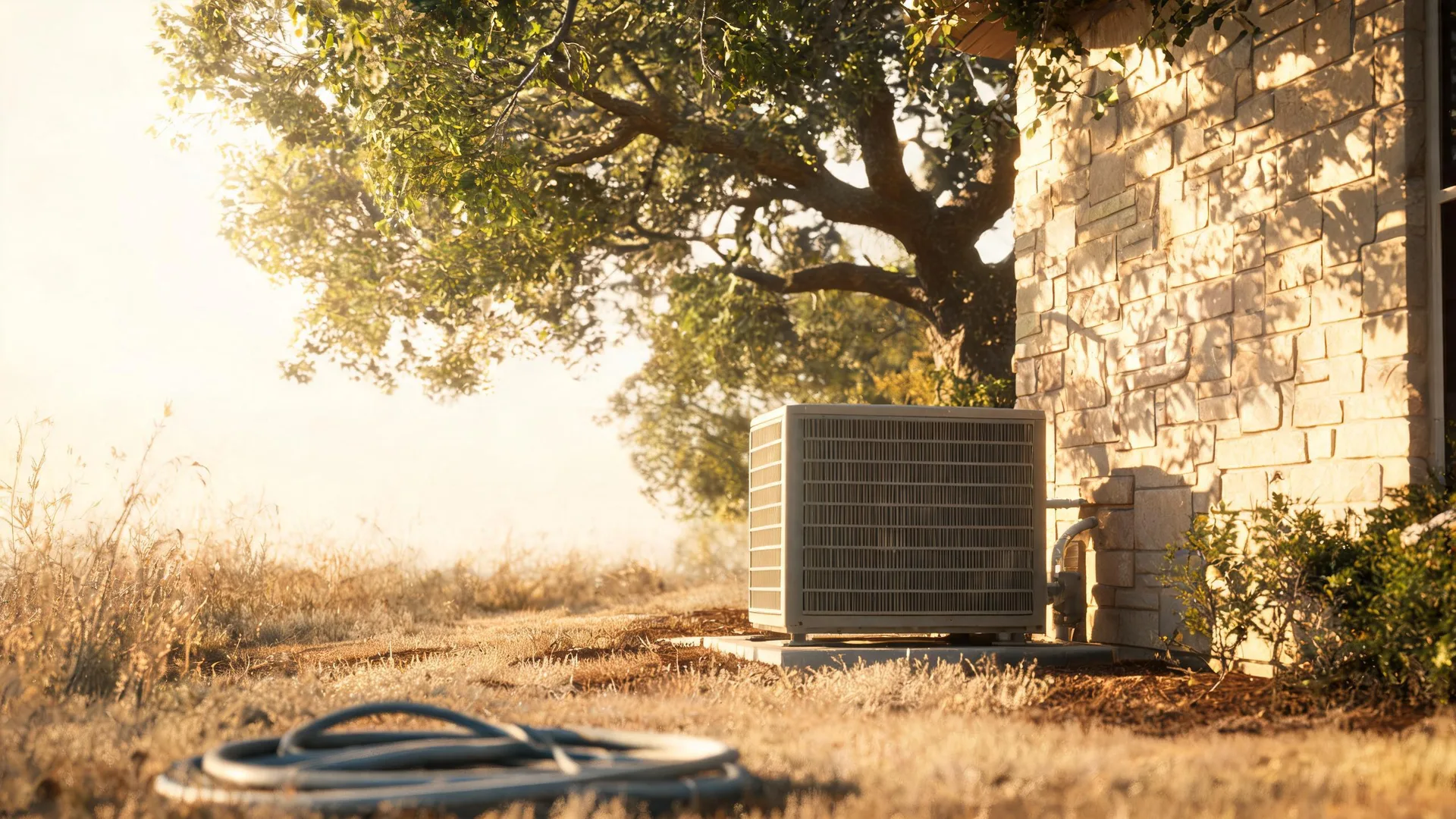
A dark gray heat pump unit mounted on a concrete pad next to a house with gray siding and a stone veneer wall.

Find Out How Old It Actually Is

Get the age of the unit itself when the contractor comes out, not just the age of the house. If it's the original system, a repair now is working on equipment that likely has years left under warranty terms or wear. One bad part doesn't mean the rest is close behind.

What Actually Wears Out

The capacitor loses its charge over years of starting the compressor and fan motors, and a weak one shows up as a unit that hums but won't start, or a fan that spins slow. Contactors pit and burn from switching current thousands of times, and eventually they stick or stop making contact. The reversing valve can fail stuck in one position, so the system only heats or only cools instead of switching. Refrigerant leaks usually show up at the joints or the coil, slow enough that you notice the house isn't comfortable before you notice anything else is wrong.
What That Means for a Repair Call

Most of these failures are one part, not a system falling apart at once. A bad capacitor or contactor is a straightforward swap, and the compressor itself is rarely the problem when the real fault is one of the cheaper parts feeding it. A refrigerant leak takes more work, since the leak has to get found and sealed before the charge means anything. The compressor is the part that's expensive and hard to replace, and it usually only fails on its own after something else has been stressing it for a long time without getting fixed.

Before you call anyone, there are a few things worth a look. Check the outdoor unit for ice on the coil or the lines, and check that nothing is blocking airflow around it, like leaves or a cover left on. Go inside and swap the air filter if it's dirty, since a clogged filter can starve the system enough to trip it into strange behavior. Check your thermostat is set to the right mode and the batteries aren't dying, because a heat pump stuck in the wrong mode will blow air that feels wrong without anything being broken. Look at your breaker panel for a tripped breaker before you assume the worst. None of this fixes a bad capacitor or a stuck reversing valve, but it rules out the simple stuff first, and it gives the contractor useful information when they do come out.

A repair call usually comes down to one question: is this part isolated, or is it the first of several. A heat pump that's run fine for years and suddenly trips on one fault, a bad capacitor, a stuck contactor, a sensor gone bad, is almost always worth fixing. That kind of failure doesn't say anything about the rest of the system. What changes the math is a unit that's already had several repairs in close succession, or one where the compressor itself is the problem. The compressor is the heart of the system, and when it's failing, everything downstream of it is working harder to compensate. A technician can tell you which case you're in by checking refrigerant pressures and looking at how the rest of the system is holding up, not just the part that quit.