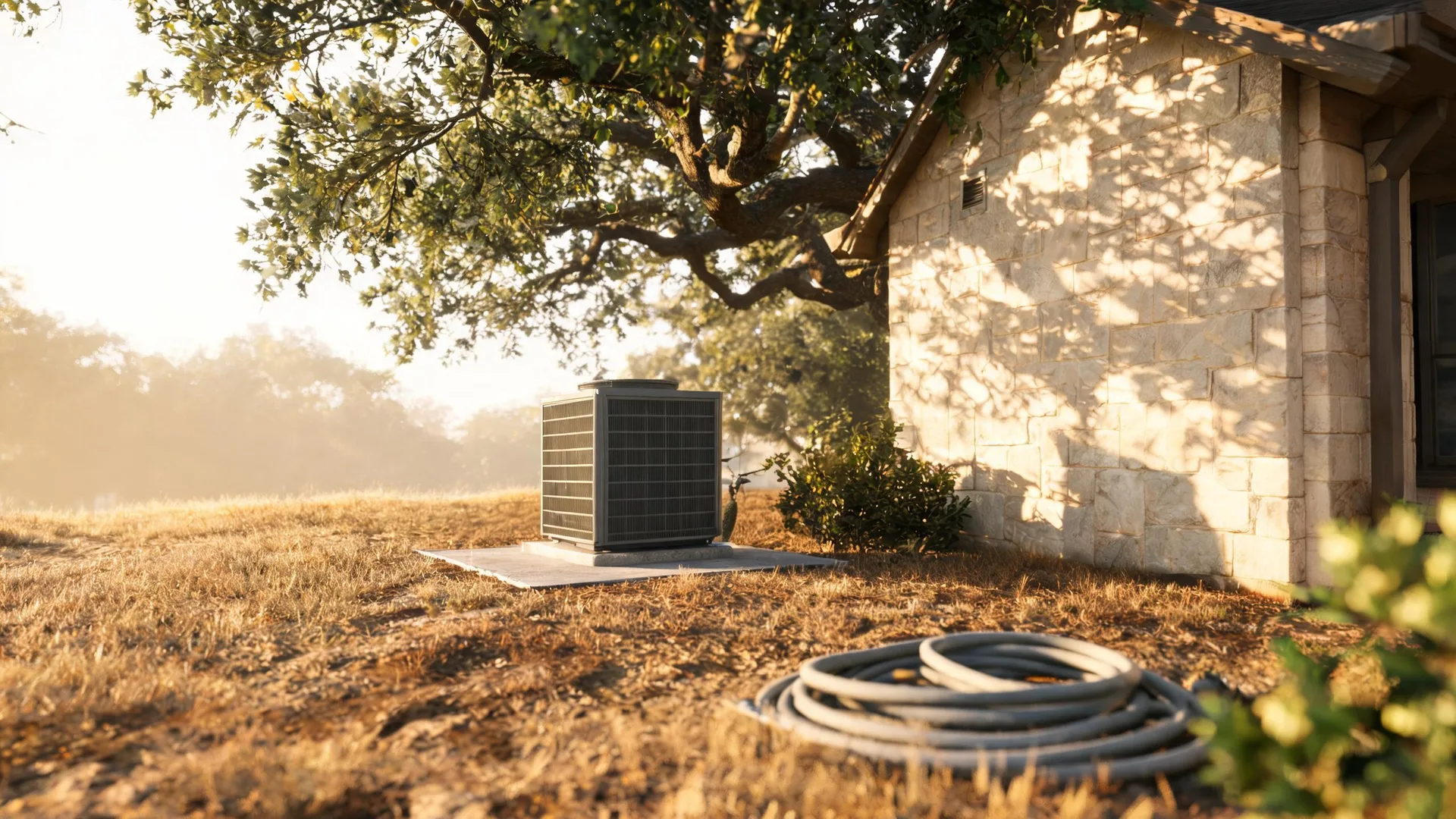
An outdoor HVAC condensing unit on a concrete pad next to a beige single-story house with a dark shingle roof.

Heat Pump Repair in Stockton, CA

Tell us about the job

Takes about a minute. No obligation.

RepairHeat PumpSan Joaquin County, CA
Step 1 of 2

What ZIP code is the job in?

Less strain on the system here

A heat pump in Stockton isn't fighting heavy, humid air all summer. The dew point here averages 48°F in June, July and August, well below most of the country, so the system isn't working to wring moisture out of the air on top of cooling it. That's less load on the compressor over the long run.

A problem is more likely age or neglect

When a heat pump here starts acting up, it usually isn't because the machine has been overworked. With the lighter job it has in this climate, trouble more often traces back to a part that's simply worn out or maintenance that got skipped. That's usually something a repair can fix.

6 months
November through April, your system heats
5 months
May through September, it cools
40°F
the average winter night it heats against
91°F
the average summer afternoon it cools against
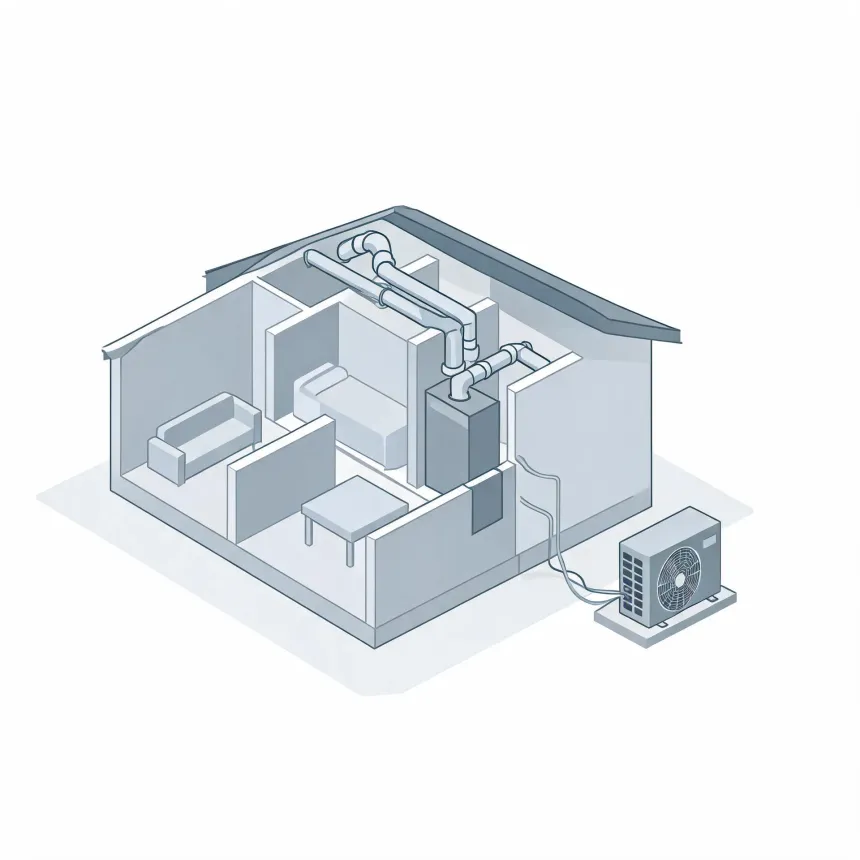
Isometric line illustration of a cutaway house showing interior rooms with furniture, ceiling ductwork connected to an indoor air handler, and a line running outside to an outdoor condenser unit.
Your system heats November through April and cools May through September.

NOAA nClimDiv, 1991–2020 normals

Half the homes in San Joaquin County were built in 1984 or later.

A heat pump that came with a newer house usually hasn't hit the end of its working life yet.

Power here costs more, so a malfunctioning unit costs you more

Power here costs 34.85 cents per kilowatt-hour
Climate zone 3B
Cooling runs May through September

Your heat pump switches jobs twice a year, and that's when problems tend to surface. It starts cooling in May, so April is worth a look beforehand. It starts heating in November, which asks something different of the same system. Right after that switch, in the first cold snap or the first hot stretch, whatever part was already marginal gets asked to carry real load for the first time in months. December through February, overnight lows here average 40°F, not brutal, but enough to run the heat pump steadily rather than in short bursts. If something was going to fail, those first few weeks of real use are when it tends to show itself.

A newer system is usually worth repairing

If the house it came with was built recently, the heat pump hasn't had to last as long as you might think. Get a repair technician out to look at it before deciding it's done.

Find a contractor
A residential heat pump outdoor unit mounted on a concrete pad next to a house with gray vinyl siding.

Time running, not time spent fighting the weather

Damaging wind has hit San Joaquin County 21 times between 2015 and 2024. That's worth knowing if a storm just came through, since debris or a bent fan blade can knock a unit out of service fast. Outside of that, there isn't much here that beats on a heat pump year after year. It runs at a steady pace most months rather than straining against heavy heat or bitter cold. Years spent running that way leave less wear than the same machine would carry somewhere harsher. If yours is acting up now and there's been no recent storm, a repair technician can tell you whether it's a part that's simply worn out rather than damage from the weather.

What a failing heat pump sounds and feels like

Warm air blowing when it should be cold, or cold air when it should be warm, usually means the reversing valve is stuck. Short cycling, where the system shuts off minutes after starting, points to a sensor problem or a compressor protecting itself from a fault. Ice building up on the outdoor coil and staying there even after a defrost cycle should run means the defrost board or a sensor isn't doing its job. A hissing sound can mean a refrigerant leak. Grinding or squealing from the outdoor unit usually means a motor bearing is going.

What's worth a call before it gets worse

A heat pump that runs constantly without hitting the set temperature is losing the fight somewhere, whether that's airflow, charge, or a failing compressor. Rooms that used to feel even now have cold or warm spots, which often means the system can no longer move enough air or has lost some of its heating or cooling capacity. A breaker that trips more than once isn't a fluke, it's a motor or electrical fault drawing too much current. None of these fix themselves, and waiting usually just means the part that's struggling now takes something else down with it.

Most heat pump failures trace back to a handful of parts, not the whole system. The capacitor that kicks the compressor and fan motors into motion weakens over time and is one of the more common reasons a unit won't start or runs rough. Contactors pit and stick from constant cycling, which can leave the outdoor unit running when it shouldn't or not starting when it should. The reversing valve, the part that switches the system between heating and cooling, can stick in one position after years of use. Refrigerant doesn't get used up, so a low charge almost always means a leak somewhere in the line set or coil, not normal consumption. Dirty coils and clogged filters make every other part work harder than it needs to, and that extra strain is what often pushes a marginal part into failing outright. Regular maintenance catches most of this early, before a worn part takes out something bigger around it.

A heat pump that's struggling, cycling on and off, running constantly, blowing the wrong temperature air, is pulling power the whole time it does it, and power here isn't cheap. That cost shows up on the bill before it shows up as a full breakdown. Waiting to see if it gets better usually just means paying more to run a system that isn't doing its job. If yours is acting up now, getting a repair technician out soon costs less than letting it limp along for another billing cycle.